Home Blog Page 2

Stage Gates: Know When to Keep Going, Pivot, or Stop in an AI World

0

Adapted from Chapter 7 of Colin C. Campbell’s Start. Scale. Exit. Repeat.

AI has made it easier than ever to start a business.

You can build a prototype in days. Launch a website in hours. Create marketing campaigns, analyze customer data, automate operations, and test ideas at a fraction of the cost it once took.

But there’s a downside to all that speed.

It has also become easier to keep a bad idea alive.

When the cost of another experiment is low and AI can generate another strategy, feature, campaign, or pivot almost instantly, founders can always convince themselves to give it one more try.

That’s why every startup needs Stage Gates.

What Is a Stage Gate?

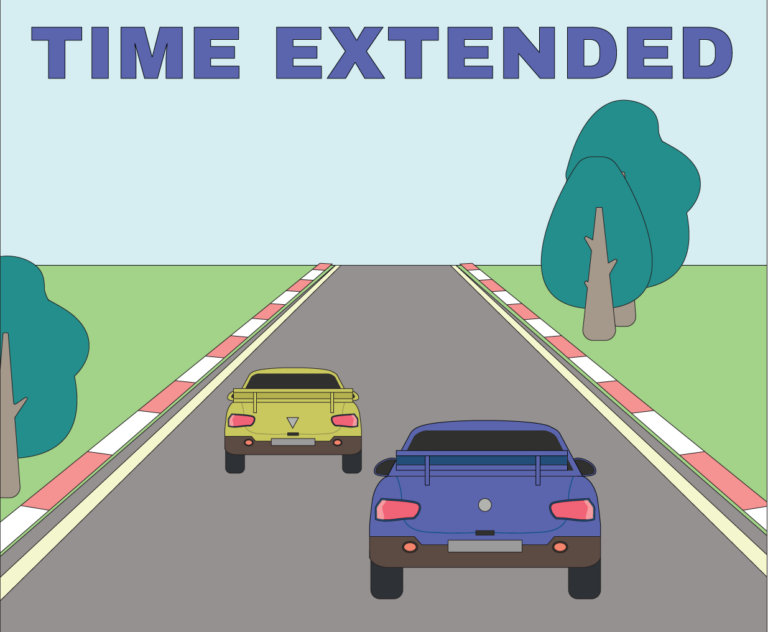
Think about an old racing video game.

You’re racing against the clock, and somewhere ahead is a checkpoint. Reach it before time runs out and you get more time to continue racing.

Miss it and the game is over.

A Stage Gate works the same way in a startup.

It is a predetermined milestone that tells you whether the business has earned the right to keep moving forward.

When we launched GeeksForLess, our first Stage Gate was simple: break even by a certain date.

Once we achieved that, we set another: reach $1 million in profit.

Then another: pay off all our debt.

Each Stage Gate gave us permission to keep pushing forward.

But Stage Gates can also tell you when it’s time to stop.

With another company I launched, Shareholder Blockchain, our first Stage Gate was to have a minimum viable product within four months. We missed it.

Rather than continuing to pour money and time into the company indefinitely, I shut it down.

That’s the other side of Stage Gates.

They define when to keep going, and when to make a difficult decision.

AI Makes Stage Gates More Important, Not Less

AI dramatically compresses the startup cycle.

A founder can now test ideas, create MVPs, analyze markets, produce content, write code, and automate workflows faster than ever before.

That should change your Stage Gates.

If something once reasonably required twelve months and $500,000 to validate, AI might allow you to test the underlying assumptions in three months for a fraction of the cost.

Your Stage Gates should reflect that new reality.

But AI also creates a new trap: activity can look like progress.

You can generate 100 landing pages.

Launch 20 campaigns.

Build 10 product features.

Analyze thousands of customer interactions.

None of that necessarily means you have a viable business.

The question isn’t how much you’re producing.

The question is whether the business is producing the results that justify continuing.

Goals and Stage Gates Aren’t the Same Thing

Companies should have lots of goals.

Increase website traffic by 25%.

Launch three new features.

Book 20 sales calls.

Reduce customer acquisition costs.

Those goals help you operate the business.

A Stage Gate sits above them.

Your Stage Gate might be:

Reach $25,000 in monthly recurring revenue by December 31 while maintaining a customer acquisition cost below $500.

You might miss some individual marketing, product, or sales goals along the way and still reach that Stage Gate.

That’s okay.

Stage Gates help founders maintain perspective.

Instead of asking whether every initiative worked, you ask the bigger question:

Did we prove enough to justify the next stage of the company?

Use AI to Measure the Business, Not Rationalize It

One of the most powerful applications of AI for entrepreneurs is its ability to analyze enormous amounts of information.

Founders can connect data from sales, marketing, customer support, product usage, finance, and operations and identify patterns that previously required teams of analysts.

Use that capability.

Ask:

Are customers actually returning?

Is revenue becoming more predictable?

Is customer acquisition becoming more efficient?

Which features are driving retention?

Are margins improving as we scale?

Where are customers dropping out?

AI can help surface the answers.

But the founder still has to make the decision.

If you establish the Stage Gate before seeing the results, you make it much harder to move the goalposts later.

That matters because entrepreneurs are naturally optimistic. We can almost always find a reason why success is supposedly just around the corner.

Stage Gates force reality into the conversation.

Stage Gates Create Momentum

Jim Collins famously described the flywheel effect in Good to Great.

A giant flywheel is incredibly difficult to move at first. You push and push and barely see movement.

Eventually, momentum builds.

Then suddenly the wheel starts moving faster and faster.

Startups work much the same way.

Your first Stage Gate may simply prove that customers are willing to pay.

The next may prove they will come back.

The next may prove you can acquire them profitably.

Then you may prove the model works in another market.

Each checkpoint creates evidence.

And evidence creates momentum.

AI can accelerate that flywheel, but only if you’re measuring the things that actually matter.

Stage Gates Give Founders Room to Breathe

When you launch a startup, it’s easy to become overwhelmed by the size of the mountain ahead.

Will this become profitable?

Can we compete?

Can we raise money?

Can we build a team?

Can we scale nationally?

Can we survive?

Trying to answer every question on day one is exhausting.

A Stage Gate narrows your focus.

Forget the mountain for a moment.

What’s the next hill?

Maybe your only job for the next 90 days is to get 100 paying customers.

If you hit it, you earn the opportunity to tackle the next problem.

This also protects founders from one of the biggest dangers in today’s AI economy: distraction.

Every week brings another tool, trend, platform, business model, or supposed breakthrough.

You don’t need to chase all of them.

Your Stage Gate tells you what matters right now.

Make Your Stage Gates SMART

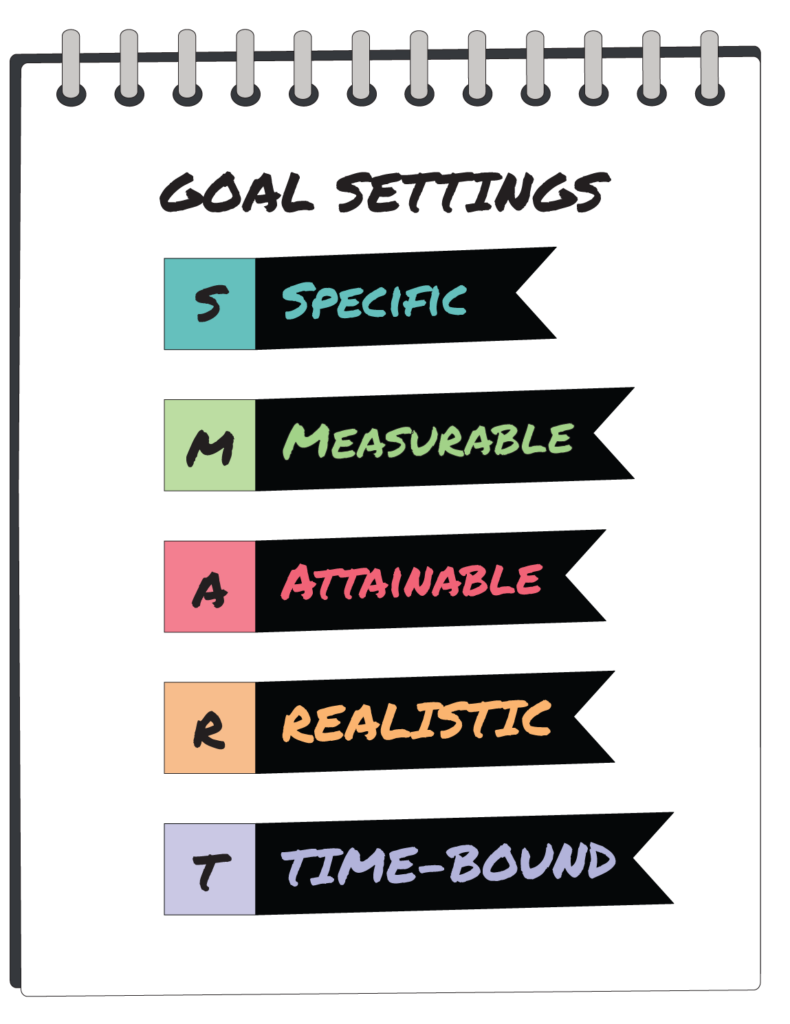
A useful Stage Gate should still follow the classic SMART framework:

Specific. Measurable. Achievable. Relevant. Time-bound.

“We want to become a leader in AI-powered accounting” isn’t a Stage Gate.

Neither is “we want to grow internationally.”

Instead:

“Reach $50,000 in monthly recurring revenue with at least 80% customer retention by March 31.”

Now you have something you can evaluate.

You either hit it or you didn’t.

And if you didn’t, you have a decision to make.

Do you continue?

Pivot?

Reduce spending?

Change the product?

Bring in new leadership?

Raise additional capital?

Or shut it down?

The answer isn’t automatically “quit.”

Missing a Stage Gate is a signal that something must change.
Don’t Get Stuck in Start

AI is creating one of the greatest entrepreneurial opportunities we’ve seen in decades.

But easier company creation doesn’t automatically mean more successful companies.

In fact, we may see the opposite.

Thousands of founders can now launch businesses that would never have made it past the idea stage before.

The winners won’t simply be the entrepreneurs who move fastest.

They’ll be the ones who know what they’re trying to prove at every stage.

Set the checkpoint.

Set the deadline.

Measure the results.

Then make the decision.

Because the objective isn’t to keep your startup alive forever.

It’s to prove that it deserves to Scale.
The AI Mindset: How Startups Can Scale With AI Agents

“AI isn’t about replacing people. It’s about democratizing expertise.”
— Abhimanyu

AI is no longer just a tool for answering questions or writing first drafts. For entrepreneurs, it is becoming an active digital workforce capable of managing complete business processes.

In this episode of The Complete Entrepreneur, Colin Campbell, Michael Gilmore, and members of the Startup Club community explore how this shift is changing the way companies start and scale.

From AI Assistant to AI Workforce

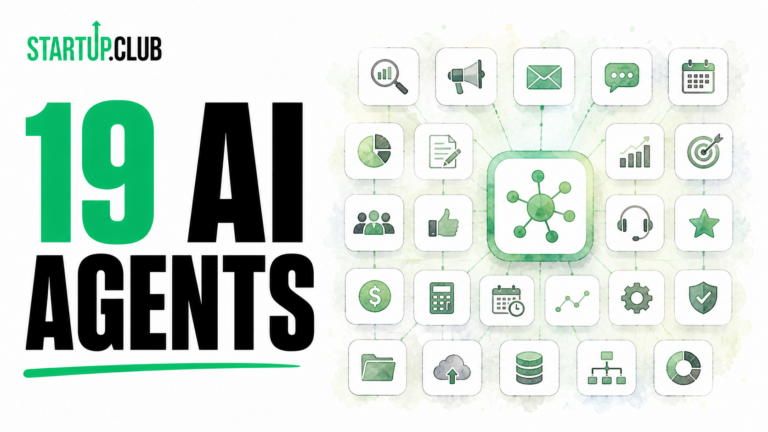
At PAW.com, the team deployed 19 specialized AI agents across different business functions. These agents help with research, lead qualification, advertising analysis, financial reconciliation, and other recurring tasks. One agent even monitors the work of the others.

The lesson is bigger than any single platform. Instead of asking, “How can AI help me complete this task?” founders can now ask, “Which process could an AI agent help me operate?”

During the conversation, entrepreneurs share how they are already using AI to:

  • Generate and qualify leads
  • Respond to customers and manage bookings
  • Create proposals, content, and marketing materials
  • Connect tools and automate routine workflows
  • Build and test early product prototypes

These capabilities can help startups move faster, reduce overhead, and compete with organizations that once had a major advantage in people and resources.

Human Judgment Still Matters

AI can accelerate the work, but it does not replace the entrepreneur.

Agents can misunderstand instructions, produce inaccurate information, or take a workflow in the wrong direction. Software, legal documents, financial decisions, and customer communications still require appropriate review.

The winning approach combines AI’s speed with human creativity, expertise, relationships, and judgment.

Start With One Process

You do not need to automate your entire company. Begin with one repetitive process that consumes time but follows a predictable pattern.

Map the steps, introduce AI where it creates value, and keep a human checkpoint wherever mistakes could carry meaningful consequences.

The opportunity is not simply to use AI. It is to rethink how your business operates.

Build a Business that Doesn’t Own You – Serial Entrepreneur: Secrets Revealed

0

Build a Business that Doesn’t Own You – Serial Entrepreneur: Secrets Revealed

Learn about building a business that creates real freedom. We’ll talk ownership, profit, systems, risk, and how founders can stop being essential to everything their company does with guest Steve Rolle, author and entrepreneur.

https://www.clubhouse.com/i/build-a-business-that-doesnt-own-you/kJyhXZ6D

Are You the Bottleneck in Your Business?

0

Are You the Bottleneck in Your Business?

Many founders unknowingly become the biggest obstacle to their company’s growth. Join us and guest speaker Barry Cryan to discuss how to let go, build stronger teams, and create a business that can scale beyond you.

https://www.clubhouse.com/i/are-you-the-bottleneck-in-your-business/qvf9yMoy

Are You the Bottleneck in Your Business?

0

Are You the Bottleneck in Your Business?

Many founders unknowingly become the biggest obstacle to their company’s growth. Join us and guest speaker Barry Cryan to discuss how to let go, build stronger teams, and create a business that can scale beyond you.

https://www.clubhouse.com/i/are-you-the-bottleneck-in-your-business/qvf9yMoy

Open Mic: Who is Winning the AI Race: Big Corps or Startups?

0

Open Mic: Who is Winning the AI Race: Big Corps or Startups?

https://www.clubhouse.com/i/open-mic-who-is-winning-the-ai-race-big-corps-or-startups/AbRPvstb

The Hidden Cost of Playing it Safe in Business

0

Is playing it safe costing your business? We’re speaking with Steve Rolle, investor and entrepreneur, to learn when to scale back, and when to take the leap.

Can You Build a Moat Around Your Idea in an AI World?

0

Adapted from Chapter 6 of Colin C. Campbell’s Start. Scale. Exit. Repeat. for the AI era.

AI has made it incredibly easy to start a company.

It has also made it incredibly easy to copy one.

A competitor can study your website, recreate features, generate similar content, launch ads, build software, and enter your market faster and cheaper than ever before.

That changes the question entrepreneurs need to ask.

It’s no longer just: Can I build this?

It’s: If this works, what stops someone else from building it too?

That’s your moat.

A Great Idea Is Not Enough

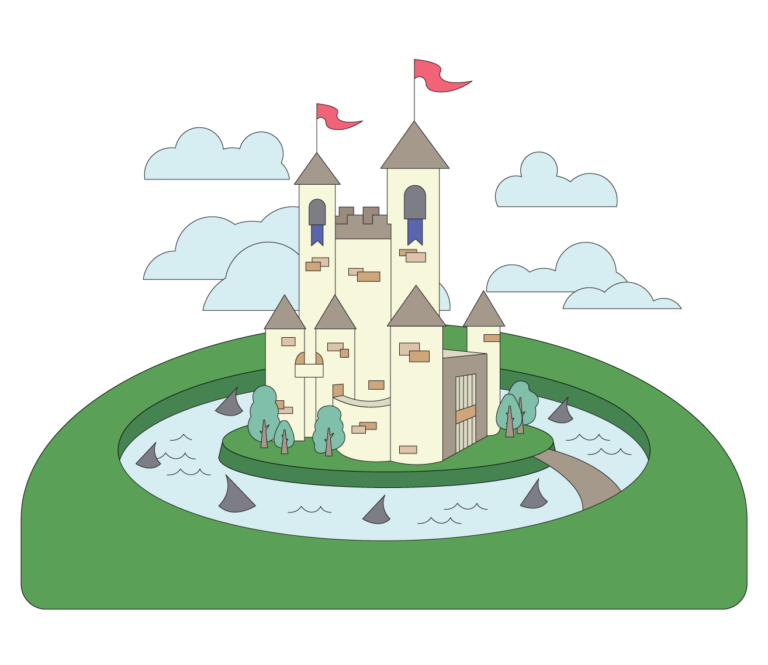
In Start. Scale. Exit. Repeat., I talk about building a moat around your business the same way you would protect a castle.

The stronger the business becomes, the more people will want a piece of it.

In the AI era, those walls need to be even stronger.

Technology itself is becoming less defensible. Features that once required a team of developers and months of work can now be replicated surprisingly quickly.

Your advantage has to come from something deeper.

Brand. Distribution. Data. Intellectual property. Customer relationships. Network effects. Exclusive partnerships. Community. Expertise.

Ideally, several of them working together.

Brand Can Become a Moat

One of the simplest moats we built was Paw.com.

The company originally operated as Treat-a-Dog, selling premium dog beds and blankets. We later invested in acquiring Paw.com.

It wasn’t cheap.

But it transformed the business.

The domain gave us a short, memorable brand that immediately communicated what we were about. In the year following the rebrand, the business more than doubled in sales and profitability.

Today, that lesson may be even more important.

When AI can generate hundreds of competing brands overnight, being remembered matters.

A great domain, recognizable brand, trusted voice, loyal audience, and strong reputation are assets a competitor cannot simply prompt into existence.

Own Something AI Can’t Easily Replicate

Founders should also ask a more difficult question:

What do we own?

That might mean patents, trademarks, copyrights, proprietary technology, exclusive contracts, unique datasets, or specialized processes.

AI can reproduce a feature.

It cannot automatically reproduce years of proprietary customer data, an exclusive licensing agreement, a trusted community, or intellectual property you legally control.

With Paw.com, for example, we pursued design and utility patents where possible. Those protections made copying our products harder.

The goal isn’t to make competition impossible.

It’s to make competing with you harder.

Distribution May Be Your Strongest Moat

At Hostopia, we learned this lesson the hard way.

We initially tried selling web hosting directly to small businesses. The problem was that we were entering a crowded market against companies with far more established customer acquisition engines.

So we changed the model.

Instead of fighting telecom companies and hosting providers, we began powering their services behind the scenes.

Our competitors became our customers.

That distribution strategy helped turn Hostopia into the gold standard in its market and ultimately contributed to the premium valuation we received when the company was sold.

The same opportunity exists today.

Thousands of companies may have access to the same AI models.

They do not have access to the same distribution.

If you control the audience, partnerships, sales channels, community, or customer relationships, the technology underneath the product becomes only one piece of your advantage.

Sometimes a Smaller Market Creates a Bigger Moat

Entrepreneurs love massive markets.

Investors do too.

But massive markets attract massive competition.

Sometimes the smarter strategy is to dominate a smaller category.

When we launched .CLUB, we had something extremely powerful: exclusivity. We held the rights to the .club domain extension. Google couldn’t create another one. Amazon couldn’t outspend us and take it away.

We had infinite digital inventory combined with a protected position.

AI founders should think the same way.

Instead of asking, How can I get 1 percent of this enormous market? ask:

What specific category could we become known for?

Being the dominant company in a valuable niche can create far more defensibility than being another small player in a gigantic market.

Give Your Idea a Defensibility Score

Before committing serious time and capital to an idea, rate its defensibility from 1 to 5.

1: I have no clear moat.

2: I know how I could build one, but haven’t started.

3: I’ve taken at least one meaningful action to protect the business.

4: I have multiple layers of defensibility.

5: Competitors would have a very difficult time replicating our position.

Then ask yourself what would move the business up one level.

Maybe it’s acquiring the right domain.

Maybe it’s filing a trademark.

Maybe it’s building proprietary data.

Maybe it’s signing an exclusive distribution agreement.

Maybe it’s creating a community competitors can’t easily recreate.

The important thing is to start building the moat before you desperately need it.

In an AI World, Build What Gets Stronger Over Time

AI will continue lowering the cost of creating products, content, software, and companies.

That’s an incredible opportunity for entrepreneurs.

But lower barriers to entry work both ways.

The companies that win won’t simply be the ones that use AI best. They’ll be the ones that use AI to move faster while building assets that become increasingly difficult to copy.

Build the product.

Build the brand.

Own the customer relationship.

Control distribution.

Protect what you can.

And keep widening the moat.

Because if you build something worth scaling, eventually someone else is going to want your castle.

Pick a Business Idea That Can Scale: A Guide for Entrepreneurs

0

A great business idea isn’t just about what you can start. It’s about what you can grow.

Entrepreneurs naturally spend a lot of time thinking about the first stage of a business: Is there a market? Can I get customers? How much money will I need? Can I actually pull this off?

But there’s another question worth asking before you commit years of your life to an idea:

What happens if this works?

That’s the central lesson from Chapter 5 of Start. Scale. Exit. Repeat.: Pick an idea that can scale—or at least understand exactly what scaling your idea will require.

Small Doesn’t Necessarily Mean Easy

There’s a common assumption that running a small business is easier than running a large one. That isn’t necessarily true.

Every business comes with challenges, and some small businesses can be surprisingly difficult to grow because their revenue is directly tied to physical space, people, or the founder’s time.

Colin uses the Montessori school he owns with his wife as an example. The school has capacity for 110 students. Once those seats are filled, adding even one more student isn’t as simple as selling another product or adding another account.

Expanding could mean buying neighboring property, getting municipal approvals, renovating or constructing a building, buying equipment, and hiring additional staff. Suddenly, going from 110 students to 111 could require an enormous capital investment.

The school can be a successful business without expanding. But its structure creates a natural ceiling.

Restaurants, gyms, retail stores, medical offices, and many other brick-and-mortar businesses face similar challenges. Growth often requires another location, additional employees, more equipment, and more capital.

That doesn’t make them bad businesses. It simply means entrepreneurs need to understand what they’re signing up for.

Scaling Is a Choice

Not every entrepreneur wants to build a massive company.

A profitable business that provides a great lifestyle, financial security, and control over your time can be an incredible outcome. In Colin’s case, his wife is perfectly happy with the Montessori school at its current size. She doesn’t want another location or a much larger operation.

There’s nothing wrong with that.

The important thing is recognizing that scaling—or choosing not to scale—is a decision.

Your business should support the life you want to build.

Before pursuing an idea, ask yourself:

  • How large do I actually want this business to become?
  • How much of my time am I willing to give it?
  • How much capital will expansion require?
  • Will growth require significantly more employees?
  • Does every new dollar of revenue create significantly more cost?
  • Can the business eventually grow without depending entirely on me?

Those questions can completely change how attractive an idea looks.

Rate the Scalability of Your Idea

One practical way to evaluate an opportunity is to give it a scalability score from 1 to 5, with 1 representing a business that is extremely difficult to scale and 5 representing one with significant scaling potential.

A rough framework looks like this:

1 — Brick-and-mortar businesses
Think schools, restaurants, retail stores, and medical offices. Growth is constrained by physical capacity, location, staffing, and high fixed costs.

2 — Time-and-materials businesses
Consulting firms, agencies, and service providers fall into this category. Revenue can grow, but usually by adding more people and more billable hours.

3 — Product or service businesses
E-commerce and online training businesses can reach larger markets, but inventory, production, financing, and fulfillment can create constraints.

4 — Recurring-revenue businesses
Subscription businesses, accounting software, and cloud services have strong scaling potential because customers continue generating revenue over time. However, building the product, retaining customers, and competing effectively can require substantial investment.

5 — Digital businesses
SaaS, domain registries, AI-driven businesses, and other digital models can potentially serve enormous markets without physical expansion for every incremental customer. The opportunity can be huge—but so can the competition.

The point isn’t that everyone should only pursue a 5.

The point is to know your number before you build.

Two Tech Companies, Two Very Different Outcomes

Colin illustrates this distinction through two companies he helped build: Brisk Mobile and .CLUB Domains.

Both were technology businesses. Both needed talented people. Both required startup capital.

But their scalability was dramatically different.

Brisk Mobile operated using a time-and-materials consulting model. More revenue generally meant winning more contracts and having more skilled people available to complete the work. People and time were directly connected to growth.

Colin rates that model around a 2 out of 5 for scalability.

.CLUB Domains was fundamentally different. It could sell domain registrations through a worldwide marketplace, and a relatively small team could support a much larger revenue base. During the period Colin owned the company, nearly a million domains were registered.

That earns the model a 5 out of 5 on his scalability index.

The distinction highlights one of the most important questions entrepreneurs can ask:

What has to increase when my revenue increases?

If doubling revenue requires roughly doubling your employees, office space, equipment, and management complexity, scaling is going to be difficult.

If revenue can multiply without expenses increasing at the same rate, you may have something much more scalable.

Scalability Creates Leverage

The best scalable businesses have leverage built into their model.

Build software once, and potentially thousands—or millions—of customers can use it.

Create a digital product once, and it can be sold repeatedly.

Build recurring revenue, and existing customers can continue producing revenue while you acquire new ones.

That leverage can create higher margins and dramatically increase the potential value of the company.

It can also make a business more attractive to investors and eventual acquirers because they’re not simply buying today’s revenue. They’re buying a system capable of generating substantially more revenue tomorrow.

But More Scalability Can Mean More Risk

There’s another side to the equation.

A highly scalable business can access a much larger market, but so can its competitors.

A local restaurant may compete primarily with other restaurants in its area. A digital platform could find itself competing against businesses anywhere in the world.

The larger the opportunity, the more people are likely to chase it.

Scalable companies can therefore face intense competition, copycats, aggressive pricing, rapidly changing technology, and constant pressure to defend their market position.

In other words, higher scalability can create both higher potential reward and higher potential risk.

That’s why choosing a scalable idea isn’t enough. Eventually, you also need to build something defensible.

Ask Yourself What Happens at 10X

One of the simplest exercises you can do before launching a company is to imagine that it succeeds beyond your expectations.

If you had 10 times as many customers tomorrow, what would happen?

Would you need 10 times as many employees?

Ten more locations?

A bigger warehouse?

Millions of dollars of additional equipment?

Or could your existing infrastructure handle much of that growth?

You don’t need perfect answers at the startup stage. But thinking through the question exposes the structural limitations of a business before you’ve invested years trying to overcome them.

Choose With Your Eyes Open

There is no universal rule that says every entrepreneur needs to build a massive, global company.

A single restaurant can be a great business. So can a consulting firm, medical practice, school, real estate business, or local service company.

But every business model comes with a different growth equation.

Understand that equation before you commit.

Know how much capital growth will require. Know how dependent the business will be on hiring. Know whether geography limits you. Know whether revenue is tied directly to your time. And know whether that’s compatible with the life and company you actually want to build.

Because picking an idea isn’t only about deciding what business you want to start.

It’s deciding what kind of business you want to own when it succeeds.

Key Takeaway

Don’t judge an idea only by whether it can become a business. Judge it by what has to happen for that business to become bigger.

Rate its scalability. Understand the trade-offs. Decide how much growth you actually want.

Then build accordingly.

The Exit Window Is Open. Most Founders Aren’t Ready.

0

Buyers are back. In July 2026 alone, venture-backed M&A cleared $9 billion and twelve companies went public above a billion-dollar valuation.

Most founders will miss it. Not because they don’t want to sell. Exit readiness takes eighteen to twenty-four months — every clean exit I’ve been part of did — and most founders start the week a buyer calls.

That week is the worst possible moment to begin.

Windows Close Without Announcing It

I’ve been through this cycle enough times to know its shape. Liquidity freezes. Everyone waits. Valuations hold up on paper while nothing actually sells.

One market analysis put the problem plainly this month: higher private valuations “may improve paper returns, but they do not return capital to limited partners.”

Then the ice cracks. Acquirers who hoarded cash for two years start shopping. Bankers float the next big listings — OpenAI, Anthropic, Databricks, Stripe. Crunchbase read July’s mix of billion-dollar rounds, M&A, and IPOs as an ecosystem where capital “is also beginning to recycle through exits.”

Beginning. Not finished.

That word matters, because this window will close, and it will close faster than it opened. One bad quarter, one rate surprise, one geopolitical shock, and the acquirers go quiet for another two years.

Rule: You can’t time an exit window. You can only be ready when one opens.

Exit Readiness Is the Whole Game

An exit is not an event. It’s a process that starts long before anyone makes an offer, and the founders who get clean, high-multiple outcomes did the unglamorous work years earlier.

I’ve sold companies. I’ve also sat in the room where a buyer repriced a great business downward in diligence over things that would have taken six months to fix — if anyone had started six months earlier.

Nobody hands you those six months once a process is live. Every week you spend fixing something is a week the buyer spends finding a reason to pay less.

The Exit Readiness Checklist

What has to be true before the phone rings.

1. Your books survive a stranger.

Not “my bookkeeper knows where everything is.” Clean, accrual-based financials going back three years, ideally reviewed or audited. Revenue recognized consistently. Add-backs documented and defensible.

Rule: If explaining your numbers takes more than ten minutes, your valuation is already falling.

2. No customer is worth more than 20% of revenue.

Customer concentration is the fastest way to lose a turn of multiple. A buyer sees one client at 40% of revenue and sees a company that could halve the day after closing. They price that risk aggressively.

Fixing it takes years. Start now.

3. The business runs without you for thirty days.

The hardest one, and the one founders fight. If you are the salesperson, the product decision-maker, and the person approving invoices, you aren’t selling a company. You’re selling a job — and buyers pay far less for jobs.

Test it honestly. Leave for thirty days. What breaks becomes your work list.

4. Your contracts transfer.

Go read your customer agreements. Find the change-of-control clauses that let clients walk or renegotiate on acquisition. Check your key employee agreements. Check your IP assignments, especially for anything a contractor built in the early years.

I watched a deal stall four months over one missing IP assignment from a freelancer nobody could find.

5. Your growth story has a number attached.

“We’re growing fast” is not a story. “We grew 62% year over year for three consecutive years with net revenue retention of 114%” is a story. Buyers pay more for predictability than for velocity.

6. You know your walk-away number before you enter the room.

Decide it while you’re calm. Write it down. Once a term sheet sits in front of you, excitement, exhaustion, and eight months of sunk cost wreck your judgment.

Rule: Set your floor before the adrenaline arrives.

The Mistake I See Most

Founders treat the exit as the reward for building. It isn’t. It’s a separate discipline with its own skill set, and it sits third in Start. Scale. Exit. Repeat. for a reason — between scaling and starting again, and you have to earn it deliberately.

The founders who do this well aren’t smarter. They ran the business as if it were for sale, every year, whether or not it was.

That habit has a side effect: a company built to be sold is a better company to own. Clean books, diversified revenue, a team that operates without you. None of that is exit prep. That’s just good business.

The Item You’ve Been Avoiding

Go back through those six. One of them made you flinch.

That’s the one costing you a turn of multiple, and it’s the one you’ve been deferring for two years because fixing it means an uncomfortable conversation — with your largest customer, with your accountant, with the person who shouldn’t be running your sales team anymore.

Book that conversation this week. Not the easy items. The one you skipped.

The window is open now. The work should have started two years ago.

Second best time is today.