

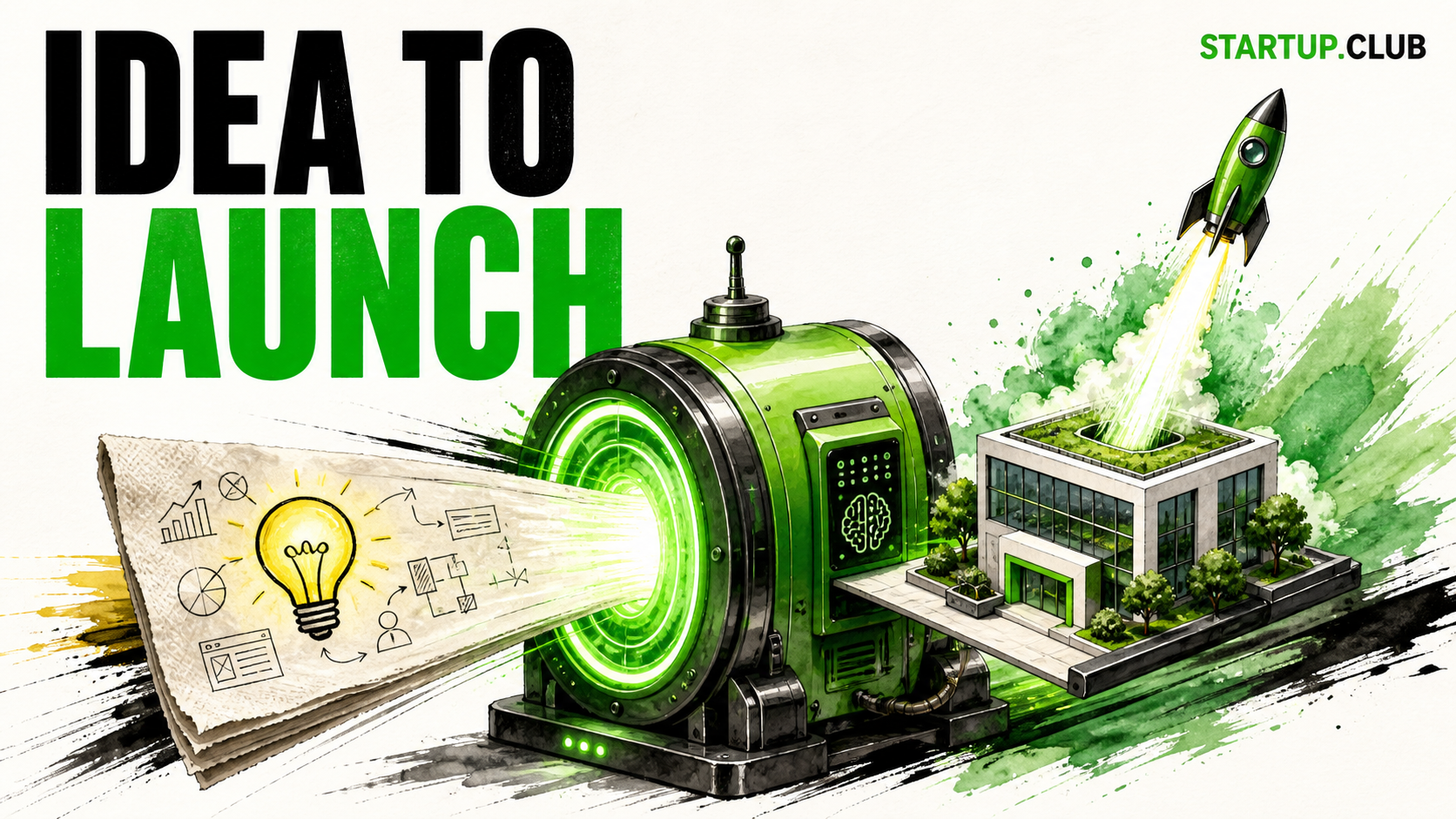

A great idea is not automatically a great business.
In this episode of The Complete Entrepreneur, Colin Campbell and Michael Gilmore explore how founders can evaluate an idea, manage the fear of launching, and use AI to move from concept to market.
“You’re only limited by your imagination.”
Colin Campbell
Validate Before You Build
Before investing significant time or money, determine whether the idea solves a meaningful problem.
Ask:
- Is the timing right?
- Is there a clear target customer?
- Will people pay for the solution?
- Can the business scale?
- What prevents a competitor from copying it?
- Does the founder have the ability to adapt and execute?
Sharing the idea with experienced founders, potential customers, investors, and qualified advisers can expose weaknesses early. Positive feedback from friends is encouraging, but it is not market validation.
Quantify the Fear
Fear is not always a reason to stop. It can be a signal that important questions remain unanswered.
Michael Gilmore recommends quantifying that fear. Build a cash flow forecast, calculate the worst-case loss, identify funding gaps, and determine which assumptions still need evidence.
Once you turn uncertainty into numbers, you can make a clearer decision about whether the opportunity justifies the risk.
Use AI as a Research Partner
AI can help founders evaluate ideas faster by:
- Researching competitors and market conditions
- Testing different business scenarios
- Drafting business and marketing plans
- Building financial models
- Creating prototypes and early products
- Identifying weaknesses in an argument
- Challenging assumptions before money is committed
The key is to ask AI to critique the idea, not simply confirm it. Its output still requires verification and human judgment.
Build What AI Cannot Copy
AI has lowered the cost of launching a company, but it has also lowered the barrier for competitors.
A product built quickly with AI may be just as easy for someone else to reproduce. That makes customer relationships, trusted distribution, specialized knowledge, strong execution, and brand loyalty even more valuable.
As Colin Campbell explains, you can never outsource the entrepreneur. AI can help build, research, market, and launch the company. The founder still has to choose the idea, understand the customer, solve problems, and create a reason for the business to endure.