

Adapted from Chapter 6 of Colin C. Campbell’s Start. Scale. Exit. Repeat. for the AI era.
AI has made it incredibly easy to start a company.
It has also made it incredibly easy to copy one.
A competitor can study your website, recreate features, generate similar content, launch ads, build software, and enter your market faster and cheaper than ever before.
That changes the question entrepreneurs need to ask.
It’s no longer just: Can I build this?
It’s: If this works, what stops someone else from building it too?
That’s your moat.
A Great Idea Is Not Enough
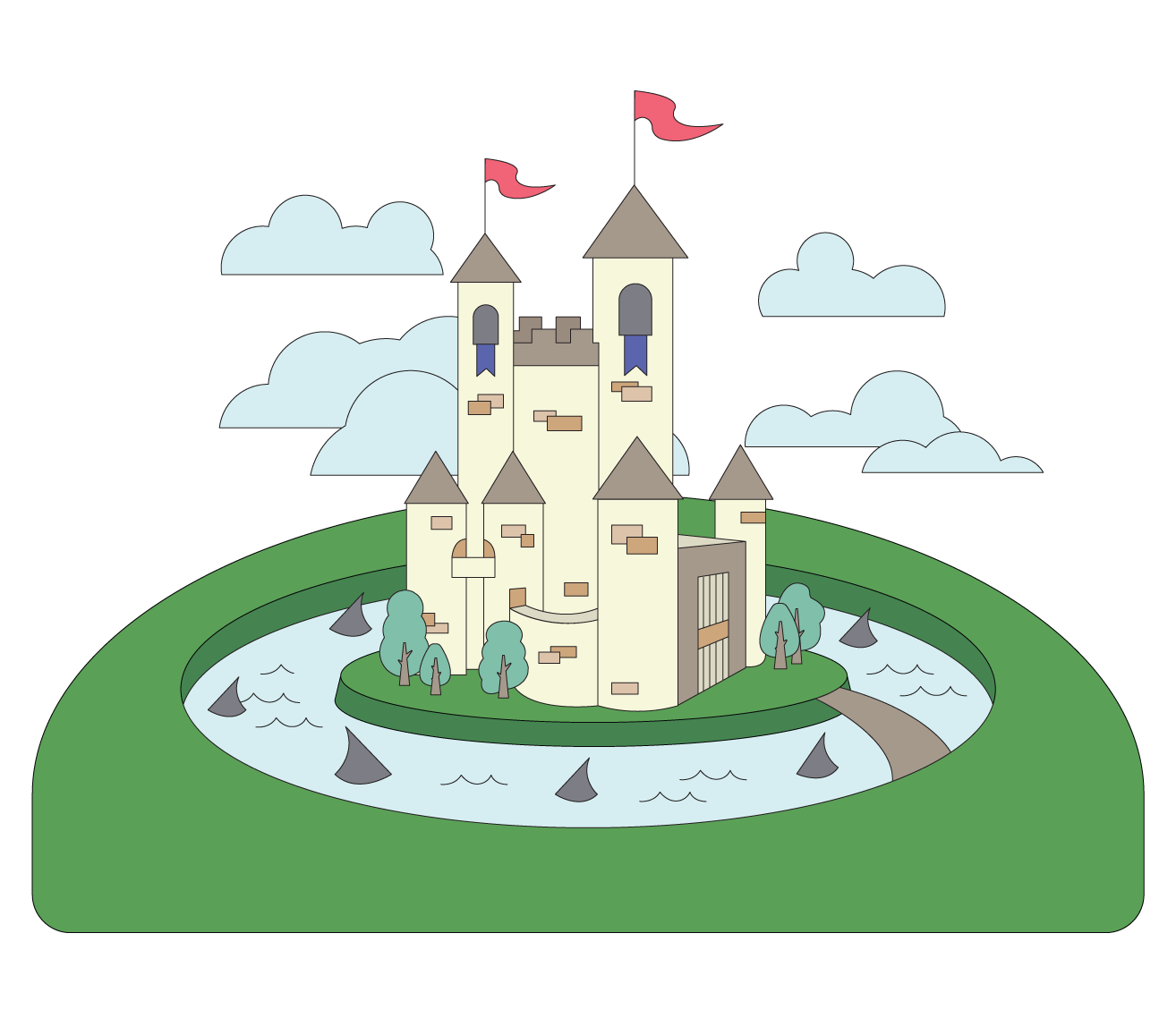
In Start. Scale. Exit. Repeat., I talk about building a moat around your business the same way you would protect a castle.
The stronger the business becomes, the more people will want a piece of it.
In the AI era, those walls need to be even stronger.
Technology itself is becoming less defensible. Features that once required a team of developers and months of work can now be replicated surprisingly quickly.
Your advantage has to come from something deeper.
Brand. Distribution. Data. Intellectual property. Customer relationships. Network effects. Exclusive partnerships. Community. Expertise.
Ideally, several of them working together.
Brand Can Become a Moat
One of the simplest moats we built was Paw.com.
The company originally operated as Treat-a-Dog, selling premium dog beds and blankets. We later invested in acquiring Paw.com.
It wasn’t cheap.
But it transformed the business.
The domain gave us a short, memorable brand that immediately communicated what we were about. In the year following the rebrand, the business more than doubled in sales and profitability.
Today, that lesson may be even more important.
When AI can generate hundreds of competing brands overnight, being remembered matters.
A great domain, recognizable brand, trusted voice, loyal audience, and strong reputation are assets a competitor cannot simply prompt into existence.
Own Something AI Can’t Easily Replicate
Founders should also ask a more difficult question:
What do we own?
That might mean patents, trademarks, copyrights, proprietary technology, exclusive contracts, unique datasets, or specialized processes.
AI can reproduce a feature.
It cannot automatically reproduce years of proprietary customer data, an exclusive licensing agreement, a trusted community, or intellectual property you legally control.
With Paw.com, for example, we pursued design and utility patents where possible. Those protections made copying our products harder.
The goal isn’t to make competition impossible.
It’s to make competing with you harder.
Distribution May Be Your Strongest Moat
At Hostopia, we learned this lesson the hard way.
We initially tried selling web hosting directly to small businesses. The problem was that we were entering a crowded market against companies with far more established customer acquisition engines.
So we changed the model.
Instead of fighting telecom companies and hosting providers, we began powering their services behind the scenes.
Our competitors became our customers.
That distribution strategy helped turn Hostopia into the gold standard in its market and ultimately contributed to the premium valuation we received when the company was sold.
The same opportunity exists today.
Thousands of companies may have access to the same AI models.
They do not have access to the same distribution.
If you control the audience, partnerships, sales channels, community, or customer relationships, the technology underneath the product becomes only one piece of your advantage.
Sometimes a Smaller Market Creates a Bigger Moat
Entrepreneurs love massive markets.
Investors do too.
But massive markets attract massive competition.
Sometimes the smarter strategy is to dominate a smaller category.
When we launched .CLUB, we had something extremely powerful: exclusivity. We held the rights to the .club domain extension. Google couldn’t create another one. Amazon couldn’t outspend us and take it away.
We had infinite digital inventory combined with a protected position.
AI founders should think the same way.
Instead of asking, How can I get 1 percent of this enormous market? ask:
What specific category could we become known for?
Being the dominant company in a valuable niche can create far more defensibility than being another small player in a gigantic market.
Give Your Idea a Defensibility Score
Before committing serious time and capital to an idea, rate its defensibility from 1 to 5.
1: I have no clear moat.
2: I know how I could build one, but haven’t started.
3: I’ve taken at least one meaningful action to protect the business.
4: I have multiple layers of defensibility.
5: Competitors would have a very difficult time replicating our position.
Then ask yourself what would move the business up one level.
Maybe it’s acquiring the right domain.
Maybe it’s filing a trademark.
Maybe it’s building proprietary data.
Maybe it’s signing an exclusive distribution agreement.
Maybe it’s creating a community competitors can’t easily recreate.
The important thing is to start building the moat before you desperately need it.
In an AI World, Build What Gets Stronger Over Time
AI will continue lowering the cost of creating products, content, software, and companies.
That’s an incredible opportunity for entrepreneurs.
But lower barriers to entry work both ways.
The companies that win won’t simply be the ones that use AI best. They’ll be the ones that use AI to move faster while building assets that become increasingly difficult to copy.
Build the product.
Build the brand.
Own the customer relationship.
Control distribution.
Protect what you can.
And keep widening the moat.
Because if you build something worth scaling, eventually someone else is going to want your castle.