
Entrepreneurs are often hit hardest by forces they never saw coming: rising interest rates, tariffs, government policy changes, supplier disruptions, market collapses, and even personal crises outside the business. In this episode, the conversation centers on a simple but difficult truth: founders cannot control the external environment, but they are responsible for how they respond.
AI Growth Hacks Every Entrepreneur Should Be Using Now

AI is no longer a future-facing technology reserved for large companies, technical teams, or venture-backed startups. It has become a practical operating tool for entrepreneurs who need to move faster, cut costs, test ideas, and make better decisions with fewer resources.
But the real advantage does not come from simply “using AI.” The advantage comes from knowing where to apply it, how to question it, and when to slow down enough to verify the output.
For entrepreneurs, AI is becoming less of a novelty and more of a business partner. It can draft documents, analyze data, create workflows, organize information, generate ideas, and help founders move through roadblocks that once required expensive outside help. The key is to treat it as leverage, not magic.
Use AI to Reduce Professional Service Costs
One of the clearest uses of AI is preparing the first version of complex business documents.
Entrepreneurs often pay thousands of dollars for legal, financial, or strategic documents before they even know whether an idea has traction. AI can now help draft early versions of private placement memorandums, business plans, investor summaries, operating procedures, internal policies, and vendor briefs.
That does not mean lawyers, accountants, or consultants disappear from the process. It means their role changes. Instead of paying someone to create everything from scratch, founders can bring a strong first draft and ask the professional to review, correct, structure, and finalize it.
This shifts the cost structure. Service providers who use AI well will become more valuable because they can deliver better work faster. Service providers who ignore it may become harder for small businesses to justify.
Turn Messy Operations Into Structured Data
AI is especially useful when a business has information scattered across photos, emails, PDFs, spreadsheets, receipts, or notes.
A furnished rental operator, for example, can photograph furniture and appliances, ask AI to identify the items, estimate replacement values based on a target retailer or quality level, and organize everything into a spreadsheet. What used to require manual inventory work can become a repeatable workflow.
The same principle applies to receipts, asset lists, maintenance logs, customer support records, marketing reports, and internal documentation. AI can help convert unstructured information into usable business data.
The important step is review. AI can estimate, categorize, and organize, but the entrepreneur still needs to verify the output before using it for insurance, accounting, purchasing, or financial planning.
Go Beyond Surface-Level Marketing Metrics
Many founders track metrics like return on ad spend, clicks, impressions, and conversion rates. Those numbers matter, but they can be misleading if viewed in isolation.
AI can help build deeper marketing analysis systems that connect ad performance to contribution margin, customer lifetime value, repeat purchase behavior, pricing, fulfillment costs, and cash flow timing.
A campaign may look profitable based on revenue alone, but if the margin is weak or the second purchase happens two years later, the business may still be losing money in the short term. AI can help founders create more thoughtful dashboards and decision frameworks around when to scale, pause, or cut spend.
This is where AI becomes more than a reporting tool. It becomes a thinking partner that helps ask better business questions.
Build Agents, But Keep Humans in Control
AI agents are becoming a major area of experimentation. They can help automate email follow-ups, bookkeeping workflows, customer support, research, reporting, and project management.
Tools like n8n, LangGraph, Pinecone, pgvector, Claude Projects, ChatGPT Projects, NotebookLM, and other agent frameworks are making it easier to connect AI with business data and recurring tasks.
But automation introduces risk. Agents can misread documents, misunderstand instructions, create incorrect classifications, or build on earlier mistakes. In finance, legal, customer-facing support, and analytics, those errors can compound quickly.
The best approach is not full blind automation. It is supervised automation. Let AI perform the repetitive work, but build in human review, confidence thresholds, source checks, audit trails, and escalation rules.
AI should not be treated as the boss. The founder, operator, or subject-matter expert still owns the decision.
Use AI for Ideation and Early Validation
AI can also help founders explore business models they might not have considered.
A co-living operator looking to reduce furnishing costs may discover local “Buy Nothing” groups, secondhand sourcing strategies, or leasing arbitrage models through AI-assisted brainstorming. A founder building a new product can use AI to simulate landing pages, mockups, scripts, decks, and customer journeys before investing heavily in development.
This is one of AI’s strongest uses: helping entrepreneurs test before they build.
But there is a trap. AI makes it easy to create endless plans, decks, mockups, workflows, and content. That can feel productive while avoiding the harder work of getting customers, generating revenue, and validating demand.
The goal is not to become busy. The goal is to move the business forward.
Create a Better Knowledge System
Tools like NotebookLM show how powerful AI becomes when it is grounded in specific source material. Instead of asking a general AI model for broad answers, founders can upload documentation, books, transcripts, policies, help files, or internal notes and query that trusted information directly.
This is useful for training, research, customer support, onboarding, content creation, and internal operations. It also reduces the risk of irrelevant or unsupported answers because the AI is working from a defined knowledge base.
For best results, source quality matters. Clean documents, markdown files, text files, structured notes, and well-organized references usually produce better outputs than messy PDFs or incomplete uploads.
The Real Growth Hack Is Better Judgment
The entrepreneurs who benefit most from AI will not be the ones who ask it to do everything. They will be the ones who learn how to direct it.
That means writing better prompts, giving clearer context, checking sources, questioning assumptions, and knowing enough about the task to spot weak answers. It also means building systems where AI supports human intelligence instead of replacing it.
AI can save time. It can lower costs. It can unlock ideas. It can make small teams look much larger. But it still needs direction, judgment, and accountability.
The best founders will use AI as a multiplier for what they already know—and as a guide for learning what they do not.
When Business Gets Hit by Forces Outside Your Control

Every entrepreneur eventually faces a moment when the problem is not bad execution, weak demand, or a poor product. Sometimes the problem comes from outside the building.
Interest rates rise. Tariffs change. A major supplier rewrites the terms. A government policy shifts. A platform that once drove revenue disappears overnight. A war, recession, banking issue, or tax change suddenly alters the math of the business.
These events can feel unfair because they often are. But fairness is not a business strategy. When external forces hit, the entrepreneur’s job is not to complain about the weather. It is to decide what to do before the storm gets worse.
Separate What You Can Control From What You Cannot
The first step is brutally simple: name what is outside your control.
You cannot control interest rates. You cannot control tariffs. You cannot control whether a major advertising network exits your industry. You cannot control a government budget, a banking rule, or the timing of a market downturn.
But you can control how quickly you respond.
That response may include reducing expenses, changing suppliers, renegotiating payment terms, narrowing the product line, shifting pricing, preserving cash, or rebuilding the company around a leaner operating model. The danger is not only the external shock itself. The danger is pretending the shock will pass before it damages the company beyond repair.
Hope is useful for morale. It is not a plan.
Efficiency Becomes a Survival Skill
In good times, inefficiency hides. Extra staff, slow processes, underused tools, bloated inventories, and weak margins can all survive when revenue is strong and capital is cheap.
In difficult times, those weaknesses become visible quickly.
A business under pressure has to become clear-eyed about what is essential. That does not mean cutting randomly. It means understanding which people, products, systems, and expenses are truly keeping the company alive.
Sometimes that means delaying purchases. Sometimes it means selling assets. Sometimes it means using technology to replace repetitive work. Sometimes it means making painful staffing decisions.
Layoffs should never be treated casually. Employees are not numbers on a spreadsheet. They have families, obligations, and lives built around their income. But if the core business fails, everyone loses. The responsibility of leadership is to make those decisions carefully, humanely, and early enough that the company still has a path forward.
Move Fast, But Not Recklessly
Many entrepreneurs delay hard decisions because they are emotionally attached to the business. They have invested years, money, identity, and reputation into it. Closing a product line, shrinking a team, or shutting down a venture can feel like personal failure.
But it is not always failure. Sometimes it is a business decision that protects the next opportunity.
One useful approach is to set clear stage gates. Decide in advance what must be true for the business to continue on its current path. That may be a revenue target, margin level, cash reserve, debt reduction milestone, or customer acquisition goal. If the business misses the gate, the decision is not emotional anymore. It becomes operational: pivot, cut, sell, or close.
The worst option is often refusing to choose. Not making a decision is still a decision. It simply hands control to the market, the bank, the creditor, or the next crisis.
Relationships Matter Most During Hard Times
When pressure rises, many founders turn inward. They obsess over their own numbers, their own payroll, their own debt, and their own survival.
That is understandable, but incomplete.
Customers, suppliers, lenders, partners, and employees may be facing pressure too. The founder who picks up the phone, visits clients, explains the situation honestly, and asks how both sides can get through the difficulty often finds options that were not visible from behind a desk.
Strong relationships can create flexibility. A supplier may extend terms. A customer may commit earlier. A landlord may adjust rent. A partner may help bridge a gap. These things rarely happen when the relationship has only been transactional.
Business is not just about extracting value from relationships. It is about building enough trust that people want to help when conditions are difficult.
Know When to Say No
Survival also requires discipline with customers.
The customer is not always right. Sometimes a customer request creates complexity that spreads through the entire organization. A custom solution may look like revenue on the surface but quietly drain time, margin, and focus from the team.
In a fragile environment, saying yes to the wrong work can be dangerous. Saying no can protect the business.
A strong company knows what it does well, what it should not do, and which opportunities are not worth the operational cost. Focus is not just a growth principle. In hard times, it becomes a defense mechanism.
The Entrepreneur’s Real Job
Entrepreneurship is often described as optimism, persistence, and risk-taking. Those traits matter, but they are not enough.
The deeper job is judgment.
Judgment means knowing when to push and when to stop. When to cut and when to invest. When to help someone and when to protect the company. When to serve a customer and when to walk away. When to accept reality and when to fight to change it.
External forces will always exist. The market will shift. Governments will act. Platforms will change. Capital will get expensive. Customers will hesitate. Suppliers will disappoint.
The entrepreneur cannot control all of that.
But the entrepreneur can decide faster, communicate better, build stronger relationships, protect cash, reduce waste, and face reality before reality becomes a crisis.
That is where real leverage lives.
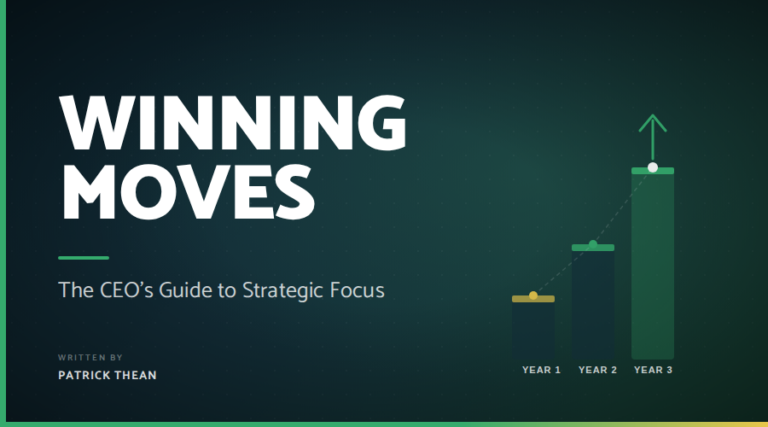
Winning Moves: The CEO’s Guide to Strategic Focus
The Trap of Trying To Do Everything
A few years ago, I was sitting across from a CEO who had just wrapped up his annual planning session. His team had worked hard; they had goals everywhere, color-coded spreadsheets, sticky notes on whiteboards, a long list of initiatives. He leaned back and said, “Patrick, I feel like we’re doing everything. And yet, I feel like we’re going nowhere.”
I’ve heard some version of that sentence more times than I can count.
Having a lot of goals is not the same as having the right goals. Busyness is not progressing, and when you try to move everything at once, you often end up moving nothing at all.
That’s where Winning Moves come in.
What Is a Winning Move?
A Winning Move is not an incremental improvement. It’s not a tweak to a process or a modest bump in efficiency. A Winning Move is a strategic bet, a 3-to-5-year initiative with the genuine potential to double your revenue.
I wrote about this in depth in Chapter 2 of my book Rhythm: How to Achieve Breakthrough Execution and Accelerate Growth. The idea is simple: rather than spreading your energy across dozens of priorities, you identify 2-3 big moves that could fundamentally change the trajectory of your business. These are the ideas that make your team’s eyes light up: a new market, a new product line, a new model that unlocks growth you can’t achieve by just running your existing business harder.
The key is to be selective. Most companies I work with start out thinking they have 6, 7, maybe 8 potential Winning Moves. But you can’t execute them all well. The discipline is to evaluate each idea honestly: What’s the revenue impact? Does our team have the capability to actually execute this? Two or three strong Winning Moves, properly resourced and relentlessly executed, will outperform a list of ten every single time.
Setting Goals That Actually Move the Needle
Here’s where goal-setting gets interesting. Most people approach goals from the bottom up; they look at what they did last year and add a percentage. That’s operational thinking, not strategic thinking.
Winning Moves require you to flip the lens. You start with the future you want to create, your BHAG, your 3-to-5-year targets, and then work backward. What would have to be true to get there? What moves would have to succeed? That’s how you set goals that are genuinely connected to strategy, not just numbers pulled from last year’s actuals.
This is the heart of the Think Plan Do® framework: Think about where you want to go, Plan the moves that will get you there, and Do the work with accountability and rhythm.
One of the most powerful things you can do during your Annual Planning session is to carve out dedicated time, at least a full day, for strategic thinking. Not just reviewing last year’s numbers or allocating budget, but genuinely asking: What are the 2-3 moves that could change everything?
Testing Your Assumptions Before You’re All-In
One mistake I see often is treating a Winning Move like a finished strategy from day one. It’s not; it’s a hypothesis.
When you first identify a potential Winning Move, you’re really saying, “We believe this could double our revenue if these assumptions are true.” Your job in year one is to test those assumptions, to gather data, run small experiments, talk to customers, and find out if the premise holds up. This is why the Winning Moves process includes explicit assumption tracking. You’re not committing to a 3-year execution plan before you’ve pressure-tested the idea.
I’ve seen companies avoid enormous mistakes, years wasted, capital burned because they built this test-and-learn discipline into their strategic process. And I’ve seen others charge ahead without it, only to discover 18 months in that a core assumption was wrong.
Be curious, be rigorous before you go all-in, and make sure the foundation is solid.
From Strategy to Execution: The Quarterly Bridge
Identifying your Winning Moves is the strategy. Executing them is everything else.
This is where a lot of companies break down. They have a beautiful annual plan, great Winning Moves, clear targets, and then they return to the office on Monday and get back to the urgent. Six months later, nothing has actually moved.
The bridge between your annual strategy and your daily work is the quarterly plan. Every 90 days, your team should ask: What are the 3-5 priorities this quarter that will actually advance our Winning Moves? Who owns each one? How will we know if we’re on track?
Execution Is the Ultimate Competitive Advantage
Over the past two decades, I’ve worked with hundreds of leadership teams, and I’ve noticed a pattern. The companies that grow the fastest aren’t necessarily the ones with the smartest strategies. They’re the ones with the clearest priorities and the discipline to execute them.
Winning Moves force leaders to make choices, they create focus, and align resources to help leadership teams stop chasing dozens of good ideas so they can fully commit to the few initiatives that will create meaningful impact.
If your strategic plan feels more like a wish list than a roadmap, take a step back and ask a simple question:
What are the three to five moves that would most dramatically change the trajectory of our business over the next three to five years?
That’s where strategy becomes actionable.
To help you identify your own Winning Moves, explore our 3-5 Year Strategic Planning resources and learn how high-growth leadership teams create clarity, alignment, and focus around what matters most.
Start here: Winning Moves Strategic Planning Resources
Because growth doesn’t come from doing more things. It comes from making the right moves and executing them well.
—Patrick Thean
How to Write a Successful Business Book: Part II
10 New Lessons for Writing a Best-Selling Business Book in the Age of AI
Two years ago, I wrote an article for Startup Club called “10 Secrets to Writing a Best-Selling Non-Fiction Business Book.”
That article hit #1 on Google for the search term “How to write a best selling business book,” and it has stayed there ever since.
So I thought it was time for Part II.
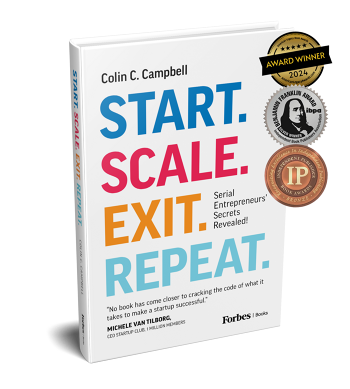
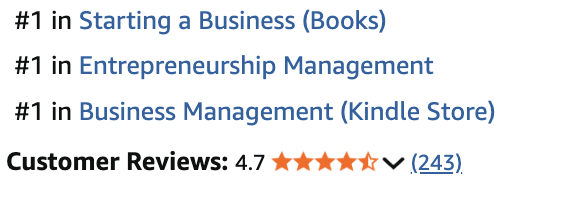
The first article was written after the launch of Start. Scale. Exit. Repeat., my first book. Since then, the book has become a #1 Amazon best seller in 15 categories, won more than 40 global awards and recognitions, and at the time of writing this article we #1 on Amazon in the categories “Starting a Business” and “Entrepreneurship Management” two and a half years after launch.
Not bad for someone whose English teacher would probably still be shocked.
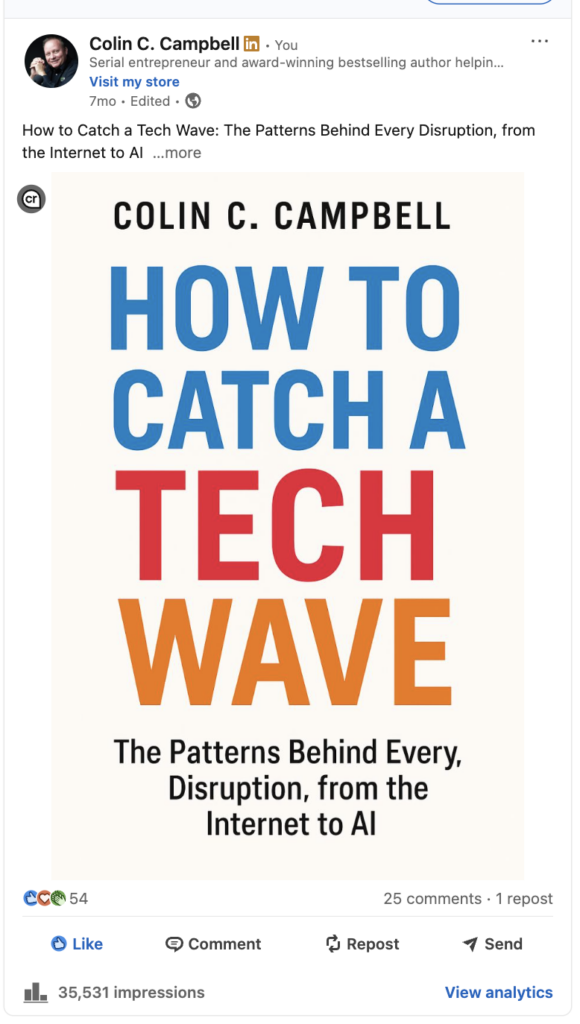
I am now working on my second book, How to Catch the Next Tech Wave: Patterns Behind Every Disruption, From the Internet to AI. As I go through the process again, I am realizing how much more I have learned, especially in a world where artificial intelligence has changed how people write, publish, market, and consume content.
Before I get into the new lessons, here is a quick summary of the first article.
The first article started with the most important question: why are you writing the book?
A great business book is not really about the author. It is about the reader. The reader wants to know how the book will help them, change them, guide them, or give them a framework they can use.
I also talked about the importance of choosing the right publisher, creating a powerful first impression with the cover, designing the inside of the book to match the promise on the outside, and writing in a way that busy people can actually consume.
Short sentences.
Short paragraphs.
Short chapters. In fact, Start. Scale. Exit. Repeat. has 78 chapters.
No walls of text. No lectures disguised as wisdom.
The article also covered the importance of authenticity, a strong launch, ongoing promotion, awards, reviews, and the long-term flywheel that begins after the book is published. Writing the book is not the finish line. It is the starting line. You might want to check this article out first before reading this one.
Two years later, here are 10 more lessons I wish I had known before writing, launching, and promoting a business book.
1. Make the Content Real
AI is tempting.
It can help you brainstorm, critique, organize, tighten, and improve your writing. Used properly, it can make a good idea stronger.
But AI should not replace the soul of the book.
The raw material still must come from you. Your experience. Your failures. Your scars. Your insights. Your content has to be “Raw and Real”. Your strange little stories that somehow make a business lesson unforgettable.
That is the difference between a book that sounds polished and a book that means something.
When I write, I start with my own thoughts first. I get the ideas down in my own voice. Then I may use AI to help critique it. That is a very different thing from asking AI to create the heart of the book. Note: in the case of my book, zero AI was used and thankfully I had great human editors at Forbes Books.
Readers can feel the difference.
A meaningful business book has to come from a real place. It has to reflect something you lived, learned, struggled with, or earned the hard way.
2. Your Name on the Cover Matters More Than You Think
In the first article, I talked about how important the title and cover are.
Since then, I learned something interesting at a publishing conference: do not make your name too small.
Many first-time authors are modest. They shrink their name on the cover because they do not want to look arrogant. I am Canadian and trust me we make an art of modesty. That is not a strategy when writing and launching a new book.
That may feel humble, but it can also send the wrong message.
A larger author name can create confidence. It tells the reader, “This person stands behind this work.” It gives the book a stronger presence. I was pretty modest with my name on the first book, but you can see from the cover draft above that I am not going to hide, but show it off with pride and confidence.
The title still matters. The design still matters. But do not hide from the cover. If you believe in the book, put your name on it like you mean it.
3. Design Your Book for the Real Buyer
At that same conference, I heard something else that caught my attention: women buy a significant majority of books.
NielsenIQ’s UK Books & Consumers data has reported that women bought 59% of all books, 58% of print books, and 65% of ebooks.
That matters.
Too many business books are designed as if the only reader is a man in a navy suit standing in front of a glass office building, holding a coffee and pretending he is not exhausted.
Business books do not have to feel cold, aggressive, or overly masculine.
With Start. Scale. Exit. Repeat., I got lucky. I didn’t plan it but my team included multiple women involved in the project before publication, including work on images, design, and production. The book was built to feel approachable, clear, visual, and useful. And they made certain the book appealed to women.
And it worked.
Based on Google data, almost 50% of our readers appear to be women. For a business book, I think that is meaningful.
Entrepreneurship is not a male category. Startups are not a male category. Business books should not be either.
4. Awards Help, But Not the Way You Think
Start. Scale. Exit. Repeat. has now won more than 40 global awards and recognitions. More awards than any other book on entrepreneurship ever.
That sounds impressive.
But here is the truth: awards do not magically open the floodgates.
You do not win an award and suddenly wake up to thousands of orders, a documentary crew on your lawn, and Oprah calling while you are brushing your teeth.
Awards help because they build trust.
They are social proof. They matter on your Amazon listing. They matter when someone is deciding whether your book is credible. They matter when you are pitching yourself for podcasts, speaking events, media, or partnerships.
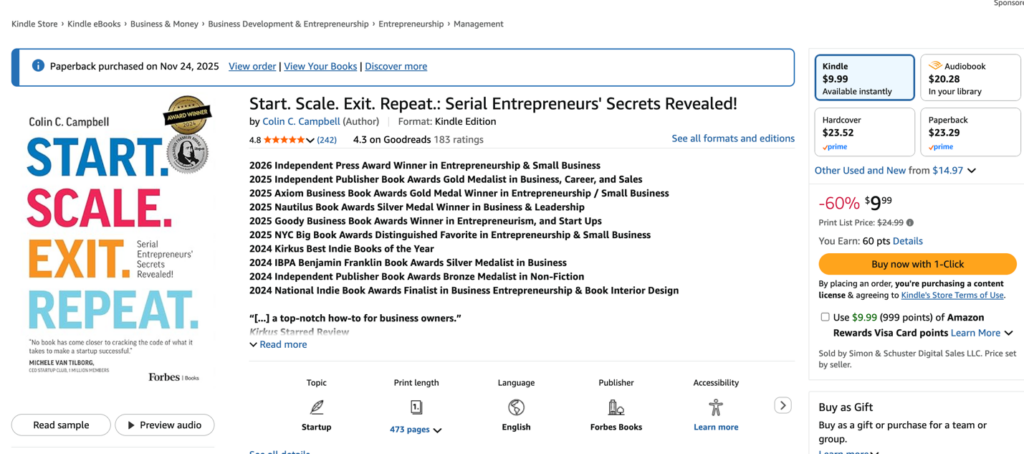
Awards are not the engine. They are fuel for the engine.
If your book is genuinely strong, apply for awards. But do not expect the award alone to do the work. But let me be clear here….your book has to be great! It has to hit 4.7 or higher on Amazon. Investing in applying for awards will not win you awards…these are real judges with awards that have reputations and some of them are well recognized. They do not hand out awards because you simply pay an application fee. If you have a good book, promote it and apply for every award you can.
5. Reviews Are Still the Currency That Matters
If awards are social proof, reviews are the oxygen.

Getting people to review your book is ridiculously hard. People will read the book, love the book, tell you it changed their thinking, send you a beautiful LinkedIn message, and then somehow vanish into the wilderness the moment you ask for an Amazon review.
Ask anyway.
When you appear on podcasts, ask for reviews.
When you speak at events, ask for reviews.
When readers message you, thank them and ask for a review.
When other authors support you, support them back.
At one recent book awards event, I bought three books from other authors. I read them. Then I reviewed each one on Amazon. Other authors have done the same for me.
That is one of the unexpected things I have learned: independent authors can become a real community. Help them. Review them. Connect with them. Promote the good ones.
The book world works better when authors support each other.
And if you love this article, please buy the book and see what makes it so great. And I would be honored if you reviewed the book.
No, I mean review the book.
Seriously, I am not joking…..review the book.
Ok this is the last time I am asking: will you damn well review the book!
6. BookBub Can Move the Needle
I have been impressed with BookBub.
We have been listed on their site three times over the last three years, and each time, the book popped up on the charts.
That does not mean BookBub is a magic machine. Nothing is. But it can be a powerful promotion tool, especially if your book already has strong reviews, a professional listing, and a clear audience. And they are extremely selective. A Forbes Books person working with me told me that only a handful of books in her career had gotten chosen to be listed on it and we got chosen 3 times. The book has to be great, has to have momentum and reviews…and maybe, just maybe they might list it.
The bigger lesson is this: keep testing channels.
Amazon ads. Podcasts. Newsletters. BookBub. Articles. Speaking events. Guest posts. LinkedIn. Awards. Media. Partnerships.
Not every channel will work. But some will.
And when something works, repeat it.
7. The Biggest Value May Not Come From Book Sales
Most authors do not make their real money from royalties.
That does not mean the book is not valuable.
For me, one of the biggest rewards is when someone sends me a LinkedIn message telling me the book made an impact in their life or business.
Beyond the personal impact, the book has created business opportunities I never expected.
One example came from another author who asked me to pre-read and critique his book. That relationship eventually led to an invitation to his home in Whistler. Today, one of my companies is working with his firm, and that relationship could lead to a major sale of one of my businesses creating millions of dollars in value. You never know where your book will lead you.
That did not happen because of royalties.
It happened because the book created trust.
A strong business book can become a door opener. It can create relationships, credibility, partnerships, speaking opportunities, consulting opportunities, investment opportunities, and even exits.
The book is not just a product.
It is a platform.
8. Podcasts and Articles Still Work
Podcasts are one of the best free marketing tools available to authors.
Most podcast hosts are looking for guests with a clear point of view, a strong story, and something useful for their audience. A good business book gives you all three.
But do not stop at podcasts.
Write articles. Comment on current issues. Share lessons. Build your voice in public.
I joined Forbes Council, which has a small fee, and that has allowed me to comment on business issues and publish my own articles. I also write for Entrepreneur magazine.
And, of course, I write for Startup Club.
If you are an entrepreneur, author, investor, or founder with a useful lesson to share, Startup.club is looking for contributors and guest speakers. Write something real, practical, and specific. That is what performs. And it costs you nothing.
And Startup.club articles can perform very well in SEO, as my first article proved.
Just remember: write something real.
9. Use AI to Launch and Promote, Not to Fake Expertise
Many authors have mixed feelings about AI.
I understand that.
Writers spend years building a voice, a point of view, and a body of knowledge. It took me 10 years to write my book. Thanks to my extensive travel and a lot of late-night flights, we finally got it done.
Then AI arrives and suddenly everyone thinks they can “write a book” in a weekend.
They cannot.
They can generate a manuscript-shaped object. That is not the same thing.
But AI can be incredibly useful if you use it the right way.
You can use AI to help identify awards and application deadlines.
You can use it to compare promotion options.
You can use it to think through Amazon ads, Google ads, podcast outreach, book positioning, audience segments, and launch strategy.
I once had two award ceremonies on the same weekend, one in New York and one in Las Vegas. I used AI to help me think through the decision. It did not make the decision for me, but it helped organize the tradeoffs.
I also use ChatGPT voice in the background when I am doing new things. It is like having a research assistant nearby.
I also created a custom GPT for Start. Scale. Exit. Repeat. by uploading the book and allowing members to ask questions about it. If you go to Startup.club and click on AI…..it’s all about my book and that tool helps readers explore the ideas in the book, and it even helps me quickly find references when I am preparing for a podcast, article, or speech.
That is a smart use of AI.
The goal is not to replace your thinking.
The goal is to extend it.
10. Make the Book Easy for the Reader
The first article started with a simple idea: it is all about the reader, not the author.
I believe that even more now.
Everything in the book should serve the reader and a good book actually changes something in their life. They might get one good idea and run with it that makes them money or changes them for the better.
The structure. The chapter length. The stories. The illustrations. The callouts. The examples. The design. All should be done with the reader in mind.
In Start. Scale. Exit. Repeat., we used very short paragraphs and short chapters. The book has 78 chapters. We included personal stories and interviewed dozens of entrepreneurs about their own experiences. We used more than 60 hand-drawn images and over 100 callouts.
Why?
Because the goal was to make the book easy to consume.
A year after one of my speeches, someone came up to me and said they remembered a story I told about the first night after selling my first company.
They remembered the story.
That is how people learn.
They do not remember lectures. They remember moments. They remember stories. They remember how the lesson made them feel.
Then, if you do your job well, they remember the principle behind the story.
A great business book is not just information.
It is information made memorable.
Final Thought: The Book Is Only the Beginning
Writing a book is personal.
The best authors put something real on the page. They are vulnerable. They share what worked, what failed, and what hurt. They tell the truth in a way that helps someone else move forward.
That is what makes a business book matter.
Not the ranking.
Not the awards.
Not the launch party.
Not even the sales.
Those things matter, but they are not the point.
The point is impact.
If your book helps one entrepreneur avoid a painful mistake, make a better decision, raise capital, build a stronger company, or keep going when they are ready to quit, then the book has value.
If it also builds your credibility, creates opportunities, opens doors, and helps your business, even better.
That is the power of a great business book.
It can help the reader.
It can help the author.
And sometimes, if the book is good enough, it can keep working for years after you write it.
🚀The Leadership Skills That Separate Founders Who Scale with Parker McCumber
🚀The Leadership Skills That Separate Founders Who Scale
Most entrepreneurs know how to start. Far fewer know how to lead as the company grows. U.S. Army National Guard Captain, entrepreneur, and author Parker McCumber joins the Serial Entrepreneur Podcast to discuss disciplined leadership, delegation, building self-reliant teams, and the mindset required to scale without becoming the bottleneck.
https://www.clubhouse.com/i/the-leadership-skills-that-separate-founders-who-scale/JGYXucyK
Why Most Entrepreneurs Fail at the Exit
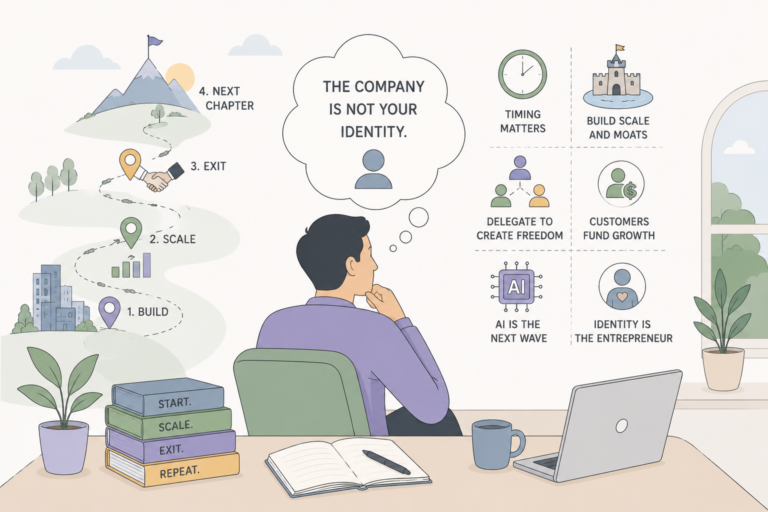
Colin C. Campbell on founder identity, timing the market, and the biggest mistake entrepreneurs make after success
This article is based on a conversation between Lee Benson and Colin C. Campbell on the Show Your Value podcast.
Most entrepreneurs don’t fail because they can’t build a company. They fail because they don’t know who they are without one.
That observation stopped the conversation cold.
During a wide-ranging discussion on entrepreneurship, exits, AI, leadership, and mental health on Lee Benson’s Show Your Value Podcast Colin C. Campbell shared one lesson that has followed him through decades of building and selling companies:
The company is not your identity.
For founders, that sounds simple.
In practice, it’s one of the hardest lessons in entrepreneurship.
Colin knows because he’s lived both sides of it.
He helped build one of Canada’s largest internet service providers during the first internet boom. He watched the company soar in value. Then he watched nearly all of that wealth disappear during the dot-com crash.
Years later, he would go on to build and exit multiple successful companies, documenting the lessons in his bestselling book Start. Scale. Exit. Repeat.
What emerged during his conversation with Lee Benson wasn’t a discussion about startup tactics.
It was a discussion about timing, identity, and how entrepreneurs can build companies that survive beyond the founder.
Timing Matters More Than Most Founders Think
One of Colin’s most painful lessons came from getting the exit wrong.
He spent nearly a decade building a company and only weeks watching the outcome unravel during the dot-com collapse.
That experience permanently changed how he thinks about exits.
Today, Startup Club tracks what Colin calls the “Time to Sell Index,” a measure designed to track liquidity and acquisition conditions across startup markets.
His view is straightforward.
Markets move in cycles.
Liquidity expands.
Liquidity contracts.
Founders who ignore those cycles often mistake favorable market conditions for operational brilliance.
“When things get frothy, it’s time to exit stage left.”
It’s not pessimism.
It’s pattern recognition.
Scale and Moats Beat Great Ideas
Colin believes most founders ask the wrong question when evaluating opportunities.
They ask whether an idea is good.
They should be asking whether it scales.
The second question is equally important.
Can it be protected?
Throughout the discussion, Colin repeatedly returned to two concepts:
Scalability.
Moats.
Without scalability, growth becomes expensive.
Without a moat, success attracts competition.
The strongest businesses combine both.
That’s where outsized exits are created.
Most Founders Never Learn to Let Go
Lee Benson and Colin C. Campbell found common ground around one challenge that stalls almost every growing company.
Delegation.
Early-stage founders naturally delegate tasks.
Scaling founders learn to delegate responsibilities.
Elite founders eventually delegate entire business units.
That shift sounds obvious.
It’s not.
Colin argued that the inability to make this transition is one of the primary reasons so few companies successfully scale.
Founders become the bottleneck.
The company becomes dependent on them.
Growth slows.
The entrepreneur becomes trapped inside the business they built to create freedom.
Customer Money Is Usually Better Than Investor Money
One of the most surprising moments in the conversation came when Colin challenged conventional startup wisdom.
Ninety percent of Inc. 5000 companies never raised venture capital.
Yet founders often obsess over fundraising.
Colin’s preference is simple.
Get customers to fund growth whenever possible.
Customer-funded growth creates discipline.
It avoids dilution.
And it forces founders to solve real market problems instead of investor narratives.
The goal isn’t to avoid capital.
The goal is to understand that capital isn’t validation.
Customers are.
AI Is Creating the Largest Opportunity of Our Lifetime
Colin has lived through multiple technology waves.
The internet.
Broadband.
Social media.
Mobile.
His belief is that AI will dwarf them all.
Throughout the interview, he described how AI agents are already replacing repetitive operational work across his portfolio companies.
But his message wasn’t about replacing people.
It was about changing how entrepreneurs think.
The founders who win over the next decade won’t necessarily be the most technical.
They’ll be the most adaptable.
They’ll develop what Campbell calls an AI mindset.
A constant willingness to ask:
Why am I still doing this manually?
The Company Is Not Your Identity
The conversation ultimately returned to the topic that opened the episode.
Identity.
Colin has seen founders achieve life-changing exits only to struggle afterward.
Not because they lacked money.
Because they lost the role that defined them.
His advice is simple.
Stop identifying as the CEO.
Start identifying as the entrepreneur.
Entrepreneurship is the craft.
The company is just the current project.
That’s a subtle distinction.
But for many founders, it can make the difference between one successful company and a lifetime of creating value.
As Lee noted during the conversation, value creation doesn’t disappear when a business is sold.
The opportunity simply takes a new form.
And for entrepreneurs willing to keep learning, adapting, and building, the next chapter is often the most exciting one yet.
The Agentic Mindset: 50 Ways AI Agents Can Automate Your Business

We recently hired 19 new agents at Paw.com and completely automated our accounting and logistic systems.
The crazy part isn’t that we automated it. It’s that we made it better.
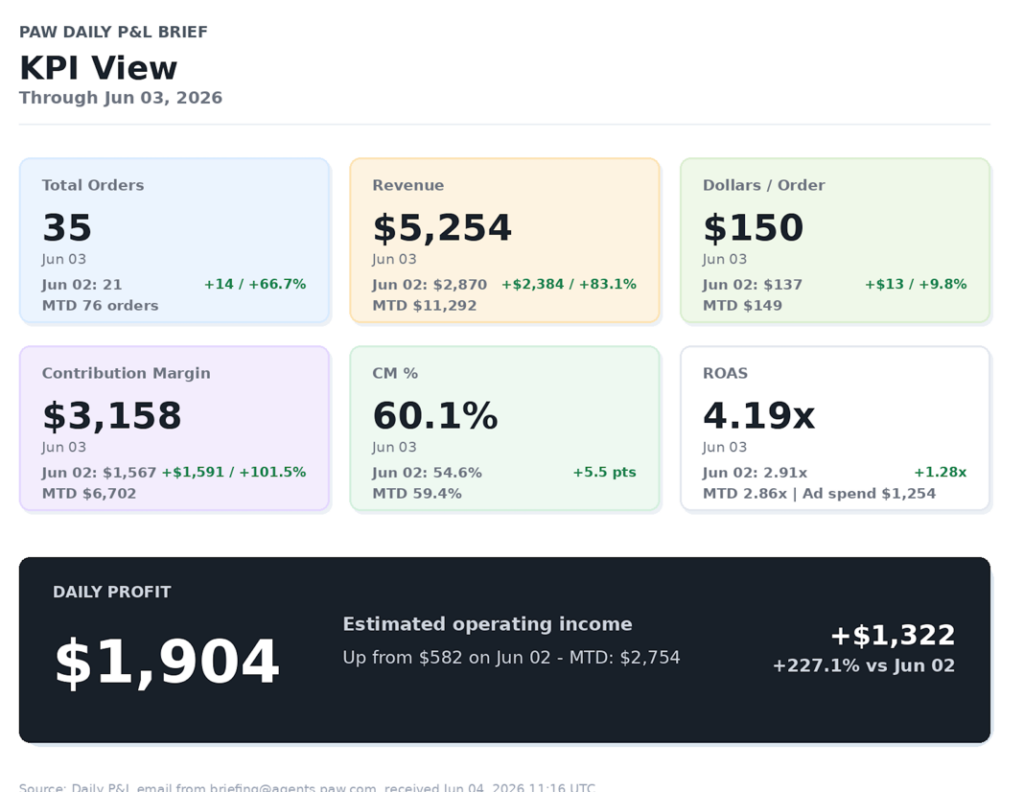
Every morning I now receive a detailed performance report. Revenue, expenses, cash flow, key metrics, inventory updates etc. Delivered like clockwork before I even start my day. More consistent, more detailed, and more actionable than what we had before.
A while back, I wrote an article on Startup Club about developing an AI mindset.
The idea was simple: whenever you encounter a problem, ask yourself, “Can AI help solve this?”
If you have an idea for a new app, use AI to build a prototype. If you’re writing content, use AI to help edit and improve it. If you want to amplify your message, use AI to repurpose and distribute it.
I’m a strong believer that the original ideas, stories, and experiences should come from humans. AI should enhance the content, not replace it.
This article is a perfect example. Every idea here is mine. I wrote everything and simply had AI help clean up the writing.
At LiveAtSea.com, we use AI to turn discussions from our Facebook community into articles. The content is authentic because it comes directly from real conversations. At Startup Club, we take Clubhouse discussions, create podcast episodes, generate transcripts, and transform those transcripts into articles that often rank on the first page of Google.
We’ve been using AI to make repetitive work easier for the last few years.
Now we’re taking it one step further.
Don’t just develop an AI mindset.
Develop an Agentic Mindset.
The Difference
An AI mindset asks: “Can AI help me do this?”
An agentic mindset asks: “Can an AI agent do this for me?”
That shift changes everything.
Last week I met with accountants who work with several companies in our incubator. They were adamant that we should avoid AI and continue doing everything manually to prevent mistakes.
I’ll admit, I got frustrated.
Not because they were worried about quality. That’s a legitimate concern.
What frustrated me was the assumption that manual work is automatically safer than automated work.
The reality is that humans make mistakes too. They get tired. They forget steps. They overlook details.
Well-designed AI agents don’t get distracted. They follow the process every time.
From Accounting to Lead Generation
Next, we turned our attention to lead generation.
My son runs a website focused on warehouse space in Ontario, Canada. Together, we built an agent that monitors daily Google Alerts for companies announcing expansions.
When the agent finds a potential opportunity, it:
- Researches the company
- Scores and prioritizes the opportunity
- Identifies the appropriate decision maker
- Finds contact information
- Drafts personalized email outreach
- Creates LinkedIn messages
- Sends outreach automatically
We added guardrails — limiting outreach to five of the best contacts per day and sending messages at randomized times during business hours.
The result is a prospecting system that works every day without anyone managing it manually.
And Then We Handed It the Ad Accounts
The same logic applies to advertising.
We’re now deploying agents that monitor Facebook and Google campaigns around the clock. They identify winning ads, test new creative variations, adjust budgets, and pause underperforming campaigns. Each morning, alongside the financial report, I get an advertising performance summary: what’s working, what was paused, and what needs a human decision.
The agent becomes your first line of optimization. You only get pulled in when something genuinely requires judgment.
Where to Start
At Paw.com we’re using OpenClaw. I’ve also built agents using ChatGPT and am currently deploying additional agents through Claude.
Some of these systems can seem intimidating at first. They’re not.
My advice: start with the Agent feature inside ChatGPT and automate one repetitive task in your business. Once you see what’s possible, you’ll never look at workflows the same way again.
To expand your integrations, consider connecting Zapier to Claude. Some of my team also prefer using n8n, as it provides more control and flexibility when building advanced automations, connecting different tools, and streamlining business processes. It can be especially useful when you need workflows that go beyond what standard integrations can easily handle.
Which brings me to my final point: don’t just adopt an agentic mindset for yourself. Instill that mindset throughout your organization.
I know this can feel uncomfortable. Many employees worry that by automating tasks and leveraging AI, they’re training their own replacement. That’s why it’s important to communicate the purpose clearly.
This isn’t about replacing people. It’s about freeing people from repetitive, low-value work so they can focus on higher-value activities that drive growth, innovation, and better customer experiences. The goal isn’t to eliminate jobs. The goal is to create more capacity, generate more business, and give your team the opportunity to make a greater impact.
The organizations that thrive in the years ahead won’t be the ones that simply adopt AI. They’ll be the ones that empower every employee to think and act more like an entrepreneur, using AI and automation as force multipliers.
Here is a list of 39 things we thought AI agents could do to help your business.
50 Things AI Agents Can Automate Right Now
Sales & Business Development
- Find and identify qualified leads
- Research prospects and companies
- Score and prioritize opportunities
- Send personalized outreach emails
- Follow up automatically with prospects
- Book meetings and demos
- Qualify leads before sales calls
- Update and maintain CRM records
- Generate proposals and sales presentations
- Create contracts and agreements
- Monitor contract renewal dates and trigger outreach
Marketing & Content Creation
- Create social media content
- Schedule and publish social media posts
- Repurpose and distribute content across platforms
- Write blog articles and thought leadership content
- Create and publish newsletters
- Optimize content for SEO
- Monitor competitors and summarize pricing or product changes
- Build market research reports
- Track brand mentions and flag reputation issues
- Translate and localize content for new markets
Advertising & Demand Generation
- Monitor Facebook, Google, and LinkedIn ad campaigns
- Test ad creatives, copy, and audience segments
- Adjust budgets and pause underperforming campaigns
- Generate daily, weekly, and monthly performance reports
Operations & Administration
- Manage email inboxes
- Schedule and coordinate calendars
- Capture meeting notes and summaries
- Track action items and follow-ups
- Create and update Standard Operating Procedures (SOPs)
- Manage projects and workflow tracking
- Process and route inbound applications, inquiries, or requests
- Build and maintain knowledge bases from customer interactions
Finance & Accounting
- Track expenses and manage bookkeeping
- Reconcile invoices against purchase orders
- Generate financial reports and dashboards
- Monitor inventory levels and trigger reorders
Human Resources & Talent
- Source and recruit candidates
- Onboard new employees
Customer Service & Success
- Answer customer support inquiries 24/7
- Route support tickets to the right team
- Monitor customer sentiment and identify churn risks
Executive & Management Support
- Prepare meeting briefings and executive summaries
- Generate KPI dashboards and performance reports
Data & Analytics
- Monitor key metrics and alert teams to anomalies
- Consolidate data from multiple systems into a single report
Legal & Compliance
- Review contracts for key terms, risks, and obligations
E-Commerce & Revenue Optimization
- Monitor competitor pricing and market changes
- Recover abandoned carts and re-engage prospects
AI Leadership & Orchestration
- Deploy an Agent Boss: One AI agent to rule them all.
The simplest rule is this:
If a task is repetitive, digital, and follows a process, an AI agent can probably automate most of it.
The entrepreneurs who thrive over the next decade won’t necessarily be the ones who work the hardest. They’ll be the ones who build teams of AI agents that prospect, follow up, publish content, manage advertising, and keep their businesses moving forward around the clock.
Humans still own vision, relationships, creativity, and judgment.
The spreadsheets, reminders, reporting, bookkeeping, and repetitive workflows are finding a new owner.
Fable 5 Shutdown: Why Restricting Advanced AI Hurts Startups, Innovation, and America’s Competitive Edge
Last week, I used Anthropic’s Fable 5 AI model to accomplish something that would have cost me thousands of dollars just a few years ago.
In 2012, when I launched .CLUB, I paid approximately $17,500 to have a private placement memorandum (PPM) prepared for investors. It was a necessary expense and, at the time, there were few alternatives.
Last week, I created a new PPM for another startup using Fable 5.
I uploaded eleven legal documents, worked collaboratively with the AI through multiple rounds of analysis and refinement, and produced a final investor-ready PPM that was not only completed for a fraction of the cost, but was substantially better than what I received from traditional providers more than a decade ago.
The difference was remarkable.
What once required a team of expensive professionals and weeks of back-and-forth work was completed with a handful of AI credits and my own expertise as a founder.
For entrepreneurs, that is transformational.
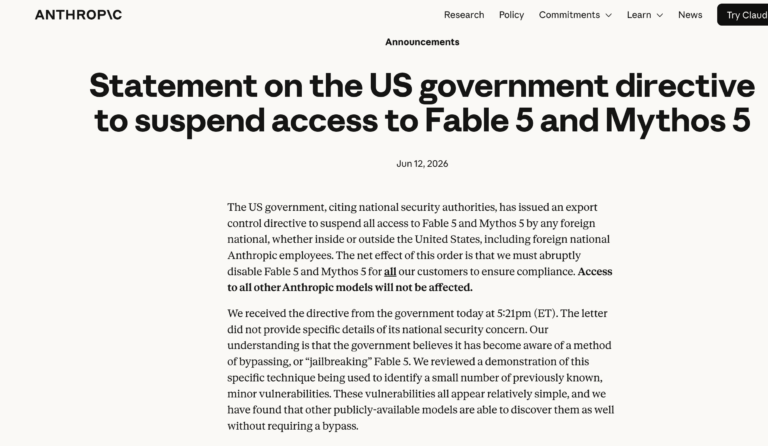
Which is why the recent suspension of Anthropic’s Fable 5 and Mythos 5 models should concern every startup founder in America.
A Tool Built for Builders
According to Anthropic, Fable 5 represents one of the most capable AI systems ever made available to the public. The company highlighted major advances in software engineering, scientific analysis, research, reasoning, and complex knowledge work.
For startup founders, these aren’t abstract technical improvements.
These capabilities directly reduce the cost of building companies.
They help entrepreneurs draft legal documents, analyze markets, write code, conduct research, prepare investor materials, and solve problems that previously required teams of specialists.
In other words, they level the playing field.
A first-time founder with a great idea but limited capital can now access capabilities that were previously available only to well-funded companies.
That is exactly the kind of democratization of opportunity that has historically fueled American entrepreneurship.
The Most Concerning Part: Even Anthropic Says the Response Is Excessive
Anthropic’s recent statement regarding the suspension raises important questions.
According to the company, the decision was driven by government concerns related to national security and export controls. Anthropic stated that it is actively working with government officials to restore access and emphasized that the issue involved a specific vulnerability rather than a broad failure of the model itself.
The company noted that Fable 5 underwent extensive safety testing before release and that it remains committed to making the technology available again as quickly as possible.
This distinction matters.
There is a significant difference between addressing a specific security concern and removing an entire class of technology from entrepreneurs, startups, researchers, and businesses.
Imagine discovering a security flaw in a new operating system and responding by shutting down access to computers altogether.
Most people would consider that an overreaction.
Yet that is effectively what has happened here.
The startup community had only begun to explore what Fable 5 could do before access disappeared.
The Dangerous Precedent
The real issue is not simply the loss of one AI model.
The real issue is the precedent.
Throughout American history, innovation has often arrived before society fully understood its implications.
The automobile disrupted transportation.
The airplane transformed travel.
The personal computer changed how we work.
The internet reshaped the global economy.
Each breakthrough created legitimate concerns and risks.
Yet America became the world’s innovation leader because we chose to adapt, compete, and improve rather than prohibit.
For more than 250 years, our nation’s success has been built on encouraging inventors, entrepreneurs, and builders to push boundaries.
That tradition made America the global leader in technology.
When government agencies move quickly to restrict access to breakthrough technologies, they risk undermining the very system that created our technological advantage in the first place.
Innovation requires experimentation.
Experimentation requires access.
Without access, there can be no innovation.
Startups Will Pay the Price
Large corporations can absorb regulatory uncertainty.
Startups cannot.
When a major technology platform disappears overnight, large companies have legal departments, compliance teams, and substantial resources to adapt.
Entrepreneurs do not.
Founders need certainty.
They need confidence that the tools they build their businesses around will remain available.
The concern is not just about Fable 5.
The concern is what comes next.
If breakthrough technologies can be removed from the market shortly after release, despite extensive testing and safeguards, entrepreneurs may hesitate to adopt future innovations. Investors may become more cautious. Startups may become less competitive.
And while America debates restrictions, competitors around the world will continue advancing.
Innovation rarely disappears.
It simply moves elsewhere.
National Security and Innovation Are Not Opposites
National security matters.
Responsible safeguards matter.
Every transformative technology requires thoughtful oversight.
But there is a difference between managing risk and restricting progress.
America’s greatest achievements have come from finding ways to lead innovation responsibly, not from stepping away from it.
The question policymakers should be asking is not how to slow down breakthrough technologies.
The question should be how to ensure America remains the best place in the world to build them.
As a founder, I don’t see Fable 5 as a threat.
I see it as one of the most important entrepreneurial tools ever created.
Last week, it helped me create a world-class private placement memorandum that would have cost tens of thousands of dollars just a few years ago.
Imagine what millions of entrepreneurs could build if they had continued access to that same capability.
America’s competitive advantage has never been fear of innovation.
It has always been our willingness to lead it.
Which is why it is particularly disappointing to witness this moment on the eve of America’s 250th anniversary.
For nearly two and a half centuries, our nation has been defined by inventors, entrepreneurs, risk-takers, and visionaries who embraced transformative technologies and built the future. From the telegraph to the airplane, from semiconductors to the internet, America didn’t become the world’s innovation leader by restricting breakthrough technologies. We became the leader by empowering builders to create them.
As we prepare to celebrate 250 years of American ingenuity, entrepreneurship, and technological leadership, it is sad to see a decision that risks sending us in the opposite direction.
The next generation of great American companies will be built with AI.
The question is whether they will be built here.
Sources
Anthropic Announcement: https://www.anthropic.com/news/claude-fable-5-mythos-5
Anthropic Access Update: https://www.anthropic.com/news/fable-mythos-access
What Happens when AI Agents can Replace Your Staff?
What Happens when AI Agents can Replace Your Staff?
https://www.clubhouse.com/i/what-happens-when-ai-agents-can-replace-your-staff/FVoWXgSQ