

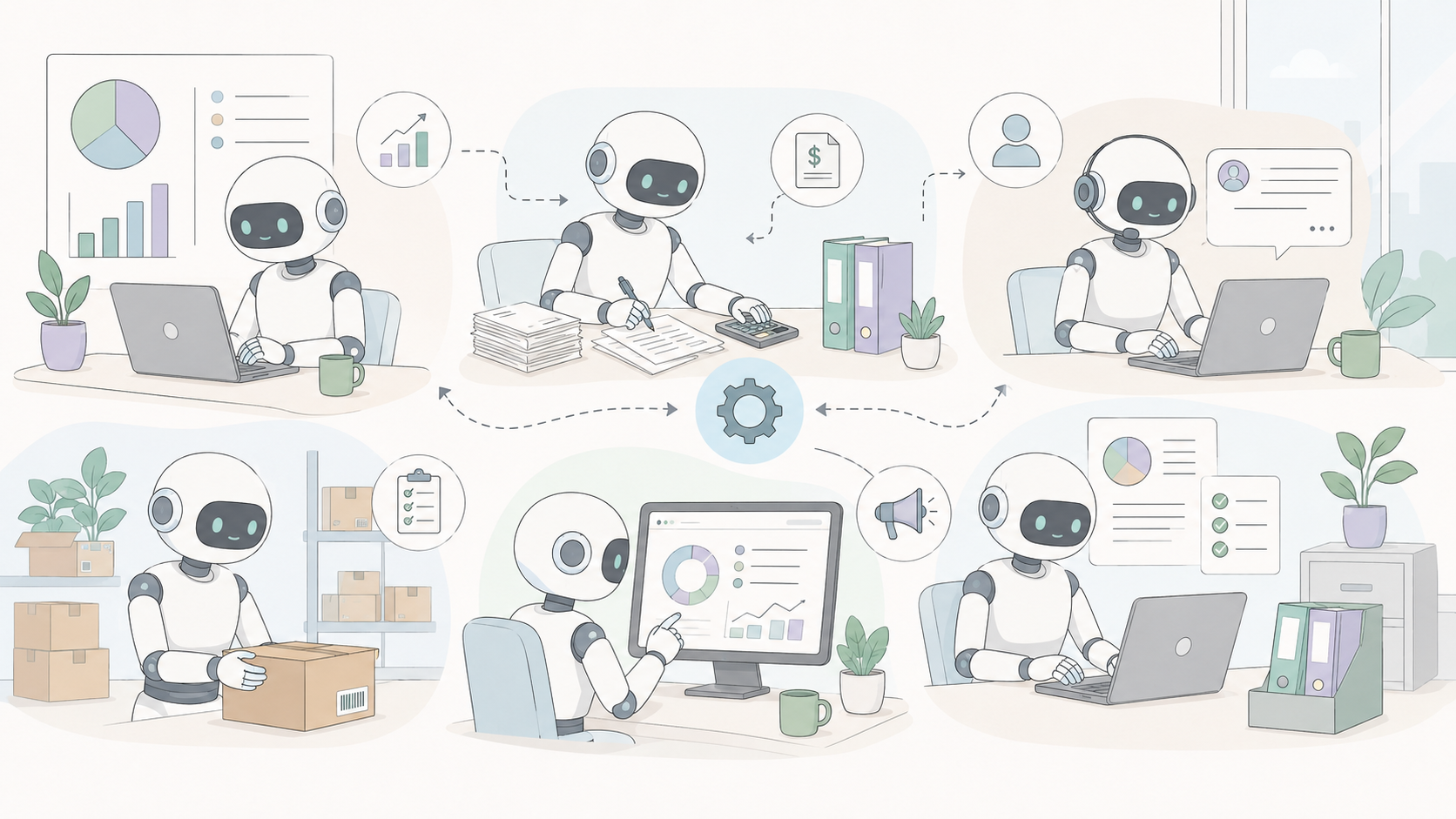

We recently hired 19 new agents at Paw.com and completely automated our accounting and logistic systems.
The crazy part isn’t that we automated it. It’s that we made it better.
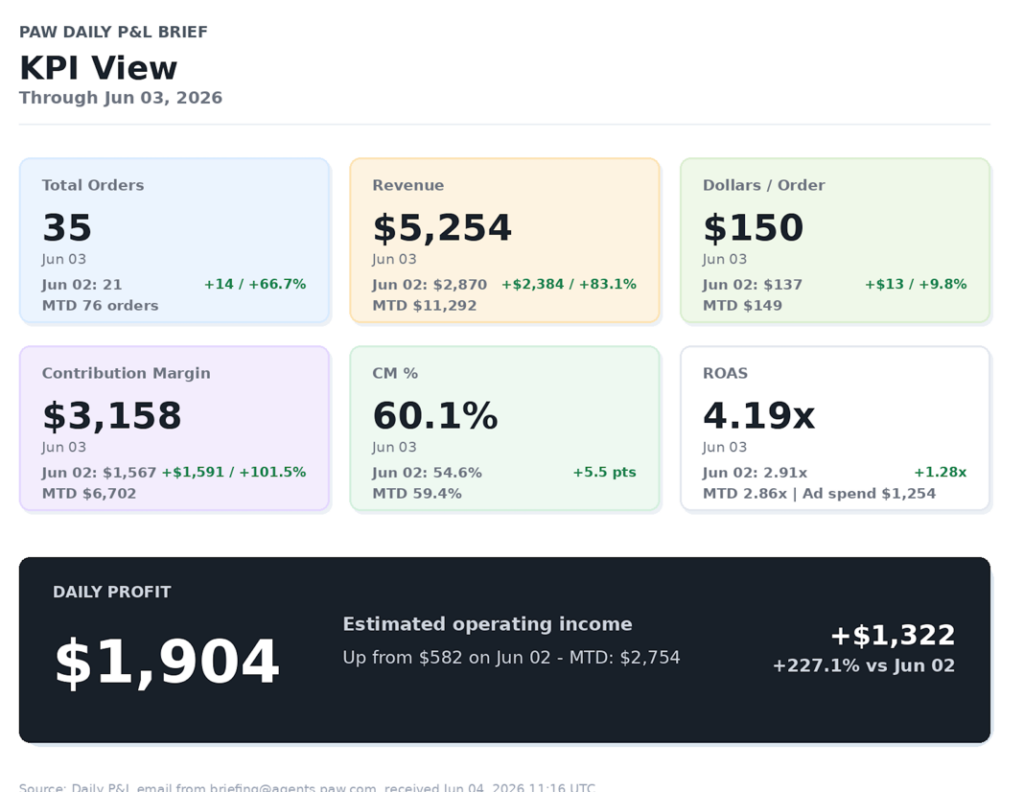
Every morning I now receive a detailed performance report. Revenue, expenses, cash flow, key metrics, inventory updates etc. Delivered like clockwork before I even start my day. More consistent, more detailed, and more actionable than what we had before.
A while back, I wrote an article on Startup Club about developing an AI mindset.
The idea was simple: whenever you encounter a problem, ask yourself, “Can AI help solve this?”
If you have an idea for a new app, use AI to build a prototype. If you’re writing content, use AI to help edit and improve it. If you want to amplify your message, use AI to repurpose and distribute it.
I’m a strong believer that the original ideas, stories, and experiences should come from humans. AI should enhance the content, not replace it.
This article is a perfect example. Every idea here is mine. I wrote everything and simply had AI help clean up the writing.
At LiveAtSea.com, we use AI to turn discussions from our Facebook community into articles. The content is authentic because it comes directly from real conversations. At Startup Club, we take Clubhouse discussions, create podcast episodes, generate transcripts, and transform those transcripts into articles that often rank on the first page of Google.
We’ve been using AI to make repetitive work easier for the last few years.
Now we’re taking it one step further.
Don’t just develop an AI mindset.
Develop an Agentic Mindset.
The Difference
An AI mindset asks: “Can AI help me do this?”
An agentic mindset asks: “Can an AI agent do this for me?”
That shift changes everything.
Last week I met with accountants who work with several companies in our incubator. They were adamant that we should avoid AI and continue doing everything manually to prevent mistakes.
I’ll admit, I got frustrated.
Not because they were worried about quality. That’s a legitimate concern.
What frustrated me was the assumption that manual work is automatically safer than automated work.
The reality is that humans make mistakes too. They get tired. They forget steps. They overlook details.
Well-designed AI agents don’t get distracted. They follow the process every time.
From Accounting to Lead Generation
Next, we turned our attention to lead generation.
My son runs a website focused on warehouse space in Ontario, Canada. Together, we built an agent that monitors daily Google Alerts for companies announcing expansions.
When the agent finds a potential opportunity, it:
- Researches the company
- Scores and prioritizes the opportunity
- Identifies the appropriate decision maker
- Finds contact information
- Drafts personalized email outreach
- Creates LinkedIn messages
- Sends outreach automatically
We added guardrails — limiting outreach to five of the best contacts per day and sending messages at randomized times during business hours.
The result is a prospecting system that works every day without anyone managing it manually.
And Then We Handed It the Ad Accounts
The same logic applies to advertising.
We’re now deploying agents that monitor Facebook and Google campaigns around the clock. They identify winning ads, test new creative variations, adjust budgets, and pause underperforming campaigns. Each morning, alongside the financial report, I get an advertising performance summary: what’s working, what was paused, and what needs a human decision.
The agent becomes your first line of optimization. You only get pulled in when something genuinely requires judgment.
Where to Start
At Paw.com we’re using OpenClaw. I’ve also built agents using ChatGPT and am currently deploying additional agents through Claude.
Some of these systems can seem intimidating at first. They’re not.
My advice: start with the Agent feature inside ChatGPT and automate one repetitive task in your business. Once you see what’s possible, you’ll never look at workflows the same way again.
To expand your integrations, consider connecting Zapier to Claude. Some of my team also prefer using n8n, as it provides more control and flexibility when building advanced automations, connecting different tools, and streamlining business processes. It can be especially useful when you need workflows that go beyond what standard integrations can easily handle.
Which brings me to my final point: don’t just adopt an agentic mindset for yourself. Instill that mindset throughout your organization.
I know this can feel uncomfortable. Many employees worry that by automating tasks and leveraging AI, they’re training their own replacement. That’s why it’s important to communicate the purpose clearly.
This isn’t about replacing people. It’s about freeing people from repetitive, low-value work so they can focus on higher-value activities that drive growth, innovation, and better customer experiences. The goal isn’t to eliminate jobs. The goal is to create more capacity, generate more business, and give your team the opportunity to make a greater impact.
The organizations that thrive in the years ahead won’t be the ones that simply adopt AI. They’ll be the ones that empower every employee to think and act more like an entrepreneur, using AI and automation as force multipliers.
Here is a list of 39 things we thought AI agents could do to help your business.
50 Things AI Agents Can Automate Right Now
Sales & Business Development
- Find and identify qualified leads
- Research prospects and companies
- Score and prioritize opportunities
- Send personalized outreach emails
- Follow up automatically with prospects
- Book meetings and demos
- Qualify leads before sales calls
- Update and maintain CRM records
- Generate proposals and sales presentations
- Create contracts and agreements
- Monitor contract renewal dates and trigger outreach
Marketing & Content Creation
- Create social media content
- Schedule and publish social media posts
- Repurpose and distribute content across platforms
- Write blog articles and thought leadership content
- Create and publish newsletters
- Optimize content for SEO
- Monitor competitors and summarize pricing or product changes
- Build market research reports
- Track brand mentions and flag reputation issues
- Translate and localize content for new markets
Advertising & Demand Generation
- Monitor Facebook, Google, and LinkedIn ad campaigns
- Test ad creatives, copy, and audience segments
- Adjust budgets and pause underperforming campaigns
- Generate daily, weekly, and monthly performance reports
Operations & Administration
- Manage email inboxes
- Schedule and coordinate calendars
- Capture meeting notes and summaries
- Track action items and follow-ups
- Create and update Standard Operating Procedures (SOPs)
- Manage projects and workflow tracking
- Process and route inbound applications, inquiries, or requests
- Build and maintain knowledge bases from customer interactions
Finance & Accounting
- Track expenses and manage bookkeeping
- Reconcile invoices against purchase orders
- Generate financial reports and dashboards
- Monitor inventory levels and trigger reorders
Human Resources & Talent
- Source and recruit candidates
- Onboard new employees
Customer Service & Success
- Answer customer support inquiries 24/7
- Route support tickets to the right team
- Monitor customer sentiment and identify churn risks
Executive & Management Support
- Prepare meeting briefings and executive summaries
- Generate KPI dashboards and performance reports
Data & Analytics
- Monitor key metrics and alert teams to anomalies
- Consolidate data from multiple systems into a single report
Legal & Compliance
- Review contracts for key terms, risks, and obligations
E-Commerce & Revenue Optimization
- Monitor competitor pricing and market changes
- Recover abandoned carts and re-engage prospects
AI Leadership & Orchestration
- Deploy an Agent Boss: One AI agent to rule them all.
The simplest rule is this:
If a task is repetitive, digital, and follows a process, an AI agent can probably automate most of it.
The entrepreneurs who thrive over the next decade won’t necessarily be the ones who work the hardest. They’ll be the ones who build teams of AI agents that prospect, follow up, publish content, manage advertising, and keep their businesses moving forward around the clock.
Humans still own vision, relationships, creativity, and judgment.
The spreadsheets, reminders, reporting, bookkeeping, and repetitive workflows are finding a new owner.