
Home Blog Page 142

Making Money with Clubhouse OpenMic

How can I make money on Clubhouse?

Since its launch, Clubhouse has become a phenomenon with its users and entrepreneurs alike. And now we are starting to see those users ask the question…’ how can I make money on Clubhouse’. In this week’s show, we will talk to a number of entrepreneurs that can show you some of the possible ways to make money on Clubhouse.

Authentic Conversations and Connections

One important aspect of using Clubhouse is that it provides a contextual conversation. As people talk on the platform, they can give you a pretty good summary of who they are through their own words. Each time someone shares on Clubhouse, they’re sharing something about themselves, about their values, and about their life. This provides an opportunity to have a more in-depth and meaningful conversation with them. Be a collector of stories. People will discuss their wants, needs, and wishes through this platform. These insights might provide the connection that could lead to potential monetization. Document their story and make sure to weave that into the conversation in DMs with somebody because it shows that you were listening.

Each time someone shares on Clubhouse, they’re sharing something about themselves, about their values, and about their life.

But don’t pitch yourself. Have a 10 to 15-second clubhouse pitch that will intrigue listeners. Something that will have them checking out your profile and maybe contacting you because they think you might be able to help or solve a related issue.

If you would like to meet a speaker and possibly make a connection, be the first one to the room when things are just getting started. An opportunity might present itself as the speaker takes stock of the room.

Monetization

Since Clubhouse is still in its’ infancy, the monetization side of the platform is just getting started. But there look to be many possible ways to make money on Clubhouse. Here are some of the suggestions from our entrepreneur guests.

  • Professional moderators As Clubhouse grows and so do audiences, professional moderators should be in good demand. Just like the panel moderator at a convention, the ability to set up, market, and moderate a panel of experts to an audience could be an important position.
  • Production Creativity Just like a radio show or convention panel, Clubhouse chats can benefit from creative expertise and assistance. Whether it’s audio engineers, producers, sound effects, logo designers, recording for your podcast, or production assistance, there are opportunities that will emerge.

And just like traditional and other social media, there are a number of possible business models that can work on Clubhouse as well. Such as Subscription models, sponsorships, membership fees, coaching, tips, grants, and direct selling when appropriate.

Listen to the full session above!

EP12: OpenMic: How to Make Money on Clubhouse

0

Sharing stories, building a brand, and making an income on the new audio-only social app with Adrian Chenault, founder of Contact Mapping

(Recorded live on Clubhouse April 30, 2021.) 

How can we make money on Clubhouse? Adrian Chenault, the Founder of Contact Mapping is aiming to help us humanize our ‘friend lists’ to grow and connect on the audio-only app in a meaningful way. We discuss methods to build authentic connections and networking opportunities that lead to  money and profit via Clubhouse. It’s all new and we’ll start the ongoing discussion to figure out what works today.

Moderators: Colin C. Campbell, Jeff Sass, Michele Van Tilborg

 Speaker: Adrian Chenault

Sign up to our email and never miss an update on our special events, guest speakers, and more: https://startup.club/

Launch Recurring Revenue – Income for Life!

Recurring revenue is a dream for many entrepreneurs. A subscription-based business can provide a lifelong income. But is your business right for this model, how long can it take to reach that goal and how do you reach it? These are some of the questions we will be discussing on today’s show with some experienced subscription model entrepreneurs.

The Model

Subscription-based business models aren’t new in fact they started in the 17th century with book and periodical subscriptions and newspapers have used this model for more than a century. But recently there has been an explosion of new businesses with this model whether that’s a monthly box subscription, a web-based software subscription, or your daily delivered meals. Now to find the right business you’ll want to look at industries that are static but could really use retooling especially if they could better help small businesses or consumers. Timing is also very important. You might have a great idea that will one day make a lot of money, but if you are too early and there isn’t a marketplace the business won’t survive.

It’s a marathon, not a sprint…

Building a subscription business is a long-term objective. You’ll need to find investors that are patient enough to achieve that objective because it will take five to seven years to get to profitability. You will lose money until you find the right formula to attract, acquire and retain customers. You will also need to make sure that your burn rate is right because if it’s too low then you aren’t going after enough customers and it will take much longer to become profitable.

Timing is also very important. You might have a great idea that will one day make a lot of money, but if you are too early and there isn’t a marketplace the business won’t survive.

The Right Customers

For subscription-based businesses, it’s all about the customer. Do your homework to identify your customer and the way they want your product or service. Pricing is an educational guess, but customers also want transparency in pricing and they want to know what they will get for their money. You need a gross profit margin and then you need to know how much it costs to acquire and retain customers. This will help you find your Ideal Customer Profile (ICP).

Listen to the full session above!

EP11: Launching a Recurring Revenue Business – Income for Life Discussion with Fintech Xendoo’s CEO Lil Roberts

0

Start earning a consistent income using recurring business models from subscriptions to memberships.

(Recorded live on Clubhouse April 26, 2021) 

Joining us to discuss SaaS platform and subscription space is Lil Roberts, the founder and CEO of Xendoo a leading SMB bookkeeping SaaS. We touched on key pricing and renewal considerations, along with best-practices when launching and operating  recurring income and SaaS businesses. She will talk about what to be prepared for as often these are capital intensive businesses that take time before blooming.

Moderators: Colin C. Campbell, Jeff Sass, Michele Van Tilborg

Speaker: Lil Roberts

Sign up to our email and never miss an update on our special events, guest speakers, and more: https://startup.club/

The Right Way and The Wrong Way to Exit Your Business

We welcomed long-time EO member and co-CEO of Herman ProAV, Jeffrey Wolf to the stage to talk about his experiences in exiting enterprise. We got down and dirty, talked through the “learnings” and failures, as well as the successes. 

Below find the highlights of our session with Jeffrey Wolf. You can also listen to the full session above!

This week’s show concentrated on the dos and don’ts for exiting your business with insights from a number of successful entrepreneurs.

For an entrepreneur, exiting your business can be an exciting and potentially nerve-wracking experience. With that in mind, here are some top-level things to consider when embarking on the exiting process.

Experts

Surround yourself with experts in things that are outside your wheelhouse. Hiring a banker, lawyer, or facilitator with a successful track record in concluding company sales should help with a smoother transition for everyone involved. The transaction details of a company sale take a lot of time and attention and that can distract an entrepreneur from the important day-to-day operations of their company. If you are focusing on the sale, you are most likely not focusing on the business and that can derail a sale.

Emotional Impact

There’s also an emotional impact when selling the company that you’ve put your heart and soul into and having outside help from experts that aren’t emotionally involved can keep the sale moving in the right direction. Having outside help to focus on the important details of the deal can potentially ease some of the emotional impacts that an entrepreneur and the company’s employees feel during this period of transition. It’s also helpful to be as honest as legally possible with your employees during this potentially stressful time. You want your employees focused on their jobs and not on what might happen after the sale.

Right Buyer

Moreover, finding the right buyer is also important when selling your company. If your company systems, culture, and employees don’t fit with a potential buyer, this can lead to difficulties when negotiating a sale. If a potential buyer shares your same or similar core values and also shows that they value your employees, this can result in higher value exits.

Relationships

In addition, when another company buys your company, they are also buying your relationship with your partners, customers, suppliers, and employees. So having solid and positive relationships across the board can be key to concluding a sale.

EP10: The Right Way and Wrong Way to Exit Your Business with Jeffrey Wolf

0

Herman ProAv, Co-CEO Jeffrey Wolf’s exit strategies to get what you want when transitioning to new owners

(Recorded live on Clubhouse April 16, 2021.)

Wolf shares what it takes to sell a company from an entrepreneur’s perspective as well post acquisition considerations. For him this was especially important given he wanted himself and the team to stay on and continue to grow the company with the new owner. We discuss the emotional impact of exiting for all employees, finding the right buyer, and what we’ve learned from making big mistakes. 

Moderators: Colin C. Campbell, Michele Van Tilborg, Rachael Lashbrook 

Speaker: Jeffrey Wolf

BusinessInsider.com: I used Clubhouse for the first time and enjoyed it way more than I thought I would — it’s easy to see why the app is expected to be valued at $4 billion

0

BY Katie Canales 

To read the full article head to BusinessInsider.com
Source: https://www.businessinsider.com/using-clubhouse-4-billion-valuation-audio-app-2021-4

by Katie Canales 

Clubhouse is one of those things I’ve kept at arm’s length for months — until now.

The invite-only social media app has attracted millions of users since its inception just a year ago, cementing itself as a Silicon Valley favorite. It’s also reportedly in talks for a funding round that values the company at $4 billion

When I finally decided to give it a try, I was surprised to find that it was strangely comforting to be peripherally part of a community while I was working and going about my day — and absent of a physical office with actual coworkers.

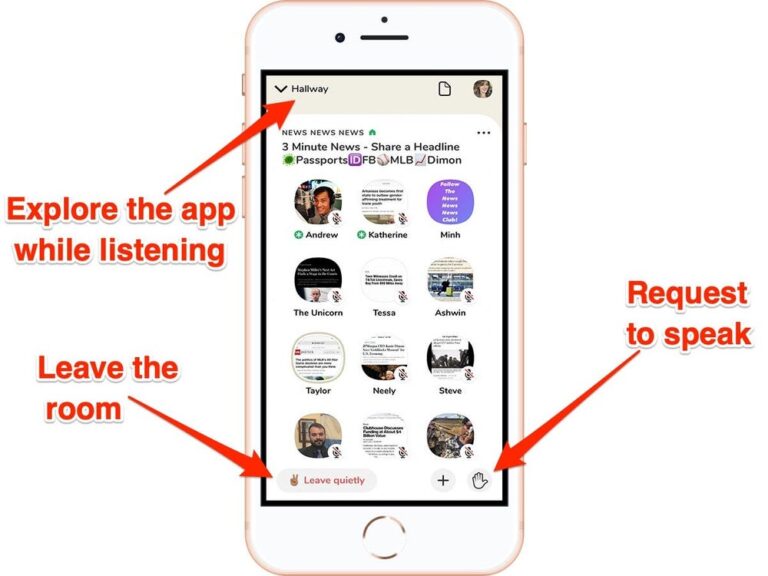
If you’re unfamiliar with the app like I was, here’s a basic rundown of what it’s like.

This is what your main “timeline” looks like in the Clubhouse app

clubhouse app walk through
The Clubhouse main timeline. 

It’s populated by rooms, or conversations, associated with the the people and clubs that you follow. Some of the topics I followed to inform the app of the kind of rooms I’d like were: television, storytelling, movies, current events, photography, wellness, meditation, AI, and startups.

I made sure to join one of the largest clubs on the app, Startup Club, with almost 450,000 members and followers. 

clubhouse app
The explore tab in the app. 

There were rooms about NFTs, bitcoin, news, meditation, founder advice, coding, Reiki healings, startups, wellness, history, and more than I would think possible. There’s also a button at the bottom of the screen to start …

To read the full article head to BusinessInsider.com
Source: https://www.businessinsider.com/using-clubhouse-4-billion-valuation-audio-app-2021-4

Scaling Up Your Business (OpenMic)

This week’s show continues our focus on the bestselling business author and last week’s guest, Verne Harnish. He is the author of Mastering the Rockefeller Habits and Scaling Up among others that you should definitely check out. 

Even though many entrepreneurs achieve their success based on “gut instincts”, it’s still important early on to put systems in place that can help the business to focus, maintain and grow in a way that’s measurable and actionable.

Accountability

The scaling-up process involves yearly and quarterly meetings as well as weekly meetings and daily huddles to monitor and direct progress as well as give employees the chance to get help and direction when facing obstacles.

Oftentimes startup entrepreneurs with small staff look at long-term processes as something that needs to be done later on, but that’s not really the case. Even if the staff is small, having measurable goals and strategies gives you the opportunity to meet and assess whether you are meeting, exceeding, or missing your goals. And as the company grows, this type of format can be used by teams and divisions to set their goals within a larger company setting.

The weekly meeting and daily huddle can be very powerful tools because it makes people accountable. There are goals and objectives assigned to people, those people are then responsible and take ownership of those tasks and those tasks are then assessed.

Delegation

At the beginning of a company, an entrepreneur may find themselves getting involved in all of the little details that it takes for a company to be successful. But at some point, an entrepreneur needs to start to let go and actually delegate responsibilities to other people on the team, which is great for the leader and it is also how you scale a company. You cannot scale a company as a solo entrepreneur, you will learn quickly that it takes a confident team who can take ownership of responsibilities and spearhead tasks.

Also, a company’s core values grow and mature over time, but they should always be an important part of the decision-making process. Keeping core values aligned with your brand and business will maintain the health and integrity of your business overtime.  By delegating responsibilities and tasks, you create leaders that can look at the company’s core values and feel confident in making decisions based on those values. 

Leadership

In order for an entrepreneur to be able to delegate items to a team, it’s really important early on to find managers that complement your weaknesses. You cannot do everything yourself. You have to learn to hire and build a team of people who are capable and trust them to do the jobs you’ve hired them to do.

You can listen to the full session above! Happy Reading & Happy Listening! 

EP09: Open Mic: Scaling Up with Verne Harnish

0

Hear the three crucial components needed to grow your business from entrepreneurial icon and EO founder Verne Harnish.

(Recorded live on Clubhouse on April 6, 2021.) 

Today, we’re picking it back up with Verne Harnish to highlight the three important foundation steps to put in place to support a business: accountability, delegation, and leadership. What to do when your “gut instinct” fails you, and the importance of having core values, getting internal influencers on board, and keeping it simple.

Moderators: Colin C. Campbell, Jeff Sass, Michele Van Tilborg

Speakers: Verne Harnish

Scaling Up With Verne Harnish

This week we welcomed Verne Harnish to the stage to talk about your business, scaling it up, and how to make it. 

From what I’ve gathered, just by listening to Verne speak and also from my observations here in the office with my team and CEO implementing Verne’s methodology, this man is next level pro. He’s kept it simple, made smart maneuvers, and probably most important for anyone and any business, he has kept it consistent. In my opinion, consistency is what makes or breaks most endeavors. 

If you have not yet experienced a presentation, video, or talk with Verne, then hopefully you glean from the recording that he is a seasoned and talented speaker. He is truly lovely to listen to and talk with, bringing a level of camaraderie, humanity, and relatability to his podium. I can’t help but to just nod enthusiastically in agreement as he offers incredible insight, pro-maneuvers, and hot tips along with just good ol’ practical and sage advice. Let’s dive in!

Listen to the full session above!

ProTips

1. Acquire or buy a company rather than build from scratch 

2. Balance feminine + masculine approach to business, especially in terminology and implementation

3. Own the word

4. Get influencers on board

5. Core Values – create a level playing field so that your team can make decisions and defend that decision against the core values. 

And so much more! We’re getting back in there next week with an OpenMic to talk with YOU our readers and listeners, about how you implement Scaling Up in your enterprise or how Verne’s methodologies have helped you along the way.