


I was seventeen when I arrived in NYC’s Port Authority on a Greyhound bus from Montreal, as an undocumented immigrant with no money and no education.
Twenty-four years later my company, The Art of Shaving, was acquired by a Fortune 25 corporation.
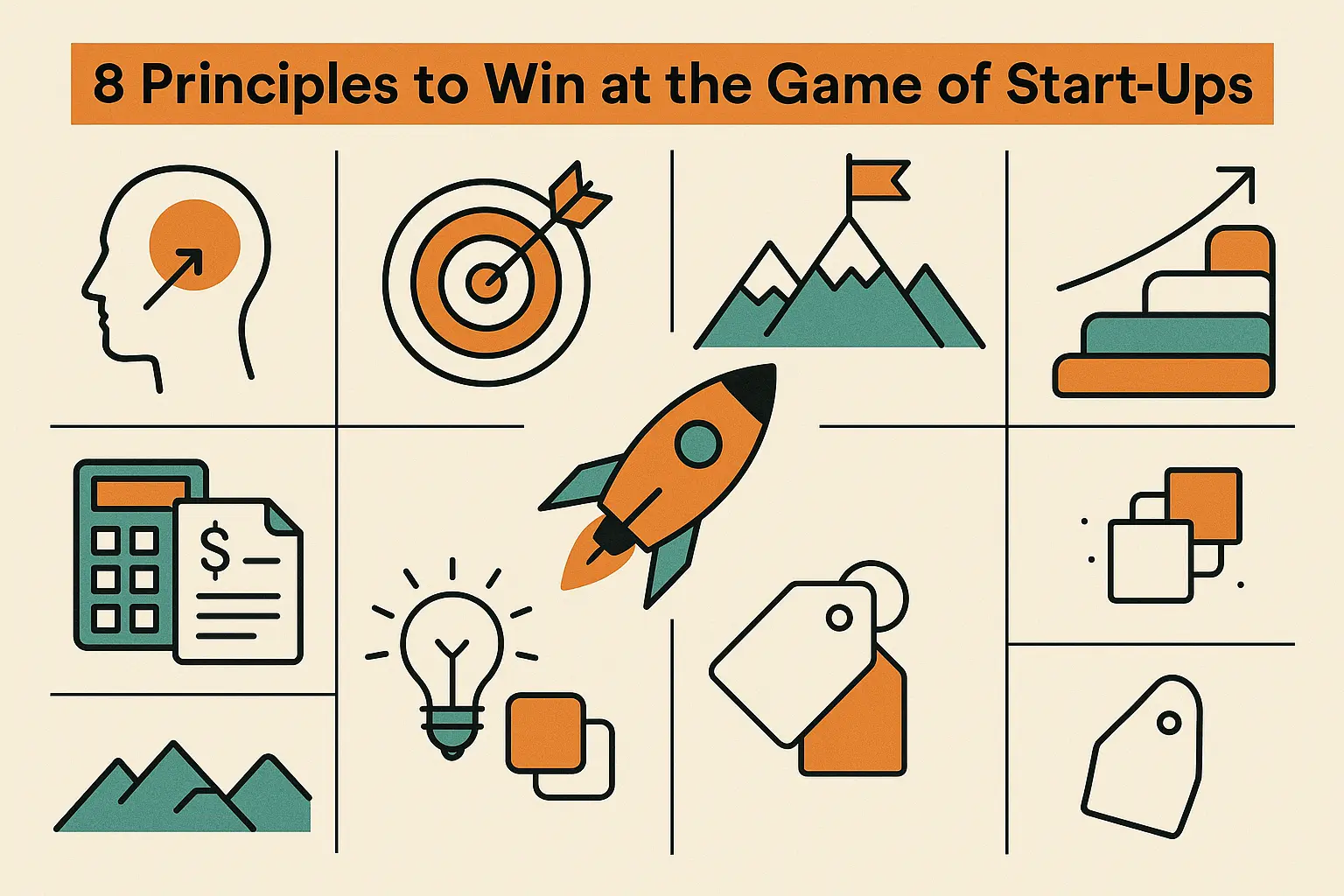
During my 40-year career, I’ve seen many smart, hardworking entrepreneurs start strong—only to stumble within the first five years. The truth is, the odds of entrepreneurial success are brutally low. Talent and effort alone aren’t enough. What makes the difference is avoiding the pitfalls that many founders fall into. That’s why I developed these 8 principles that took me from launching The Art of Shaving from kitchen table to strategic acquisition.
Principle #1: Mindset
Looking back, I realize our business success was in large part due to our mindset. Some aspects of that entrepreneurial mindset were forged through life experiences, while others were innate and sharpened over time. Here are the most important four pillars of mindset that shaped everything we did:
No Plan B – We were all in. Failure wasn’t an option because we had nothing to fall back on. We had no “work/life balance,” nor did we want any —we just focused 100% on our business.
Grit – Entrepreneurship is a marathon, not a sprint. My resilience was forged young—moving to a new country at a young age taught me how to adapt, endure, and keep going when things got tough.
Prudence – Prudence isn’t about avoiding risk. It’s about making smart decisions, learning from mistakes, and weighing risks carefully before moving forward.
Action – When we decided to sell our car and use the cash to open a store in NYC, we didn’t overthink it. Within three months, the doors were open. Action creates momentum. Momentum creates opportunity.
When you combine grit, prudence, and action, you don’t just get progress—you create your own “luck.” And if you ask any successful entrepreneur, they’ll admit luck always plays a role.
Principle 2: Execution is Everything
People often compliment me that The Art of Shaving was a brilliant idea. The truth? The idea was simple. I had seen many shops in London selling traditional shaving products with barber services in the back. I thought it could work in New York City. That was it.
The magic wasn’t in the idea—it was in our execution:
- Luxurious store design
- Premium natural shaving products
- Handcrafted shaving instruments
- Elevated barber spa services
- Great employees + culture
- Prime retail locations
- Well-run operations
Execution turned our idea into a household brand name. Most entrepreneurs get stuck in the idea phase. Don’t! Focus on whether you can execute it better than anyone else.
For us, execution was powered by partnership: Myriam’s impeccable taste and product passion, and my experience in retail and entrepreneurship. That combination was our real competitive advantage.
Principle 3: Think Big, Start Small
Before starting TAOS, my ambitions were huge—it felt like standing at the foot of the Himalayas without any training or gear. But having no resources was a gift. With just $12,000, I had to ask myself: What’s the smallest version of this business I can start?
Our first little neighborhood shop generated under $350K in its first year—profitably. Twelve years later, TAOS was generating $30M in sales annually and on track to hit $50M within two years.
That’s the power of thinking big while starting small.
- You test assumptions
- You learn from mistakes
- You build your team
- You recalibrate before scaling
The danger comes when entrepreneurs get impatient and try to scale too fast. Cash runs out before the lessons kick in. Yes, you’ll hear social media stories of companies hitting $100M in 3 years. But what you don’t hear is that 50% of startups fail within 5 years, and 70% are gone after 10. Start small. Learn. Adapt. Then conquer the world.
Principle 4: Crawl, Walk, Run, Fly™
The main reason I’ve seen start-ups fail is that they try to scale too early. Greatness in business—or in life—takes time. Success comes from moving through the right stages, not from taking shortcuts.
I developed the Crawl, Walk, Run, Fly© methodology as a framework I follow in all my businesses nowadays. It is focused on the prudent evolution of a team that thinks big and starts small. This encourages us to start slowly and speed up as we build momentum. As I reflect on the evolution of TAOS from start to exit, I realize we instinctively went through the same four stages. Could this be one of the reasons our company was successful? It took nice years for our revenue to grow from zero to $10 million. Then we started flying, growing from $10 million to $30 million in three years. We reached $50 million three years later, and three years after that, the brand reached $100 million.
Entrepreneurs can maximize their chances of success by following the natural evolution of a company or project. The order and succession of these stages must be respected, but the time a company stays in each stage can vary significantly from one company to another. Skipping any of these stages can be detrimental or even fatal to an entrepreneur. Trust me, I know from experience.”
Principle 5: Scalability
A scalable business model is one that can grow revenue faster than it grows costs. But scalability isn’t just about efficiency or keeping costs low — it’s also about having a proven, repeatable process to acquire and retain customers profitably. Once you’ve cracked that formula (and it takes time), you’re ready to scale.
At that point, you may need growth funding — the rocket fuel for your venture. The good news is that when you can demonstrate a scalable business model, you won’t just have the confidence to scale, you’ll attract savvy investors eager to come along for the ride.
In my view, if you and your team are talking about scaling in the very early years, that’s a red flag. Building a scalable model doesn’t mean you’re ready to launch. Your rocket ship needs these six elements in place before takeoff:
- Product-Market Fit
- Repeatable Customer Acquisition
- Strong Unit Economics
- Operational Systems
- People & Leadership
- Capital & Cash Flow
Entrepreneurs with the right mindset — who think big, start small, execute with excellence, and respect the four phases of Crawl, Walk, Run, Fly© — will eventually earn the chance to experience exponential growth. Without these foundations, the journey is often plagued by “growing pains” that make scaling more painful than rewarding.
Principle 6: Financial Discipline
I am often surprised at how many entrepreneurs don’t understand the basics of finance and accounting. The scariest part? Many aren’t even aware of their own numbers. Running a business without a financial dashboard is like driving a car blindfolded—at best it’s stressful, at worst it ends in disaster.
Cash is oxygen for your business. Without it, you won’t survive—no matter how great your product or vision is. In the early days of The Art of Shaving, Myriam and I had no outside funding. We even sold our car to open the first shop, leaving no room for error. That forced us to track every expense, negotiate hard with suppliers, and run lean operations. Looking back, that constraint was a blessing—it gave us the financial habits that sustained us even as we scaled to tens of millions in revenue.
A financially disciplined founder must at the very least track:
- Cash Flow (weekly)
- Budget & Forecasts (monthly, quarterly, yearly)
- Profit & Loss Statements (monthly, quarterly, yearly)
- Key Predictive Indicators (sales, inventory, financial metrics)
Investors don’t just back great ideas; they back entrepreneurs who prove they can be good stewards of capital. The principle is simple: adopt financial discipline from day one, and you’ll not only survive—you’ll give yourself the best chance to thrive.
Principle 7: Innovate
Before investing a dime in your new company, you must answer two critical questions:
- What can we be the best in the world at doing or making?
- What three things make us uniquely different from all competitors?
These three unique traits are your Points of Difference (PODs). Competitors might copy one or two, but none should be able to claim all three together—that’s what makes your brand truly defensible. If I could point to one element that catapulted The Art of Shaving into becoming the leader in our industry, it was our relentless pursuit of innovation in every part of the business. From concept to execution, innovation wasn’t an afterthought—it was baked into our culture.
Here are just a few examples where TAOS broke ground:
- First men’s grooming specialty retail chain in the U.S.
- First men’s retailer to integrate barber services inside stores
- Natural formula pioneer with a transparent “blackout” ingredients list
- First company to license the Gillette brand name
Innovation is not just about products—it’s about creating a culture that constantly asks, “How can we do this differently, and better?” That mindset is what sets apart brands that fade from those that endure.
Principle 8: Branding
A brand is always a company, but a company is not always a brand!
According to PricewaterhouseCoopers’ report, 2009 was one of the worst years for M&A transactions, with activity down 86 percent from the previous year. We were among the few deals that crossed the finish line that year…against all odds. Although we were unprofitable for months leading to the sale, the word profit was never discussed during the entire negotiation for TAOS. Our buyer allocated 95 percent of our purchase price to brand equity.
That is the power of selling a brand versus selling a company. If my company were not a recognizable consumer brand name, it would have been worth much less, or dare I say nothing. The most valuable asset a company has often isn’t visible on the balance sheet. Trademarks, patents, proprietary products, and data are what create long-term value. Investors and acquirers pay for mindshare, loyalty, and recognition—not just revenue.
As you build, make sure you’re not only selling products or services but also developing your intellectual property and brand equity. That’s what will ultimately set you apart and make your business truly valuable.
© 2025 Eric Malka. All rights reserved.