In this OpenMic episode, the team breaks down what repeat startup success actually looks like in the entrepreneurial world. They walk through the ‘Start. Scale. Exit. Repeat.’ framework and how leaders win by shifting their story, team, capital strategy, and systems at every stage.
Most founders want the same thing: a repeatable way to win. Not a one-hit wonder. Not a lucky breakout. A system that works across markets, teams, and cycles.
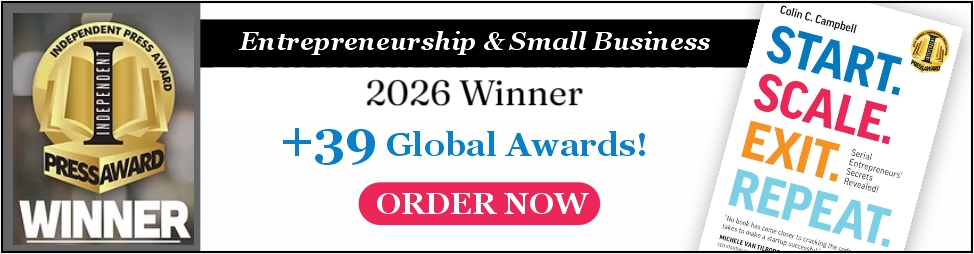
That is what this conversation is about: the patterns behind repeat startup wins, and why Start. Scale. Exit. Repeat. keeps resonating. The book just picked up its 39th award, the International Press Award in New York City, which matters for one reason: it signals the framework is landing with real builders, not just readers.
The core idea is simple. Entrepreneurship starts instinctively, but it does not scale instinctively. You can will your way through the early days. After that, instinct becomes the bottleneck. Most companies stall because the founder stays in start mode while the business demands scale mode. The gap is not talent. It is operating discipline.
“Repeat wins aren’t luck. They’re built by founders who change how they operate at every stage, not just how hard they work.”
The Start. Scale. Exit. Repeat. framework forces clarity by breaking every stage into four parts: story, people, money, and systems.
In Start, the story is what you are building and why anyone should care. People are your first hires and partners. Money is what you need to reach the first stage gate, that go or no-go moment where you either double down, pivot, or shut it down. Systems are lightweight early, but there is one exception: KPIs. If you are not tracking the handful of metrics that actually drive your business, you are flying blind. You are making decisions off vibes.
In Scale, everything changes. Your story evolves because what got you to one million will not get you to ten. The people you need are different, too. Scaling is not about hiring more. It is about hiring the right operators who can add zeros without breaking the machine. The money conversation gets smarter here. Venture capital is not the default path for most companies. The real job is matching the right type of capital to the right stage, without losing your leverage too early. Then come systems, the thing most founders resist until the pain forces it.
One of the clearest points from this episode: systems are not corporate theater. They are what gets you unstuck. Weekly check-ins, quarterly goals, annual planning, and clear red-yellow-green scorecards sound basic because they are. That is why they work. When the team agrees on what “winning” looks like, you cut drama, confusion, and wasted motion.
Michele Van Tilborg, CEO of Paw.com, put it in practical terms. Start meetings with three wins, three priorities, and three stuck points. You would think adults could do that easily. Many cannot. Especially the wins. People discount progress because it is not headline-worthy. That is a mistake. Momentum is built on micro moves: fixing the shipping glitch, tightening the packaging, improving the process that saves ten minutes a day. Those “small” wins compound into real advantage, and they keep teams confident when the big wins are lumpy.
Audience members Renee and Jason reinforced another truth: you do not absorb operations in school. You learn it by watching it or getting burned. Renee described what strong process looks like in the real world: tight handoffs, clear deadlines, and accountability that keeps work moving. That is the difference between a team that performs and a team that waits. Jason shared the darker version: a business can hit ten million fast and still implode in a year if there is no clear leadership, no strategy, and no system to absorb growth.
Then comes Exit, and founders tend to get this wrong because they treat it like a victory lap. It is not. It is a shift in identity. The operator job in exit mode is to make the company less dependent on you, not more. Buyers pay a premium for a business that runs like a Swiss clock. They discount founder-dependent companies because the risk is obvious: founders leave. Post-acquisition founder retention is low, and buyers price that in.
If you want the premium multiple, you need to step back earlier than feels comfortable. Promote your leaders. Demote your ego. Get out of the way. The story becomes “this is a professionally run company.” The people are the bench that stays after the deal. The money is deal structure, leverage, and negotiation discipline. The systems are what you sell, because they prove the results are repeatable.
Colin shared the real thing that makes the framework real: you can spend ten years building wealth and ten weeks destroying it on a bad exit. Two mistakes to never repeat: giving up control without liquidity, and signing lockups that trap you when the market turns. You do not get points for almost cashing out.
Finally, Repeat is where the compounding really happens. Ideas show up when you are in the arena, not when you are parked on the couch. That is why the best advice for someone who wants to start something is often: go get close to the action. Work inside a business. Learn how the machine works. Opportunities live in the mess.
Repeat also means you track your A-players. You do not “steal” them from prior companies, but you keep a relationship and you rehire great people when the next build starts. You build a reputation, too. A strong LinkedIn presence, a consistent body of work, and proof of wins make the next raise, hire, or deal easier. And you copy-paste what worked. Not blindly, but intentionally. Systems are assets. If they produced results once, they can produce results again.
That is the through-line: repeat wins are not magic. They are the outcome of story, people, money, and systems evolving on purpose, stage by stage. Founders do not fail because they are not “built for it.” They fail because they refuse to change modes. The ones who win again and again treat entrepreneurship like a craft. Learn it. Run it. Improve it. Then do it again.
Trade shows and conferences can be either a budget drain or a growth accelerator—depending on how you prepare. Colin C. Campbell and Michael Gilmour share the exact pre-event, on-site, and post-event plays that turn visibility into meetings, meetings into deals, and one weekend of travel into weeks of marketing.
Trade shows and conferences are either a revenue driver or an expensive way to stay busy. There is rarely a middle ground.
If you are going to give up time, money, energy, and family bandwidth to attend, the event should produce something tangible. Meetings. Pipeline. Content. Momentum. If it doesn’t, it was probably avoidable.
The difference between amateurs and professionals is not charisma or luck. It is preparation. The best operators book meetings weeks or months in advance, create visibility before they arrive, and walk into the event with a plan for how every hour will be used. Everything else is hoping the room magically delivers value.
Networking That Actually Converts at Conferences, Trade Shows, and Beyond
Most conferences lose money because people treat them like networking events. They show up, wander the floor, collect business cards, and promise to follow up. Very little happens after that.
Professionals treat conferences like campaigns. Attention is intentional. Meetings are pre booked. Content is planned. Follow up is already scheduled before the event ends. If you wait until you arrive to decide what you are doing, you are already behind.
One of the fastest free wins at any conference is visibility. Wear the merch. Always.
Conferences are crowded and attention is scarce. Nobody remembers the person trying to blend in. They remember the brand they saw repeatedly throughout the day. Repetition creates familiarity and familiarity creates trust.
Positioning matters just as much. Sit in the front row. Ask a thoughtful question. Introduce yourself clearly and confidently. Saying who you are and where you are from sounds simple, but it makes you easier to remember and easier to reference later. That small moment costs nothing and quietly builds credibility in the room.
Speaking at a conference is one of the fastest ways to establish authority, but only if you do it right. Do not wing it and do not pitch.
Build anticipation before the event. Deliver real value during the talk through stories, insights, visuals, and practical takeaways. Then amplify the talk afterward. Record it. Break it into short clips. Share it across LinkedIn, YouTube, and your broader content ecosystem.
A conference talk should not be a one time moment. It should become weeks of marketing. If it disappears once the applause stops, the opportunity was wasted.
Execution details matter more than people like to admit. Stay at the host hotel because real conversations happen in hallways, elevators, and bars. Travel carry on only to reduce risk and stress. Use a clear system to manage leads so multiple team members are not duplicating the same follow up.
Be cautious about paying for visibility. Many companies overspend on sponsor slots when they could create better outcomes themselves. Hosting a small suite meetup with simple food and real conversation often outperforms a large logo and a crowded booth.
The goal of a conference is not attendance. It is not networking. It is not free swag.
The goal is to leave with qualified follow up meetings, reusable content assets, and clear next steps already on the calendar.
You can waste money at conferences, or you can make money at conferences. The difference is doing the work early, showing up intentionally, and treating the event as the starting point, not the finish line.
This site uses functional cookies and external scripts to improve your experience.
Privacy settings
Privacy Settings
This site uses functional cookies and external scripts to improve your experience. Which cookies and scripts are used and how they impact your visit is specified on the left. You may change your settings at any time. Your choices will not impact your visit.
NOTE: These settings will only apply to the browser and device you are currently using.