By Colin C. Campbell, Founder, Startup Club
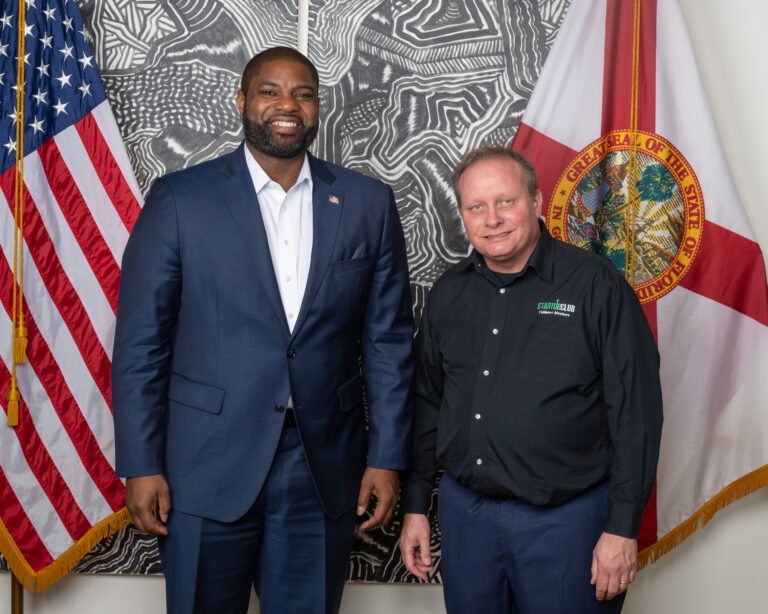
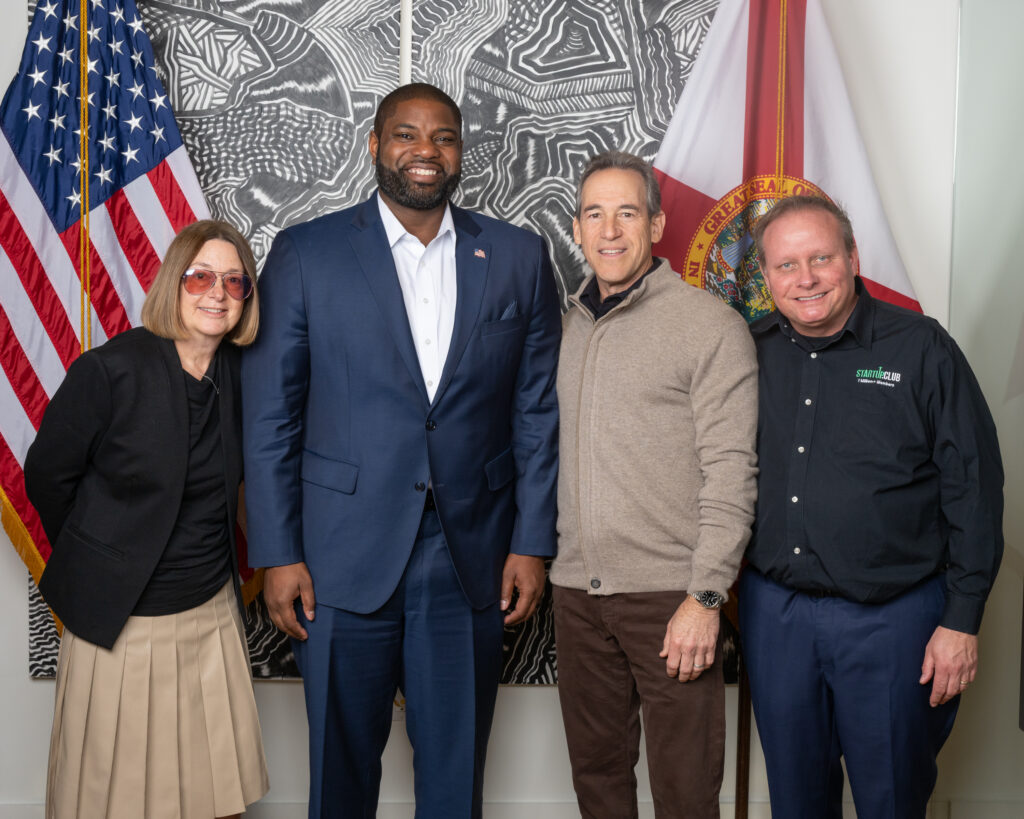
Not long ago, I had a chance to meet Byron Donalds at a local small business, and I told him about a CrossFit gym here in Fort Lauderdale.
It’s a great little business, with a loyal membership, a real community, and a reputation that brings in new members without a big marketing budget. In other words, the owners have done exactly what we tell entrepreneurs to do at Startup Club: find a problem, build something people love, and run it well.
And yet, when I talk to them, the conversation isn’t about growth. It’s about insurance premiums that keep climbing, rent that keeps climbing, and a dozen other costs that have nothing to do with how good they are at running a gym.
I’ve spent more than thirty years starting, scaling, and exiting companies, and I can tell you that entrepreneurs don’t mind risk because we sign up for it every day. Customers may not show up, a competitor may come out of nowhere, your best employee may leave, and the market may change under your feet. That’s the job.
What’s harder to accept is watching a healthy business get squeezed by structural costs it can’t control, costs that have very little to do with the quality of the company itself.
That’s the part where the next Governor of Florida can actually make a difference, and it’s why Startup Club is doing something we’ve never done before.
We are endorsing Byron Donalds, the Republican nominee, for Governor of Florida.
Let me be clear about what this is and what it isn’t. I’m a registered independent here in Florida. Startup Club is a global community of more than one million members: Republicans, Democrats, independents, and a whole lot of entrepreneurs who couldn’t care less about politics and would rather talk about customer acquisition costs.
Our mission has always been entrepreneurship, and that’s the lens I’m using to look at this race.
This isn’t about party loyalty or ideology. It’s about which candidate’s policies would create the best environment for people who start companies, hire people, invest capital, and take risks in this state.
Florida has changed a lot over the past several years, and mostly for the better. Entrepreneurs have moved here, investors have followed them, and now more capital is starting to flow here too. Access to startup capital in Florida has been a big issue since I moved here in 2002.
South Florida in particular has an energy that would have been hard to imagine ten years ago.
But at the same time Florida has become a better place to start a company, it has become a much more expensive place to run one. Insurance costs have gone through the roof. Money is still expensive. Housing costs are squeezing employees and the employers trying to keep them. And permitting, licensing, and regulation add delays that quietly add cost.
A big corporation can absorb all of that. It has a legal department and a government-relations team. A small business doesn’t, and for a small business those costs can be the difference between making it and not. So what impressed me about Donalds? It wasn’t that he said he supports small business. Every politician says that, and they’ve been saying it for generations. What mattered to me was that he actually understands the plumbing. Before he ran for office, he worked in banking, finance, and insurance. In the Florida Legislature, he chaired the House Insurance and Banking Subcommittee, and in Congress he sits on the House Financial Services Committee. Insurance and access to capital happen to be two of the biggest problems facing Florida businesses right now, so it’s hard to imagine a more relevant résumé. On insurance, he has proposed something he calls an Insurer Scorecard, basically a modernized version of the state’s rate-comparison tool that pairs price with performance: how fast an insurer pays claims and how often it approves them. The idea is simple: give consumers and business owners a clear way to compare carriers, and let competition do some of the work that regulation alone hasn’t. I am experiencing this firsthand. I filed a claim for our beach house in North Captiva, and after two years, we still have not received the insurance funds. For someone who has experienced the system firsthand, the idea of making insurance companies more accountable is welcome news. Donalds has also said he would revisit Florida’s property insurance rules, which he argues could bring rates down by as much as 20 percent, while keeping the state’s hurricane catastrophe fund in place as the backstop for major storms. Will it come in at exactly 20 percent?
Campaign math always meets reality at some point. But the approach is consistent with how he thinks about markets in general: more transparency, more competition, fewer barriers. Then there’s friction, and I’d argue it matters just as much. I’ve written before that cash is the oxygen that keeps a business alive. Friction is what slowly cuts off the air supply. A permit that takes six months, a license with no clear timeline, one more layer of review, each one seems manageable on its own. Add them up and they change the economics of a business. For a small business owner, a six-month delay isn’t an inconvenience. It’s six months of rent, interest, and payroll, and sometimes it’s the deal you never got to do. That’s why Donalds’ “Florida Means Business” agenda resonated with me. It includes a public “shot clock” showing how long state and local agencies take to approve permits. As he put it, “If you can look up your county commissioner’s salary in 30 seconds, you should be able to look up how long your county takes to approve a permit the same way.” The plan also calls for a single online dashboard that tracks permits across local, regional, and state government, a task force to review the permits, licenses, and fees businesses have to deal with, faster review timelines for transportation, energy, and infrastructure projects, dedicated business courts so commercial disputes don’t wait behind every other civil case, and a modernized business registration process at the Department of State. None of this makes headlines. But it matters. My own beach house repairs were stalled for 18 months while permits were tied up with Florida’s environmental regulators. I’ve experienced firsthand what those delays cost. Bringing greater transparency and accountability to government is another step in the right direction. Now, I want to be fair to David Jolly, the Democratic nominee, because I looked at him seriously. Jolly is a credible candidate. He has focused on the right problems: affordability, insurance, and housing. I also respect that he has been willing to break with his former party and take positions that don’t fit neatly in either box. His big idea deserves a real look: a state-run catastrophic fund, which he says would need to reach $30 to $40 billion, that would pull hurricane and natural disaster risk out of the private insurance market entirely and leave private carriers covering things like fire and theft. He would fund it in part with a tax on insurer profits and by redirecting tourist development tax revenue, and he argues it could cut premiums by 60 to 70 percent. Don’t get me wrong. I am not here to tell you Jolly’s plan is crazy. It’s a serious proposal for a serious problem. The difference between the two candidates really comes down to approach.
Jolly’s proposals generally give the state a larger role in addressing insurance, housing, utilities, and affordability. And although that sounds tempting, greater government control of markets can also lead to unintended consequences. Donalds generally wants more competition, faster government, and fewer barriers to starting and growing a company. Both approaches deserve to be debated. But from where I sit as an entrepreneur, Donalds’ approach is the stronger bet for the people I spend my days with. Here’s why: small businesses are allergic to complexity. Big companies can afford lawyers, compliance teams, and lobbyists. Entrepreneurs can’t. When government gets more complicated, the burden doesn’t fall evenly. It falls hardest on the smallest players. In my experience, when you cut friction and add competition, the little guy benefits the most. There’s a bigger opportunity here, too. My brother, Bill, and I started our first internet company in the early 1990s, when most banks didn’t know what the internet was, let alone how to lend against a company built on it. Years later, we built another technology company and took it public. If those experiences taught me one thing, it’s this: great ideas need capital. Florida has something today it didn’t have a generation ago. The entrepreneurs are here, the investors are here, and the capital is starting to follow. That could become one of this state’s biggest competitive advantages. But capital is mobile, and so are entrepreneurs. If Florida becomes significantly more expensive, more difficult, or less predictable than the states we compete with, both can leave just as fast as they came. So the next chapter for Florida can’t just be about attracting people. It has to be about keeping them, making this a place where entrepreneurs can stay, build, and scale. That means getting insurance costs under control, improving access to capital, dealing with housing, investing in infrastructure, and taking the friction out of dealing with government. Why is Startup Club wading into a political race at all? Some of you will reasonably ask, and it’s a fair question. We’re not becoming a political organization, and our mission isn’t changing. But public policy affects entrepreneurs whether we choose to talk about it or not, and if we believe one candidate offers a better environment for the people who start companies, create jobs, invest capital, and take risks, then I think our community ought to be willing to say so. This endorsement doesn’t mean every Startup Club member will agree with me, and it doesn’t mean we’ll agree with Byron Donalds on every issue. It means something much narrower: when you look at this race through the lens of entrepreneurship and small business, we believe he’s the stronger candidate. After going through both candidates’ positions and meeting Donalds to talk about what Florida entrepreneurs are up against, I believe he has the background, the perspective, and the approach to keep Florida one of the best places in America to build a business.
For the first time in Startup Club’s history, we are endorsing a candidate for public office. We are endorsing Byron Donalds for Governor of Florida because we believe
Florida’s next chapter should be written by entrepreneurs, small businesses, investment, and growth. And if you’re an entrepreneur in Florida, I’d ask you to look at both candidates the same way, through the lens of your own business, and decide for yourself.