

Home Blog Page 2

Life Hacks for Entrepreneurs: 21 Tips From the Startup.club Community

No theory. No fluff. Just what works.

The best founders don’t just build great companies. They engineer their lives to run on autopilot. Here are 22 hacks they actually use.

Travel

1. Never check a bag. Michael Gilmour hasn’t checked luggage in 25 years. Carry-on only. One of his team members ignored this advice on a trip from Melbourne to Las Vegas. Michael was already at the hotel working by the time the guy’s bags showed up.

2. Same spot, every hotel room. Charger here. Laptop there. Shoes by the door. Every room, every trip. You’ll pack in 30 seconds and never leave anything behind.

Decisions cost energy. Energy is your most valuable resource.

Wardrobe

3. Kill sock-sorting forever. Throw them all out. Buy 24 identical white and 24 identical black. No sorting. No mismatches. No mental energy wasted.

4. Find something you like? Buy a dozen. Stop re-deciding things you’ve already decided. That energy belongs on your business.

5. Wear your company merch daily. Colin wears a Startup.club shirt. Michael wears a Park Logic polo. Every elevator, every photo, every random conversation becomes a branded impression. You already paid for the shirt, so make it work.

AI

6. Use AI to conquer your files. One founder spent 15 minutes letting Claude sort through six gigabytes of chaos. It categorized everything and flagged confidence levels before lunch. Start here.

7. Automate your repetitive communications. Michael built a workflow that reads support requests, routes summaries to the right people, and auto-replies to anything routine. It runs every day. He does nothing. That’s the goal.

8. Build a personal AI medical file. Upload your entire medical history to a dedicated chat. When a health issue comes up, the AI already has full context. First stop before any doctor’s visit.

9. Use AI as a nutrition coach. Photograph your meal before and after eating. Feed it to a dedicated chat. Over weeks it spots patterns and tells you exactly what you’re missing. No app. No subscription.

10. Drop legal documents into AI before calling your lawyer. Surface pros, cons, and red flags first. Still read every clause yourself, but the review will be dramatically faster.

11. Watch great films like a screenwriter. After a movie moves you, ask AI for the top ten reasons it worked as a story. It strips out the emotion and reveals the craft. Do this for ten years and you’ll become an exceptional storyteller.

Time and Focus

12. Your schedule is your to-do list. When something lands in Michael’s inbox, he asks one question: is this worth a calendar slot? Yes, it gets scheduled. No, it’s gone. No separate task list. No thrashing.

13. Batch your errands. Stop scattering low-value tasks across your week. Group them, knock them out, protect the rest of your time.

14. Commit to five minutes. Tell yourself you’ll work on something for just five minutes. An hour later, you’re still going. Tell yourself it’ll take an hour and you’ll never start.

15. Stop small decisions from reaching you. Michael told his accountant: never call about anything under $5,000. His team can spend up to $10,000 without him. His travel policy is one sentence: “I trust my team to make sensible decisions.” He says it’s saved more money than any rulebook ever could.

Health and Routine

16. Lay your workout clothes out the night before. Wake up, see the clothes, decision already made. One founder puts them just outside the bedroom door so he trips over them. Friction removed. Workout done.

17. Habit stack. You already make coffee every morning. Those two minutes are free. Do squats. Stack a new habit onto one you already have and it costs you nothing.

18. Make your bed, every day. Michael does it without fail. A small act of order that sets the tone for everything that follows.

Spending

19. Shop by price per gram, not sticker price. Ignore the headline number. Look at the unit cost. A two-pound tin can be a better deal than a one-pound one. Stop letting packaging fool you.

Delegation

20. Delegate responsibilities, not tasks. Colin hasn’t paid a personal bill in 25 years. He’s involved in 20 companies. He didn’t delegate to-dos. He handed off entire domains of his life.

Start small. If you make $50 an hour and pay someone $30 to do something you hate, the math is obvious. But the real win isn’t financial. It’s the 3am wake-ups you never have again.

21. Clean your desktop in 60 seconds. Create a folder. Call it “Desktop.” Drag everything into it. Done. Pull files out one at a time as you need them. Anything that never comes out? You never needed it.

The Bottom Line

Every hack on this list does the same thing: it eliminates a decision.

Decisions cost energy. Energy is your most valuable resource. Whether it’s socks, travel, or who pays your bills, stop burning mental cycles on things that don’t matter so you can go all in on the things that do.

Colin C. Campbell is the author of Start, Scale, Exit, Repeat. The Complete Entrepreneur airs every Thursday at 5PM ET on Startup.club. The content for this post was generated by the community during a live episode of the podcast.
EP208: How Fear and Self-Doubt Kill Great Businesses

0

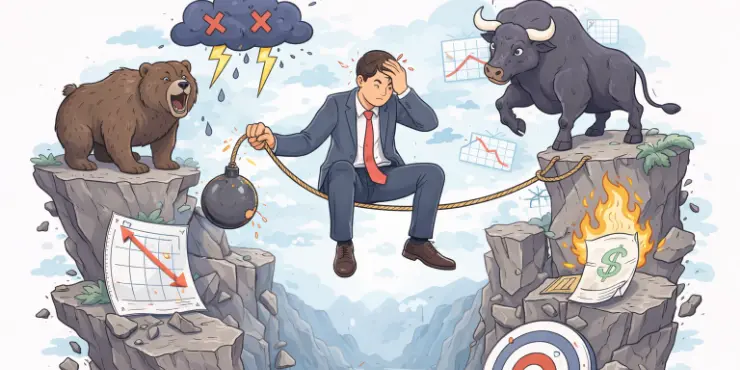
Why fear is driving more decisions than you think

Colin C. Campbell and Michele Van Tilborg sit down with Dr. Rowshanak Hashemiyoon to unpack how fear and self-doubt actually work in entrepreneurs. This episode explores the biological roots of hesitation, the pressure behind success, and how founders can move forward without waiting to feel ready.

Hosts: Colin C. Campbell, Michele Van Tilborg

Guest: Dr. Rowshanak Hashemiyoon

How Fear and Self-Doubt Kill Great Businesses

Colin C. Campbell and Michele Van Tilborg spoke with Dr. Rowshanak Hashemiyoon to discuss one of the most common and least understood forces in entrepreneurship: fear.

Fear is the most expensive mistake entrepreneurs make.

Not bad ideas. Not lack of capital. Not timing. Fear.

And it shows up in ways that look smart, responsible, and even strategic.

Entrepreneurs are not thinking as clearly as they think

Most founders believe they are making rational decisions.

They are not.

As Dr. Hashemiyoon explained, the nervous system reacts to risk before the brain has time to process it, which means hesitation, overthinking, and delay often feel logical even when they are not.

That is why someone can know exactly what to do and still not do it.

It is not a knowledge gap.

It is a response.

Success creates pressure, not just upside

Fear of failure is obvious. Fear of success is quieter.

More visibility, more expectations, more responsibility, and more people relying on the business all show up at once, and the brain registers that as risk.

Colin pointed out that even experienced founders feel this tension when launching something new, not because they doubt the opportunity, but because they understand what comes with it.

So instead of accelerating, many founders slow down at the exact moment they should be leaning in.

They convince themselves they need more time or more certainty.

What they are really doing is managing pressure.

The fear is not about ego

Early-stage fear is often misunderstood.

It is not about embarrassment or looking bad.

In the discussion, Michele Van Tilborg, CEO of Paw.com, described how the real stress in launching came from the potential impact on others, not personal reputation.

Employees, partners, and customers raise the stakes.

The more people involved, the heavier each decision feels, and the easier it becomes to hesitate.

This is not insecurity.

It is responsibility.

Staying small can feel like the right move

There is a version of discipline that is actually fear.

If the business does not scale, it cannot fail at scale.

If the founder does not push, they cannot let people down.

It feels careful. It feels rational. It even sounds strategic.

But it limits what the business can become.

Sometimes staying small is not strategy.

It is protection.

You cannot outthink a stress response

One of the clearest takeaways from the conversation was that fear cannot be solved at the level of thought alone.

Dr. Hashemiyoon emphasized that founders need to regulate their state before making decisions, because the body is often reacting faster than the mind can keep up.

Simple tools like slowing the breath or writing things down are not soft tactics.

They are ways to interrupt the stress response and regain clarity.

Once the system settles, better decisions follow.

Action is what builds confidence

There is a common belief that confidence comes before action.

The reality is the opposite.

Confidence is built through evidence, and evidence only comes from taking action.

Small steps create momentum.

Momentum builds a sense of control.

And control reduces fear.

That is the loop founders need to understand.

At some point, the noise has to be shut out

Colin C. Campbell reflected on starting his first business when almost everyone around him advised against it.

The feedback was logical and well-intentioned.

It was also wrong.

Every founder eventually reaches a point where they have to choose between external opinions and internal conviction.

Setting clear targets and committing to them without constant outside interference becomes critical.

Focus creates progress.

Progress creates belief.

Worth and outcome are not the same

One of the most important distinctions raised in the discussion is that many entrepreneurs tie their worth to the outcome of their business.

If it works, they feel validated.

If it fails, they question themselves.

That is a dangerous equation.

A business can succeed or fail for many reasons, many of which are outside a founderโ€™s control.

Separating identity from outcome makes decisions lighter and faster.

And speed matters.

Fear does not disappear as a business grows.

It evolves.

The founders who win are not the ones who eliminate fear.

They are the ones who understand it, manage it, and keep moving anyway.

Avora Cruise Residences: What We Learned From the AMA About Pricing, Risk, and the Reality of Living at Sea

We set out to have an honest and open conversation.

No polished pitch. No filtered answers.


This AMA was hosted by myself and Aaron Alexander, a fellow moderator from the Live at Sea community. We asked questions directly, and members from the Live at Sea Facebook group submitted questions as well, which we brought into the discussion.

The goal was simple. Ask the real questions people are thinking about when it comes to Avora cruise residences, and see how the team responds in real time.

What came out of it was far more useful than any brochure.

This is not a vacation product. 
Itโ€™s a capital-intensive, operationally complex, slightly unconventional model that might actually work if executed well.

The Deal Behind the Ship

This is where things usually get confusing, and to their credit, they explained it clearly.

Avora is operating under a nine-year charter-to-purchase agreement with Norwegian Cruise Line for the Seven Seas Navigator.

Hereโ€™s what that actually means:

– They put down roughly $20 million 
– They make structured payments over nine years 
– At the end, there is a nominal buyout to take full ownership 

During the AMA, they made an important clarification.

Even though the financing structure is nine years, when you buy a residence, you are buying it for the life of the vessel, not just nine years.

They estimate the shipโ€™s usable life at 20 years or more, and they are guaranteeing 15 years with a prorated protection if something prevents the ship from operating before that.

In other words, the financing timeline and the ownership timeline are two different things.

What Buyers Actually Pay

Pricing discussed in the AMA:

– Entry-level residences start around $560,000 
– Balcony units run roughly $850,000 to just over $1 million 
– Larger suites range from about $1.4 million up to $4.5 million 

Monthly costs:

– Approximately $8,000 per month for single occupancy 
– Around $11,000 or more for double occupancy in smaller units 

What the Ship Is Actually Like

Iโ€™ve personally traveled on Regentโ€™s luxury ships before, including this class, and itโ€™s worth saying this plainly.

They donโ€™t feel crowded. The service level is noticeably higher.

The ship underwent a $40 million refurbishment in 2016 and still feels modern today.

What This Really Is

After sitting through the AMA, this is not a standard investment.

It is a lifestyle decision with a financial structure behind it.

You are choosing mobility over permanence, experience over predictability, and community over isolation.

Business Networking & Strategizing in the World of AI

0

Business Networking & Strategizing in the World of AI

Speaking with author and marketing expert George Dubec about networking, strategizing, and using tech to your businessโ€™s advantage

https://www.clubhouse.com/invite/dXNcga065NX2pnGJEgrQ8OJAbZL1TlbBLYY:S5xenpCTTPy9ew6-8g0yl4I6uMZlZb0W5hMucRIkG5A

Parker McCumber- Turning Discipline into Execution

0

Parker McCumber- Turning Discipline into Execution

Speaking with Parker McCumber, US Army National Guard Captain about leadership, business execution, and team building

https://www.clubhouse.com/invite/ED7IL3WnLkp6nZoNb8agL48JXWLWSAD2533:o-BxUq1fYbR1LV_5fsVLbflKnrxlxF54GdNRWociGfI

Storylines Article Taken Down

I want to address why the Storylines article was taken down.

Prior to publication, I received a legal notice from the company. The article was published based on information that was reviewed and verified through documents, conversations, and multiple sources.

I remain confident in the process used to develop the article and the work that went into it.

To avoid a prolonged legal dispute, I have decided to remove the article and related posts.

I appreciate everyone who shared their experiences and contributed information. I will continue to follow the situation closely.

Join the LiveAtSea.com Community!

Most people see cruise ships as vacations. Colin sees them as homes.

With the launch of LiveAtSea.com, heโ€™s betting on a shift that feels obvious once you hear it: if people can work from anywhere, why not live anywhereโ€ฆ including the ocean?

This isnโ€™t theory. Itโ€™s already happening.

The early content on the site points to a growing movement of people choosing long-term cruise living over traditional housing. Not because itโ€™s flashy, but because it solves real problems. Predictable costs, built-in community, travel without logistics, and a lifestyle that replaces routine with motion.

One post breaks down the difference between world cruises and residential ships.

Another article highlights how ships like the Avora Lumina are selling quickly, signaling real demand. A recent post asks the bigger question: is this the beginning of an entirely new category of living?

It might be.

Because once you remove the assumption that โ€œhomeโ€ has to be fixed, everything changes. Housing, travel, social life, even identity. Youโ€™re no longer visiting places. Youโ€™re rotating through them.

Thatโ€™s the pattern Colin tends to spot early. Not just trends, but shifts in behavior that become businesses.

LiveAtSea isnโ€™t just a blog. Itโ€™s a signal.

The same way remote work quietly rewired where people live, this is what happens when mobility becomes permanent.

And like most new categories, it sounds nicheโ€ฆ until it doesnโ€™t.

You Cannot Outsource the Entrepreneur

Every week someone opens an AI chat and types the same doomed prompt: “Make me a million dollars.” And every week, the AI politely tells them to go buy index funds.

That’s not a technology problem. That’s a thinking problem.

“What that told me: you are only limited by your imagination now. If you can see it, you can build it.”

The Question That Changes Everything

I tested this myself. I typed “make me a million dollars” into ChatGPT. The response was basically: if I could do that, I’d be living on a server farm on a private island.

Then I changed the question. I said I had an app idea, and I wanted help building it, marketing it, and getting to a million in revenue. Different question, completely different answer.

The AI said: now we’re talking. Here’s the path. Idea. MVP. Users. Retention. Monetization. Scale.

Same tool. Wildly different outcome. That’s the whole lesson.

I Built an App and I’ve Never Coded Anything

I don’t know how to transfer a domain name. That’s not an exaggeration.

But I built a working version of a card game app using Claude Code. Not a mockup. A working version. I took screenshots every time I hit a wall and fed them back to the AI until we pushed through. About ten or fifteen loops to figure out Xcode.

What that told me: you are only limited by your imagination now. If you can see it, you can build it. But building it is only the beginning. You still have to market it, find users, handle the logistics, and deal with every other element of the business.

The AI doesn’t replace that work. It just removes the excuse that you couldn’t do it.

AI Is a Multiplier, Not a Magic Wand

Michele used AI to analyze a production video for a Kickstarter campaign before launch. It gave back specific, actionable feedback we would have paid an agency $25,000 to produce.

We used it to build a full pre-launch to post-launch marketing schedule. Refined it ten times. Still faster than two weeks of manual research, and it cited its sources.

The AI didn’t come up with the product. It didn’t know the audience. It didn’t have the instinct. But once we brought those things to it, it compressed months of work into hours.

The Real Opportunity Nobody Is Talking About

Data is the new moat.

If you have proprietary data in any vertical, you have something the generic models don’t. Feed that into a custom AI workflow and you’ve got something no one can easily replicate.

And on the content side, we are seeing front-page Google results on nearly every article we publish at Startup Club. The formula is real and raw data fed into the AI. Actual quotes. Real conversations. Human input that the model sharpens and structures.

If you feed AI back to AI, it spits it right back out. Bring something real to the process and the output is different.

LLM Optimization Is the New SEO

Search engines are no longer the only gatekeepers. AI answers are the new front page.

Start thinking about where AI scrapes for credible, human-sounding answers. Reddit. Quora. FAQs structured with proper schema. If your content shows up in those AI-generated answers, you’ve bypassed the algorithm entirely and gone straight to the reader.

This is wide open right now. Move fast.

The Bottom Line

You cannot outsource the entrepreneur. The instinct, the idea, the conviction, the relentless follow-through: none of that is replaceable.

What you can do is use AI to become the master of every trade you used to have to hire for. Legal, logistics, code, marketing, content. You don’t have to be the expert. You just have to know enough to know when the AI is wrong.

The million dollars isn’t in the prompt. It’s in the person asking the right questions.

This article is based on a live conversation with the Startup Club community, hosted by Colin C. Campbell and Michelle Van Tilburg.

EP207: You Cannot Outsource the Entrepreneur

0

Why AI wonโ€™t build your business

Everyone is asking AI the wrong question and getting the same useless answer. In this episode, Colin C. Campbell and Michele Van Tilborg break down why AI is a powerful multiplier but not a replacement for entrepreneurial instinct, and how the real advantage comes from better inputs, better questions, and real-world execution.

Hosts: Colin C. Campbell, Michele Van Tilborg