


We set out to have an honest and open conversation.
No polished pitch. No filtered answers.
This AMA was hosted by myself and Aaron Alexander, a fellow moderator from the Live at Sea community. We asked questions directly, and members from the Live at Sea Facebook group submitted questions as well, which we brought into the discussion.
The goal was simple. Ask the real questions people are thinking about when it comes to Avora cruise residences, and see how the team responds in real time.
What came out of it was far more useful than any brochure.
This is not a vacation product.
It’s a capital-intensive, operationally complex, slightly unconventional model that might actually work if executed well.
The Deal Behind the Ship
This is where things usually get confusing, and to their credit, they explained it clearly.
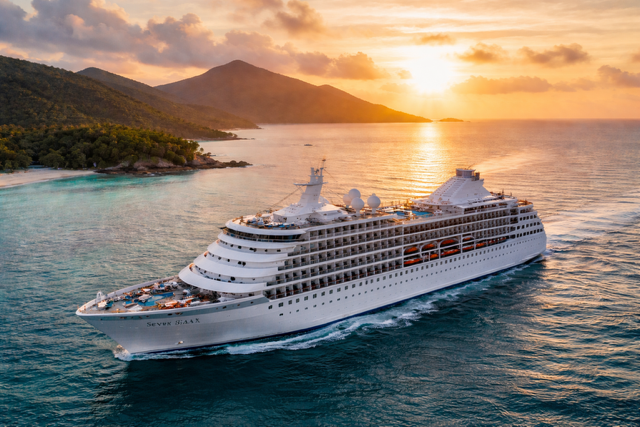
Avora is operating under a nine-year charter-to-purchase agreement with Norwegian Cruise Line for the Seven Seas Navigator.
Here’s what that actually means:
– They put down roughly $20 million
– They make structured payments over nine years
– At the end, there is a nominal buyout to take full ownership
During the AMA, they made an important clarification.
Even though the financing structure is nine years, when you buy a residence, you are buying it for the life of the vessel, not just nine years.
They estimate the ship’s usable life at 20 years or more, and they are guaranteeing 15 years with a prorated protection if something prevents the ship from operating before that.
In other words, the financing timeline and the ownership timeline are two different things.
What Buyers Actually Pay
Pricing discussed in the AMA:
– Entry-level residences start around $560,000
– Balcony units run roughly $850,000 to just over $1 million
– Larger suites range from about $1.4 million up to $4.5 million
Monthly costs:
– Approximately $8,000 per month for single occupancy
– Around $11,000 or more for double occupancy in smaller units
What the Ship Is Actually Like
I’ve personally traveled on Regent’s luxury ships before, including this class, and it’s worth saying this plainly.
They don’t feel crowded. The service level is noticeably higher.
The ship underwent a $40 million refurbishment in 2016 and still feels modern today.
What This Really Is
After sitting through the AMA, this is not a standard investment.
It is a lifestyle decision with a financial structure behind it.
You are choosing mobility over permanence, experience over predictability, and community over isolation.