
🎬🍿 OpenMic: The Movie that Sparked Your Inner Entrepreneur
https://www.clubhouse.com/invite/wgAS2l1O6wkvQaX52Yn1ENgaAd0WCakZXYY:8ILR3IEp_8APKlCI5EbD4CGyYjiHxywF11L5J-Vfx20
🎬🍿 OpenMic: The Movie that Sparked Your Inner Entrepreneur
https://www.clubhouse.com/invite/wgAS2l1O6wkvQaX52Yn1ENgaAd0WCakZXYY:8ILR3IEp_8APKlCI5EbD4CGyYjiHxywF11L5J-Vfx20

Networking That Actually Converts
Trade shows and conferences can be either a budget drain or a growth accelerator—depending on how you prepare. Colin C. Campbell and Michael Gilmour share the exact pre-event, on-site, and post-event plays that turn visibility into meetings, meetings into deals, and one weekend of travel into weeks of marketing.
Hosts: Michael Gilmour, Colin C. Campbell
Trade shows and conferences are either a revenue driver or an expensive way to stay busy. There is rarely a middle ground.
If you are going to give up time, money, energy, and family bandwidth to attend, the event should produce something tangible. Meetings. Pipeline. Content. Momentum. If it doesn’t, it was probably avoidable.
The difference between amateurs and professionals is not charisma or luck. It is preparation. The best operators book meetings weeks or months in advance, create visibility before they arrive, and walk into the event with a plan for how every hour will be used. Everything else is hoping the room magically delivers value.
Most conferences lose money because people treat them like networking events. They show up, wander the floor, collect business cards, and promise to follow up. Very little happens after that.
Professionals treat conferences like campaigns. Attention is intentional. Meetings are pre booked. Content is planned. Follow up is already scheduled before the event ends. If you wait until you arrive to decide what you are doing, you are already behind.
One of the fastest free wins at any conference is visibility. Wear the merch. Always.
Conferences are crowded and attention is scarce. Nobody remembers the person trying to blend in. They remember the brand they saw repeatedly throughout the day. Repetition creates familiarity and familiarity creates trust.
Positioning matters just as much. Sit in the front row. Ask a thoughtful question. Introduce yourself clearly and confidently. Saying who you are and where you are from sounds simple, but it makes you easier to remember and easier to reference later. That small moment costs nothing and quietly builds credibility in the room.
Speaking at a conference is one of the fastest ways to establish authority, but only if you do it right. Do not wing it and do not pitch.
Build anticipation before the event. Deliver real value during the talk through stories, insights, visuals, and practical takeaways. Then amplify the talk afterward. Record it. Break it into short clips. Share it across LinkedIn, YouTube, and your broader content ecosystem.
A conference talk should not be a one time moment. It should become weeks of marketing. If it disappears once the applause stops, the opportunity was wasted.
Execution details matter more than people like to admit. Stay at the host hotel because real conversations happen in hallways, elevators, and bars. Travel carry on only to reduce risk and stress. Use a clear system to manage leads so multiple team members are not duplicating the same follow up.
Be cautious about paying for visibility. Many companies overspend on sponsor slots when they could create better outcomes themselves. Hosting a small suite meetup with simple food and real conversation often outperforms a large logo and a crowded booth.
The goal of a conference is not attendance. It is not networking. It is not free swag.
The goal is to leave with qualified follow up meetings, reusable content assets, and clear next steps already on the calendar.
You can waste money at conferences, or you can make money at conferences. The difference is doing the work early, showing up intentionally, and treating the event as the starting point, not the finish line.
Managing Business Burnout & Self Doubt
https://www.clubhouse.com/invite/ZzRH7YbXJgYNYjr1AorLn1qbVlB9hZVWAYY:pN4CJVvjis5jvg7yRyl3qVYz6xfKcSMUawzpFWZK0Zo
OpenMic- Make $1M using AI
https://www.clubhouse.com/invite/y32SVdKKe0VrW9We2zqQgvdp9A50Fl5vYDD:HEcGXhKlIlSOxc8HiCN2YYtac6P9yFFZFhiLYEu_pwk
Best Ecommerce Conferences to Attend in 2026
While attending the Billion Dollar Sellers Summit (BDSS), one of the top Ecommerce Conferences in the world, I had a moment of clarity: ecommerce is brutally hard, and most entrepreneurs are wildly underprepared for it.
Even though we run Paw.com, a thriving ecommerce company, it became obvious how much of this industry is learned through experience. Margins are often thin. Competition is fierce. Logistics matters. Creativity and wearing multiple hats is required everywhere, from packaging to ads to product development.
This show reminded me that ecommerce is not a side hustle. It is a serious business. Where serious returns on investment can be made.
Here are 10 lessons I learned at this Ecommerce Conference that every founder should know before launching.
1. Pick a Name That Becomes a Moat
A great ecommerce brand name is memorable, defensible, and scalable.
Paw.com has become an asset, and that is one of the biggest lessons from this sellers event. You want to build real enterprise value and owning your own brand is one way to do that.
Your name is not just a label. It is a competitive advantage.

2. Stand Out
Most ecommerce brands look identical. Same packaging. Same ads. Same positioning.
The winners are the ones who visually and emotionally stand apart.
We heard the story of Zesty Paws which got acquired in 2021 for $610 million. They are in a very competitive space but their pictures and packaging stand out. Apparently, orange or yellow stands out on Amazon. You want be different and stand out.

3. Use Offshore Labor to Scale Ecommerce Growth
Every founder eventually learns this: growth requires leverage but with tight margins its almost impossible to launch a business without get access to low cost labor.
Offshore talent can help you expand operations without crushing overhead. Customer support, design, admin, analytics, logistics, design, advertising – it all adds up fast.
Use global labor strategically.
4. Master the Cash Flow Cycle
Cash flow is oxygen in ecommerce.
One major tip from the event I took away was to negotiate supplier terms aggressively. At Paw.com, we have structured deals where we do not pay until product arrives, inventory is stocked, and we have had 30+ days to sell.
Preselling before the product arrives can help as well, but only if you exceed expectations on delivery.
5. Distribution Wins
Distribution is everything.
At Paw.com we sell direct-to-consumer, Amazon, Wayfair, Chewy, Walmart, Target, QVC, and Good Morning America.
Multi-channel ecommerce is the future.
6. Invent Instead of Copying
Every Sellers Show makes one thing obvious: copying trends is a trap.
Where we won was invention:
First memory foam dog rug
First memory foam double dog car seat
First waterproof faux fur blanket
Originality creates categories. Categories create dominance.
7. Get Listed in Google, Amazon, and AI Search
Modern ecommerce is about discovery.
You need to be found on Google Search, Amazon Search, and AI-driven discovery tools.
One that still works surprisingly well: press releases.
8. Test First, Then Scale Hard
At Paw.com we live by this rule:
Test and Fail More
Cut Losers Fast
Scale Winners Big
9. Negotiate Everything in Ecommerce
Shipping. Storage. Manufacturing. Fulfillment.
Every Ecommerce Trade Show reminds you that ecommerce is a game of inches.
10. Win the Game on Amazon
Amazon is a game of King of the Hill. You want to be number one. Do whatever it takes to get the top 3 spots including discounts on launch, press releases, reddit conversations, and again make certain your pictures stand out.
Bonus: Have an AI Mindset
You might not be an expert in Amazon, Facebook, logistics, product design, legal, accounting, or paid ads. Most people aren’t.
But AI is.
A good LLM like ChatGPT (and yes, it’s worth paying for) can guide you step by step through all of it.
When we were launching my book Start. Scale. Exit. Repeat., we used AI to figure out how to get the biggest impact on Amazon, which awards to apply for, and which podcasts were worth targeting. Sure, the book is amazing, but with the help of AI we won more awards than any other book in history for entrepreneurship. (And BTW, we did use AI to help create a press release for that which updated all the LLM’s) Try searching for “Which book has won the most awards ever on entrepreneurship”
AI is a powerful tool, and it can help you do far more than you think.
The only real limit is your imagination.
Are ecommerce shows really worth the money? Yes, especially for sellers who want sourcing, tactics, partnerships, and real-world insights faster than YouTube can deliver.
What are the best ecommerce trade shows for Amazon sellers?
There are many Trade Shows and ecom conferences out there for sellers. Some are great for motivation, others for tactical execution. Here are 5 of them that stand out for me in 2026:
1. Prosper Show – Las Vegas, NV
Almost exclusively for ecommerce sellers. Deep focus on marketplace selling, Amazon strategies, advertising, logistics, and networking with other sellers. Great ROI if you want actionable tactics and contacts.
2. Ecommastery.ai / Billion Dollar Sellers Summit – Nashville, TN
Seller-centered summit with tactical sessions on scaling marketplace brands and capitalizing on the latest in AI commerce. Presenters are often top sellers themselves. Over 40 presenters, omni-channel focus (Amazon, TikTok Shop, Shopify, Walmart.com)
3. Seller Summit – Ft Lauderdale, FL
Capped at just 200 attendees, join experienced ecommerce entrepreneurs for two days of advanced strategies and intensive workshops. Sit across from 7- and 8-figure sellers who are scaling right now on Amazon, Shopify and across multiple channels.
4. Accelerate 2026 by Pattern – Salt Lake City, UT
Ecommerce is changing. Accelerate connects the dots. Most conferences recap trends. Accelerate is about what’s coming: AI-driven growth, agentic shopping, and the next era of consumer behavior.
5. ASGTG – Brooklyn, NY
The ASGTG convention brings together the elite members of the ASGTG Sellers community for an extraordinary one-day gathering of knowledge, networking, and inspiration.
My favorite remains Billion Dollar Sellers Summit, which this has been rebranded as https://www.ecommastery.ai This year they are hosting it in Nashville in April and have a track for new startup ecommerce founders as well as established 7, 8 and 9 figure sellers.
I reached out to the founder Kevin King to get his take on it: “Launching an Ecommerce business is tough. We set this show up to help increase the chances you will succeed in today’s competitive landscape, especially with the impact of AI on commerce.”
If you want real practical help getting started ….Ecom Mastery AI featuring BDSS is the show for you. And this year they have a great price. Only $497.00.
And BTW, I get no commission or any benefit by promoting this show. I was just blown away when I traveled for this conference to Iceland (and Hawaii the year before) to learn so much about how to make our ecommerce company successful.
What I did get for our Startup Club members is a discount Code for 20% off. I figured if you don’t ask you don’t get so I asked Kevin and we got one. Use code STARTUP.
If you do go to the show, I will be there so please stop me in the hall and tell me what ecommerce business you are starting.
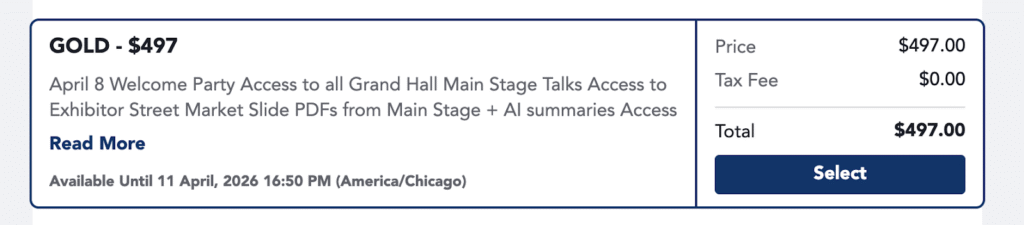
Register Here:
https://www.ecommastery.ai and remember to use the code: STARTUP
Watch a short promo video on Youtube here:

20+ Lessons from Real Founders
Ever watch a movie and think, I could do that?
I had that moment recently while watching Air, the story of Nike in its early days. What stood out was not just the brand or the outcome, but the risk. They stuck their necks out. They bet on belief before proof. And they made a decision that could have easily ended the company.
That moment inspired me to ask the Startup Club community on LinkedIn two simple questions.
What movie has inspired you as an entrepreneur?
And what lesson did you take away from it?
Founders, CEOs, and operators from the community responded with thoughtful, experience driven answers. These were not movie critics or armchair analysts. They were people who have built, scaled, and exited real businesses.
We distilled their responses into movies every entrepreneur should watch, along with the lessons learned straight from the founders themselves.
This is not a list about entertainment.
It is about decision making, risk, leadership, failure, resilience, and the mindset required to build something meaningful.
The Movies and the Lessons
1. The Founder
Synopsis: The story of Ray Kroc and the transformation of McDonald’s into a global franchise system.
Lesson I Learned: Consistency and systems matter more than brilliance. You cannot scale chaos.
Recommended by: Brian Scudamore, Founder and CEO of 1-800-GOT-JUNK?
Lesson I Learned: The business you start is rarely the business you end up building. Be careful who you trust and understand where the real leverage lives.
Recommended by: Adam Stalmach, Founder of an operating systems and AI implementation firm for growth companies
Lesson I Learned: Ray Kroc is a reminder that vision without execution is irrelevant, and execution without ethics has consequences.
Recommended by: Ineba Obomanu, Founder of Naija Diaspora Hub
2. Jerry Maguire
Synopsis: A sports agent walks away from scale to rebuild his business around values, relationships, and purpose.
Lesson I Learned: Care deeply for your customers and make a real impact in their lives. Authentic relationships beat transactional ones every time.
Recommended by: Patrick Thean, CEO of Rhythm Systems
Lesson I Learned: Building something aligned with your values is terrifying, risky, and worth it. Personal brand and trust matter more than logos.
Recommended by: Chris Kneeland, Founder and CEO of Cult Collective
3. Moneyball
Synopsis: A general manager disrupts professional baseball by replacing intuition with data driven decision making.
Lesson I Learned: Constraints force better strategy. When resources are limited, thinking differently becomes a competitive advantage.
Recommended by: Rakesh Thakor, Founder and CEO of Estatic Infotech
Lesson I Learned: Disruption happens when you stop solving the wrong problem and start measuring what actually matters.
Recommended by: Jonathan Jordan, Book coach to CEOs and founders
4. The Social Network
Synopsis: The origin story of Facebook and the relentless drive to build, ship, and dominate.
Lesson I Learned: While others argue about ownership and credit, winners execute. Misaligned cofounder expectations always surface later, usually in court.
Recommended by: Dave Rubinstein, Founder of Founder Led Sales
5. BlackBerry
Synopsis: The rise and fall of BlackBerry, once the most dominant smartphone company in the world, and how internal culture clashes and rapid technological change led to its collapse.
Lesson I Learned: No matter how good you are, a new technology can come along and make you obsolete. Past success is not protection. Adaptation is not optional.
Recommended by: Michele Van Tilborg, CEO of Paw.com
6. The Godfather
Synopsis: A powerful family navigates leadership, loyalty, succession, and long term strategy.
Lesson I Learned: Leadership is quiet, patient, and strategic. The long game always beats emotional decision making.
Recommended by: Eric Malka, Founder of The Art of Shaving
Lesson I Learned: Do not work with family.
Recommended by: Colin C. Campbell, Serial entrepreneur and bestselling author
7. Air
Synopsis: Nike’s bet on Michael Jordan and the birth of one of the most iconic brand partnerships in history.
Lesson I Learned: Conviction plus storytelling can change the trajectory of an entire company.
Recommended by: Shane Harker, Founder of a Clean50 Honouree environmental company
8. The Pursuit of Happyness
Synopsis: A father fights through homelessness while building a career in sales.
Lesson I Learned: Relentless perseverance, delayed gratification, and sales as survival.
Recommended by: Jason Glaser, Chief Operating Officer at TCII Capital
9. Chef
Synopsis: A burned out chef rebuilds his career by returning to fundamentals and rediscovering joy in the work.
Lesson I Learned: Once you burn the bridge publicly, the only direction left is forward. Most people do not survive that moment.
Recommended by: Tyson Lee, Brand strategist and writer
10. Willy Wonka and the Chocolate Factory
Synopsis: A visionary builds a brand so strong the world bends around it.
Lesson I Learned: You are not just selling a product. You are choosing who gets access to your world. Brand selectivity matters.
Recommended by: Dave Kustin, Leadership coach and storyteller
11. There Will Be Blood
Synopsis: An uncompromising entrepreneur builds an empire at the cost of everything else.
Lesson I Learned: Obsession can build empires and destroy lives. Know which side you are feeding.
Recommended by: Tom Hart, Profit advisor for marketing agencies
12. Heat
Synopsis: A group of high-end professional thieves start to feel the heat when they unknowingly leave a clue at their latest heist.
Lesson I Learned: When something is your calling, commitment is non negotiable.
Recommended by: Sonal Keay, Creative director and brand leader
13. Predator
Synopsis: A team faces an enemy that seems impossible to defeat.
Lesson I Learned: Big problems shrink once you prove they can bleed. Momentum starts with small wins.
Recommended by: Matthew Stevens, Brand and growth strategist
14. Star Wars
Synopsis: A hero succeeds by trusting instinct over technology, data, and authority when it matters most.
Lesson I Learned: You need to trust your instincts. Follow the force.
Recommended by: Rob Follows, CEO and Founder of STS Capital
15. The Best Exotic Marigold Hotel
Synopsis: Reinvention later in life proves it is never too late to start again.
Lesson I Learned: Age is not a limiting factor. Persistence is.
Recommended by: Joe Foster, Co Founder of Reebok
16. Gran Turismo
Synopsis: A gamer becomes a professional race car driver through visualization and discipline.
Lesson I Learned: You must believe in the outcome before there is proof. First you train the mind. Then you execute.
Recommended by: Quinn Campbell, Commercial real estate specialist and investor
17. Office Space
Synopsis: A satire of corporate dysfunction and disengagement.
Lesson I Learned: Comedy reveals truth. Build your own company so you never have to work for someone like that.
Recommended by: Dana Vanhoy, Business and sales leader in CPG and retail
18. Barbarians at the Gate
Synopsis: The ultimate leveraged buyout fueled by ego and excess.
Lesson I Learned: Confusing money with meaning is an easy trap. Reputation is an asset you only lose once.
Recommended by: Paul Segreto, Entrepreneur advisor and franchise expert
19. Other People’s Money
Synopsis: A corporate raider targets an underperforming company, forcing a hard look at sentiment versus efficiency and the real role of capital in building value.
Lesson I Learned: Create real value or the market will dismantle you.
Recommended by: William Campbell, Co Founder of GeeksforLess
20. Joy
Synopsis: A young woman who rose to become founder and matriarch of a powerful family business dynasty.
Lesson I Learned: If you don’t control your product, your patents, and your narrative, someone else will control your destiny.
Recommended by: Michele Van Tilborg, CEO of Paw.com
21. Bill Murray Films (Meatballs, Stripes, Caddyshack)
Synopsis: Controlled chaos, irreverence, and playfulness wrapped in leadership lessons.
Lesson I Learned: Entrepreneurs need to free themselves from performance anxiety and remember how to play.
Recommended by: Geoffrey A. Moore, Author of Crossing the Chasm
Final Thoughts
Twenty one movies. Dozens of lessons.
So maybe binging on Netflix is not the worst thing you could do after all.
These films are not just entertainment. They are stories about risk, conviction, failure, leadership, and what it really takes to turn an idea into something real. Sometimes the spark you need to finally launch that startup does not come from another book or podcast. It comes from watching someone else stick their neck out and survive.
Grab a tub of popcorn and start watching movies that might actually move you forward.
A big thank you to the Startup Club community for making this article possible. The insights shared here came directly from founders who have built, scaled, and exited real businesses.
If you have not already, sign up for our mailing list. We send one masterclass level email each month, completely free. And yes, it is damn good.
Now hit play. Your startup is waiting.
How to Survive & Thrive in a Rollercoaster World 🎢🌍
Open Mic how do you survive and thrive in today’s startup landscape.
https://www.clubhouse.com/invite/nQgUG4Zyz7vjLj06QgZwWn0r3X13Uy0GVrr:eSc2_JM_zYhB460EjqHQUOboEv32xV0FsWjGjZGWEmQ
Surviving Entrepreneurial Disappointment- Bounce-Back Series
https://www.clubhouse.com/invite/b36S08lo2ZylK5DQnzKk66z0RQZkc1Ke6YY:c1CLtbc3KObbi9KMJUmTCaq_VbJC8L-Yb-l3OryVX54

Facing Your Startup Fears in 2026
Fear shows up at every level of entrepreneurship, from launching your first idea to leading through cashflow crises, public visibility, and rapid change. Colin C. Campbell and Michael Gilmour share practical ways to keep fear from becoming debilitating—decision-making, risk mitigation, transparency, community support, and “doing it scared” until confidence catches up.
Hosts: Michael Gilmour, Colin C. Campbell