


Starting a business can feel like standing at the edge of a cliff—you can see the opportunity, but you’re not sure which step to take first. This week, we came up with a checklist that turns the process into clear, actionable moves to go from spark to startup without stalling out.
Ideas are everywhere, but it’s execution that wins.
1. Write It Down
Your idea isn’t real until it’s written. Grab a sticky note—yes, a literal one—and write your business idea in a single, sharp sentence. The act of writing forces clarity. You’ll refine it later, but for now, make it tangible.
2. Know Your “Why”
Why this business? Why now? Purpose is your anchor when things get messy (and they will). Write down your motivation, whether it’s solving a problem, filling a gap, or creating freedom for yourself. Your “why” will become the emotional backbone of your pitch and brand.
3. Choose the Space You’ll Own
Every startup needs a niche. Instead of “I want to start a marketing agency,” think “I’ll help boutique fitness studios run social media ads in South Florida.” That’s a market you can own. Start local and narrow—scaling wide comes later.
4. Plan How You’ll Be Found (Google + AI)
Being searchable isn’t optional. Ask yourself: How will people find me online—and how will AI describe me?
In 2025, your digital presence needs to rank not only in Google but in AI summaries. Create original, high-quality content that tells your story and uses your target keywords naturally. Add LLM crawl code to your website if your platform supports it (WordPress does, Shopify soon will).
5. Name It, Check It, Claim It
This is the fun part. Brainstorm names that reflect your brand’s essence, then:
- Check trademarks (use USPTO in the U.S. or NUANS in Canada)
- Buy the domain
- Reserve social handles
- Commission or AI-generate a logo
In one afternoon, your business goes from abstract to official.
6. Find Mentors and a Community
Entrepreneurship isn’t solo. Join incubators, accelerators, or SCORE—the free U.S. mentor network. Surround yourself with people who’ve built before. According to SCORE, mentorship can triple your chances of success.
7. Build Your Customer Persona
Who are you really solving a problem for? Give your customer a name, a job, a frustration, and a dream. “Sam, a 34-year-old dog owner who wants durable, stylish pet beds,” is far more actionable than “dog owners.” When you know them, you can build for them.
8. Create Your X-Factor and Brand Promise
What makes you different? That’s your X-Factor.
It might be speed, quality, ethics, or innovation—but it has to be real. Then, pair it with a bold promise. Think Domino’s “30 minutes or it’s free.” Your promise should make people stop scrolling and start remembering.
9. Set Your First Stage Gate
Stage gates keep you accountable. Create one SMART goal—Specific, Measurable, Attainable, Relevant, and Time-bound.
Example: “Launch MVP and secure 10 paying users by March 1.”
If you hit it, double down. If you don’t, pivot or pause. Stage gates reduce stress and keep your progress honest.
10. Know What You Need (Money + People)
Two killers of early startups: underfunding and doing it alone. Estimate how much cash you need to hit your first stage gate, and who you’ll need to get there—partners, freelancers, or advisors. If you can’t secure either, don’t start yet.
11. Track the Right Metrics
Even before investors ask, you need to know your numbers:
- CAC (Customer Acquisition Cost)
- ARPU (Average Revenue Per User)
- Churn Rate
- LTV (Lifetime Value)
These metrics aren’t just for finance—they’re feedback loops that help you scale smarter.
12. Learn the Trade
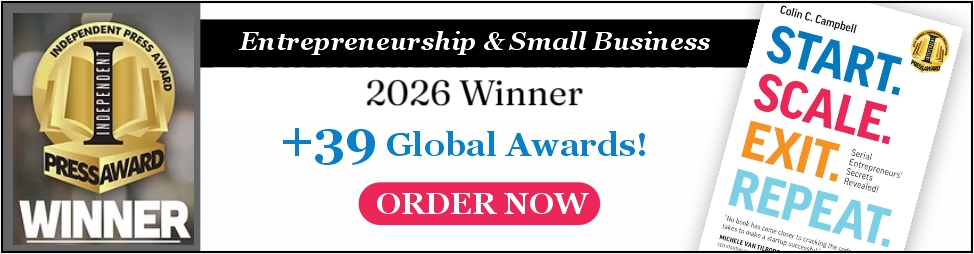
Entrepreneurship is a craft. Read, listen, learn. Books like Start. Scale. Exit. Repeat. can help you master the startup journey through proven frameworks and real founder stories. The companion Start. Scale. Exit. Repeat. Workbook turns this entire checklist into fillable, guided action—with embedded GPTs for each stage to help you plan and execute faster.
The bottom line is, ideas are everywhere, but execution wins. With a strong “why,” clear steps, and a few sticky notes, your startup can move from concept to company faster than ever.