


What Paw.com’s Forced Liquidation Reveals About Small Business Lending in America
A profitable company. On-time payments. A recognizable consumer brand.
And still, no refinancing.
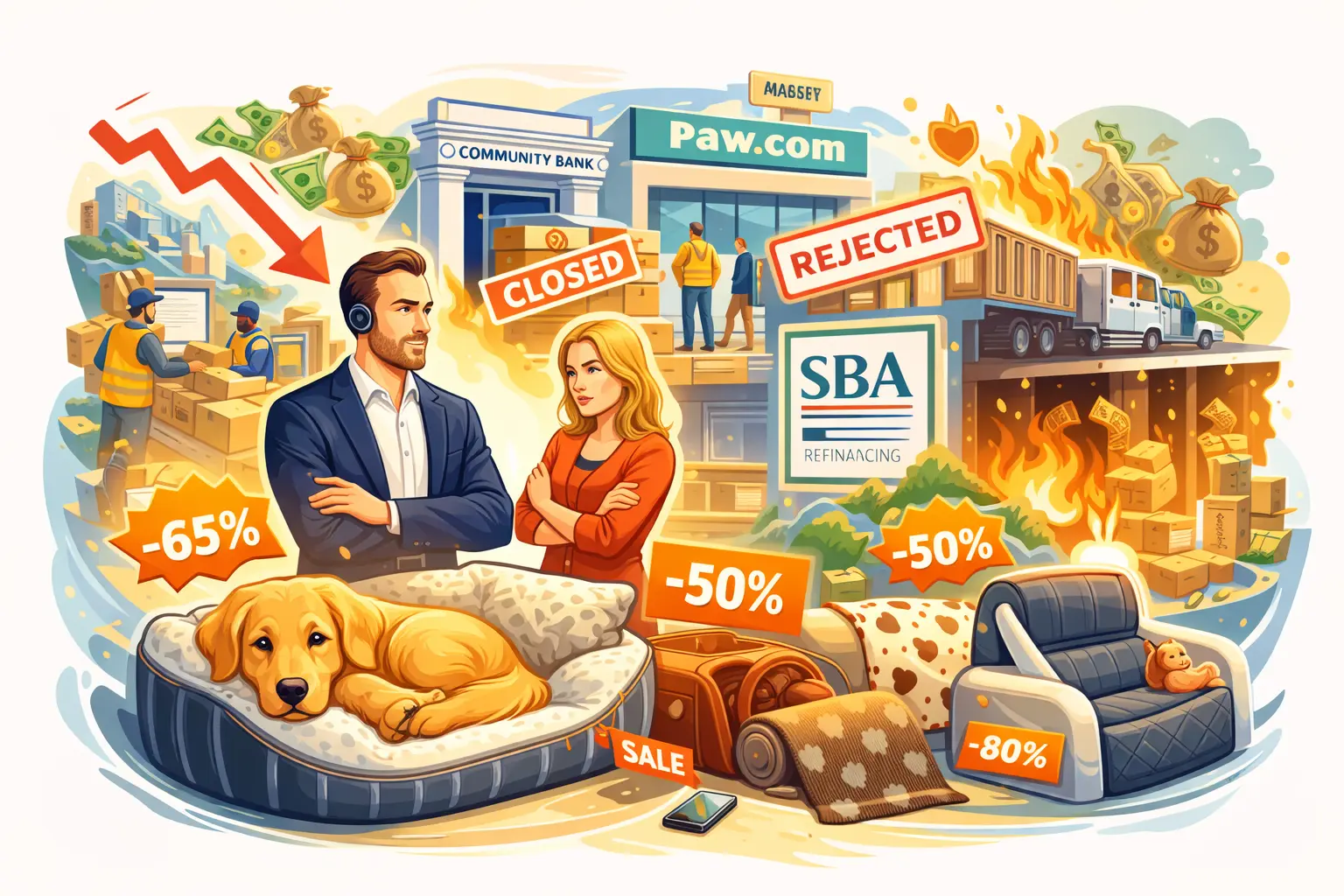
That’s the uncomfortable reality facing Paw.com, the direct-to-consumer pet lifestyle brand best known for its design-forward dog beds, blankets, and car seat beds. This week, the company announced a structured inventory liquidation after its Main Street Lending Program (MSLP) loan reached final maturity and refinancing was declined by both its longtime community bank and the Small Business Administration.
The result: a sitewide liquidation of inventory at up to 65 percent off, the closure of several warehouses, and renewed questions about how small businesses are treated when federal relief programs come due.
Now this story is a little personal given I am the chief investor in Paw.com, and I truly believe it is a great company with some of the best dog beds, blankets and car seats in the world.
A Program Designed to Help, Ending With a Cliff
Paw.com is one of hundreds of U.S. companies now confronting the final balloon payments attached to MSLP loans issued in 2020. The program allowed businesses to defer meaningful principal payments in its early years, followed by a steep structure that culminated in a 70 percent balloon payment in year five.
Despite remaining current on all loan obligations and achieving profitability in 2025, Paw.com was unable to secure refinancing or a bridge solution as the balloon payment came due.
“We made every payment and had a profitable year despite a difficult turnaround, but it still wasn’t enough,” said CEO Michele Van Tilborg. “When the final balloon payment came due, the bank and SBA declined to provide any refinancing or bridge alternatives.”
The Human Cost of Policy Design
Programs like MSLP were critical during the height of the COVID crisis. They saved jobs, preserved supply chains, and kept thousands of businesses alive. But the structure of those loans is now producing a second-order effect that few anticipated at the time: viable companies being forced into liquidation not because they failed, but because the debt design leaves no off-ramp.
Primary investor Colin C. Campbell, author of Start. Scale. Exit. Repeat., addressed that reality directly.
“Not all investments work out as you plan, but I am still confident in Paw.com given their product lineup,” said Campbell. “It’s a shame that a program designed to help small businesses survive the COVID pandemic has ended by forcing small businesses to pay up or go under. It is also ironic that the post covid pull back combined with government tariffs depressed our earnings making a turnaround very difficult but the SBA required 2 years of profitability to renew the loan.”
What Happens Next for Paw.com
As part of its restructuring, Paw.com will:
– Close several warehouses across the country
– Liquidate all inventory, including bestsellers, at 65 percent off
– Continue operations post-sale with plans to return to full pricing and profitability
The liquidation sale is live now at paw.com.
A Warning Signal for Founders and Policymakers
Paw.com may be among the first consumer-facing brands to publicly disclose MSLP-related distress, but it won’t be the last. Thousands of businesses are approaching similar maturity cliffs, many with identical payment histories and equally limited refinancing options.
For founders, the lesson is uncomfortable but necessary: government-backed debt can carry risks that only reveal themselves years later.
For policymakers and lenders, the message is simpler and harder to ignore. If profitable, on-time borrowers cannot refinance, then the definition of “creditworthy” may need revisiting. Transparency, fairness, and flexibility shouldn’t expire when the crisis does.