Home Blog

EP36: What Actually Works when Raising Money

0

Getting it right the first time & setting up for success

(Recorded Live on Clubhouse November 12, 2021) 

We were joined by Lil Roberts, CEO and founder Fintech platform Xendoo, for insights into raising capital for your startup. We learned where to look and what to look for in an investor, preparing to meet with potential investors, plus Lil’s top tips for perfecting your pitch.

Moderators: Colin C. Campbell, Michele Van Tilborg, Rachael Lashbrook, Jeff Sass

Guest: Lil Roberts

Sign up to our email and never miss an update on our special events, guest speakers, and more: https://startup.club/

26 Best Startup Ideas to Launch in 2026

We are on the precipice of one of the greatest years to ever start a business in our lifetime.

2026 will usher in massive change driven by AI, automation, and shifting interest rate conditions. History shows that when technology shifts and capital becomes cheaper at the same time, new companies are born and incumbent’s struggle. That is good news if you are an operator.

This article is based on a live Startup Club podcast discussion with founders, operators, investors, and businesses that have already succeeded inside our incubator. These are not theoretical ideas or trend chasing. They are real businesses you can start today!

If you want the raw conversation behind this list, you can listen to the full episode on the Startup Club podcast below, or on your favorite podcast streaming service.

2026 belongs to founders who move fast with AI, but win by staying human and building what people actually need, in the digital world and the real one.

1) AI Consultant for Businesses

Idea: Help companies implement AI tools and workflows.
Pros: Immediate demand, fast cash flow.
Cons: Competitive market.

2) AI Agent Builder for One Industry

Idea: Build AI agents for a specific vertical such as real estate, legal, or healthcare.
Pros: Clear positioning, pricing power.
Cons: Requires domain expertise.

3) Skilled Trades

Idea: Electrical, plumbing, HVAC, and specialty trades.
Pros: AI resistant, demand exceeds supply.
Cons: Hiring and operations matter.

4) Smart Home Specialist

Idea: Install and maintain smart home systems.
Pros: Growing demand, recurring revenue.
Cons: High customer expectations.

5) Office Internet and Network Reliability Service

Idea: Fix Wi Fi, networking, and uptime for homes and offices.
Pros: Clear pain point customers pay for.
Cons: Troubleshooting varies.

6) Low Labor Cost Franchises

Idea: Franchise models designed to run lean on staffing.
Pros: Proven systems, predictable operations, improved unit economics as borrowing costs decline.
Cons: Location and execution matter.

7) Teach People How to Use AI

Idea: Training focused on outcomes rather than tools.
Pros: Fast to launch, strong demand.
Cons: Requires constant updating.

8) Buy and Run an Airbnb

Idea: Own and operate short term rentals in select markets.
Pros: Strong cash flow potential, lower interest rates improve cash on cash returns.
Cons: Regulatory and seasonality risk.

9) Airbnb Management Company

Idea: Manage Airbnbs for owners who do not want the hassle.
Pros: Asset light, recurring revenue, more owners enter the market as financing becomes cheaper.
Cons: Guest issues never stop.

10) Market Specific Real Estate Investing

Idea: Buy in regions positioned to benefit from rate changes.
Pros: Macro tailwinds amplify returns, falling rates unlock pent up demand.
Cons: Timing matters.

11) Renovate and Flip Homes

Idea: Buy undervalued properties, renovate efficiently, and resell.
Pros: Clear value creation, lower rates expand buyer affordability and resale prices.
Cons: Cost overruns are real.

12) Realtor and Contractor White Glove Service

Idea: Combine listings with renovations and vendor coordination.
Pros: Faster sales, higher margins.
Cons: Operational complexity.

13) Niche SaaS for Small Businesses

Idea: AI powered marketing platforms for industries like dentists or gyms.
Pros: Recurring revenue, strong niche positioning.
Cons: Requires deep customer understanding.

14) E Commerce Brand

Idea: Launch consumer products using modern platforms and AI tools.
Pros: Easier than ever to start.
Cons: Advertising volatility.

15) Pet Services Business

Idea: Pet grooming, boarding, or daycare.
Pros: Recession resistant demand.
Cons: Labor intensive.

16) Drone Services

Idea: Aerial photography, video, inspections, and mapping for real estate and commercial use.
Pros: Low startup cost, high perceived value.
Cons: Weather dependency.

17) Independent Sales Organization

Idea: Resell shipping, telecom, HR, or insurance services to small businesses.
Pros: Recurring commissions, no product development.
Cons: Sales driven business.

18) Influencer Commerce

Idea: Build commerce driven audiences using Tik Tok Live and Amazon Live.
Pros: Immediate monetization.
Cons: Platform dependency.

19) Enterprise AI Implementation

Idea: Help large organizations make AI actually work.
Pros: High ticket engagements.
Cons: Long sales cycles.

20) Shared Economy Management Business

Idea: Operate cars, rooms, or properties for others in exchange for a percentage.
Pros: Asset light, scalable, more asset owners emerge in lower rate environments.
Cons: Operational intensity.

21) AI Entertainment Studio

Idea: Produce music, video, and short form content using AI tools.
Pros: Production costs are falling rapidly.
Cons: Authenticity still matters.

22) Create a Masterclass Using Your Expertise

Idea: Package real world experience into a structured course on platforms like Udemy, Teachable, or Kajabi.
Pros: Scalable income, low upfront cost.
Cons: Requires promotion.

23) Tokenized Real Estate Expertise

Idea: Specialize in fractional and tokenized ownership models.
Pros: Early mover advantage.
Cons: Regulatory complexity.

24) Land Trust and City Partnership Structuring

Idea: Structure deals separating land ownership to reduce capital requirements.
Pros: Unlocks difficult projects.
Cons: Bureaucracy.

25) New gTLD Domain Opportunities

Idea: Prepare for new domain extensions opening in 2026.
Pros: Rare regulatory window.
Cons: Capital intensive.

26) Virtual Food Brand

Idea: Launch a delivery first food concept optimized for platforms like Uber Eats.
Pros: Low startup cost, instant demand, reduced pressure on operating capital as financing costs fall.
Cons: Platform fees and reviews matter fast.

My Last Thoughts:

The best businesses aren’t started when conditions feel perfect.
They’re started just before everyone else realizes the conditions have already changed.

2026 will be defined by massive disruption. The kind of change large corporations fear. That fear creates opportunity. It opens the door to one of the best startup environments we’ve seen in decades.

You don’t need the perfect idea.
You need one idea.

Pick it. Execute. Launch. Learn faster than the market around you. Speed beats polish. Progress beats hesitation. The only real failure is not starting.

Nothing compounds like learning.

If you want to learn how to start, scale, exit, and build real wealth, join Startup.club’s monthly masterclass newsletter. Practical insights. No fluff. Built by people who’ve done it before with real stories and real actionable ideas. 

7 Values of Highly Effective Founders – CompleteEntrepreneur

0

7 Values of Highly Effective Founders – CompleteEntrepreneur

https://www.clubhouse.com/invite/eX9c1b1O5Z8VZO1V1odbn3We9Xbvhq8oVOO:0r5dBlB8Rk_AOO6bjrN-QWjwDgdlxOiqOxTpL6AJhfQ

Top Startup Ideas for 2026

0

Top Startup Ideas for 2026

https://www.clubhouse.com/invite/gg1S7kaY00akg5aVqo6WoOnqX8O0fnpLXYY:T84CHNq_dapWKME6hclIE3jPoljvHuQ0RL77ch54sLw

EP198: Eric Malka’s Tips to Winning the Startup Game

0

How Art of Shaving Founder Eric Malka Turned a Simple Idea into a Global Brand

(Recorded Live on Clubhouse November 14, 2025)

In this episode with Colin C. Campbell and Michele Van Tilborg, The Art of Shaving co-founder Eric Malka shares the eight principles that took him from undocumented warehouse worker to building, scaling, and exiting a category-defining brand. They dive into mindset, brand focus, execution, pivots, culture, and scalability, and why “crawl, walk, run, fly” is the only sane way to build a business that lasts.

Get Eric’s Book, ‘On The Razor’s Edge’ on Amazon: https://amzn.to/48uQm0C

Hosts: Colin C. Campbell, Michele Van Tilborg

Guest: Eric Malka, Founder of The Art of Shaving

Eric Malka’s Tips to Winning the Startup Game

Colin C. Campbell spoke with Eric Malka, co-founder of The Art of Shaving and author of On the Razor’s Edge, to unpack what it really takes to win at the startup game. Malka didn’t begin with money, status, or credentials. He arrived in New York as a 17-year-old immigrant with no formal education, working in a warehouse in Manhattan. Less than twelve years after stepping off a Greyhound bus at Port Authority, he and his wife had launched The Art of Shaving, built it into the leading premium men’s grooming brand in the U.S., and sold it to Procter & Gamble. Behind that story are eight principles every founder can apple to win at the startup game.

“Every brand is a company, but not every company is a brand.”

Eric Malka, Co-Founder of The Art of Shaving

The first principle is mindset. Eric reminds founders that startups are a marathon, not a sprint—90% will fail, and the universe will test how badly you want it. You need grit, resilience, and prudence: taking real risks, but minimizing unforced errors, like a championship tennis player who wins by making fewer mistakes, not just more brilliant shots. Second is execution. Ideas are cheap; it’s the way you bring them to life that creates value. The Art of Shaving didn’t invent shaving, or even shaving shops. What Malka and his wife did was execute obsessively well—elevating ingredients, store design, service, and hiring—until a simple idea became a category-defining brand.

Eric stresses the power of focus in branding. Every brand is a company, he says, but not every company is a brand. From day one, they chose to be the best in the world at one thing: luxury shaving. Not “grooming,” not “men’s skincare”—shaving. That clarity helped them own a mental mountain competitors couldn’t reach. Fourth, they built that brand directly from the customer. For years, Eric and his wife worked in their first two stores, treating them like laboratories. Thousands of men walked in and told them the same problems—sensitive skin, razor burn, bad fragrance. The products, messaging, and positioning were all crafted from those conversations, not from a conference room.

The next set of principles are about people, purpose, and culture. A great brand, Eric says, is an extension of who you are. The Art of Shaving reflected his Moroccan roots, his wife’s French sensibility, their love of natural ingredients, beautiful aesthetics, and true service. Internally, culture was built on an “inverted pyramid”: frontline staff and customers at the top, leadership at the bottom, serving them. Employees weren’t just selling $18 shaving cream; they were promoting men’s health and daily self-care. That sense of purpose made them brand ambassadors, not just retail clerks.

Colin and Eric also talked scalability and strategic flexibility. True scalability is having a proven, profitable system for acquiring and retaining customers, then the systems and people to replicate it. It took The Art of Shaving nine years to reach $10 million in revenue—but once the foundations were solid, they went from $10 million to $100 million in roughly the same amount of time. Along the way, he wasn’t afraid to pivot: first away from stores toward wholesale distribution, then back into building a national retail footprint when the data changed. His framework today is simple: crawl, then walk, then run, then fly. If you can avoid the early pitfalls, stay close to your customer, protect your brand, and build patiently for scale, you give yourself the chance to join the 10% who truly win the startup game.

For an even deeper dive, check out Eric’s Full Blog Post, How To Succeed as a Startup Founder – 8 Principles from The Art of Shaving Founder.

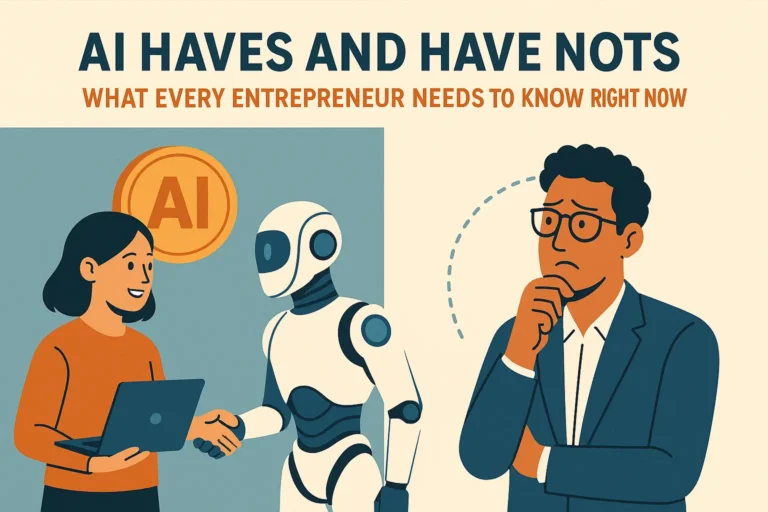
AI Haves and Have Nots: What Every Entrepreneur Needs to Know Right Now

Are you winning in the AI era or are you getting left behind?

Back in the early internet days a few tiny service providers in Toronto patched their gear together in a cramped room and agreed to share bandwidth. That handshake turned into one of the biggest internet exchanges in North America. People showed up for the common good. It felt like the nineties were built on curiosity, community, and a bit of Star Trek optimism. Then the giants arrived, and the innocence evaporated.

Jump to November 2023. ChatGPT 3.5 lands and the world lights up. 

Finally, a global equalizer. 

Education, geography, background none of it mattered. Anyone could tap into a tool with world changing potential. OpenAI was still not for profit, and the story was that AI would lift everyone.

Then the giants arrived again. Microsoft moved in. OpenAI shifted to a for profit model. Competitors raced forward. Grok. Claude. Google Gemini. Innovation exploded. And right behind it came something less inspiring.

The price of admission started climbing.

People who did not buy in started falling behind.

In my book Start. Scale. Exit. Repeat., I talk about Living in the Future. It means stepping into tomorrow before everyone else so you can spot the trends early. I always chased the fastest internet and the newest tech. I bought the early HDTVs. I drove the early Model X. Today I stack paid LLM memberships because they help me launch new companies and accelerate growth. Living in the future is how I ended up building and exiting more than a dozen tech companies over the past twenty-five years. So when AI hit, I jumped in full throttle. 

Right now, we are sitting on the edge of the biggest technological shift in history. I believe it will mint more millionaires than anything before it. The winners will be the ones who choose to live inside an AI world instead of watching it from the sidelines.

ChatGPT 3.5 was just the spark. Since then, we have seen leaps in content creation, music, video, research, analysis, and everything in between. Every month another industry shakes.

And here is what hit me. I jump between AI tools all day building music videos, commercials, legal reviews, research, and more. Meanwhile almost no one around me pays for even the basic membership. 

Today, real AI tools do not come cheap.

If you want to play the game, you will spend two hundred to five hundred a month. For me the return is endless. For early-stage entrepreneurs that price can feel like a locked door.

But using AI to launch a business is one of the biggest edges you can get. A simple example. I wanted to launch a YouTube video with no real experience. In the past I would hire an agency. This time I used a stack of AI tools and followed their step-by-step guidance. I bounced from model to model stealing the best of each one even while fighting daily limits. After a few weeks the video Made in America was ready and within seventy-two hours it crossed one hundred thousand views.

Three months earlier this would have been impossible without a big budget or serious creative chops. With AI it became accessible. But only because I paid for the tools.

So here we are. Are we repeating history? Are we building a new class of AI haves and AI have nots? Will big companies keep their edge while scrappy entrepreneurs get priced out?

No one knows how the future shakes out. But one thing is obvious. If you do not pay for it, you will not play with it. And if you don’t play with it, you won’t build wealth from it.  

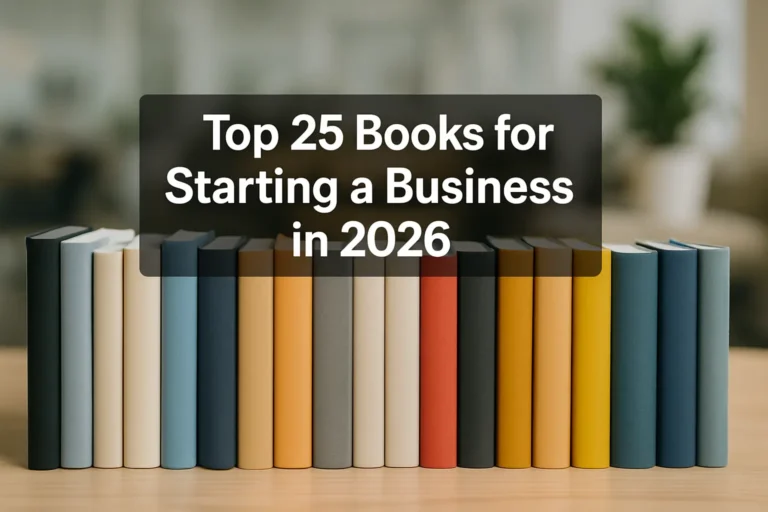
Top 25 Books for Starting a Business in 2026

0

This  curated  list  highlights  the  most  influential  and  practical  books  for  aspiring  and  experienced  entrepreneurs.  Selections  are  based  on  Amazon  bestsellers  (4.5+  stars),  industry  awards  (Axiom,  FT  Business  Book  Awards,  Porchlight),  and  expert  recommendations  from  the  U.S.  Chamber  of  Commerce,  Forbes,  Inc.,  and  the  New  York  Times.  The  list  spans  essential  startup  methodologies,  leadership,  scaling,  AI  integration,  and  exit  strategies,  emphasizing  books  with  lasting  impact  and  real-world  application.

RankTitleAuthor(s)Key  Topics  CoveredWhy  It  Fits  Criteria
1The  Lean  StartupEric  RiesLean  methodology,  MVP  testing,  pivotingAmazon  #1  bestseller;  4.6/5  stars  (50k+  reviews);  influential  modern  classic.
2Zero  to  OnePeter  Thiel  with  Blake  MastersInnovation,  monopoly  building,  unique  value4.7/5  stars;  award-nominated;  foundational  for  startup  visioning.
3The  E-Myth  RevisitedMichael  E.  GerberSystems  thinking,  franchising  mindsetPerennial  bestseller;  core  entrepreneurship  framework.
4Start  Your  Own  BusinessEntrepreneur  Media  StaffBusiness  planning,  funding,  marketing  basics2025  edition;  comprehensive  startup  guide.
5Rich  Dad  Poor  DadRobert  T.  KiyosakiFinancial  mindset,  asset  buildingTimeless  bestseller;  over  100k  reviews;  mindset  cornerstone.
6The  Hard  Thing  About  Hard  ThingsBen  HorowitzLeadership  in  crises,  scaling  challengesCandid  insights  from  a  top  venture  capitalist;  4.8/5  stars.
7Atomic  HabitsJames  ClearHabit  formation  for  productivityGlobal  #1  bestseller;  200k+  reviews;  high  relevance  for  founders.
8Shoe  DogPhil  KnightBootstrapping,  perseveranceInspirational  memoir;  top-rated  across  entrepreneurship  lists.
9$100M  OffersAlex  HormoziSales  funnels,  offer  creation4.8/5  stars;  Amazon  #1  in  Entrepreneurship;  highly  actionable.
10Extreme  OwnershipJocko  Willink  &  Leif  BabinAccountability,  team  leadershipNavy  SEAL-tested  leadership  principles;  NYT  bestseller.
11TractionGino  WickmanEOS  framework,  operationsPractical  system  for  scaling  operations;  8k+  reviews.
12Good  to  GreatJim  CollinsLevel  5  leadership,  hedgehog  conceptBusiness  classic;  20k+  reviews;  deep  organizational  insight.
13How  to  Win  Friends  and  Influence  PeopleDale  CarnegieNetworking,  persuasionEvergreen  classic;  over  100k  reviews;  essential  communication  guide.
14The  Making  of  a  ManagerJulie  ZhuoFirst-time  managementModern,  relatable  management  guide;  4.7/5  stars.
15Measure  What  MattersJohn  DoerrGoal-setting  frameworks  (OKRs)4.6/5  stars;  adopted  by  major  tech  firms  globally.
16OriginalsAdam  GrantInnovation,  risk-takingPsychological  insights  into  creative  leadership.
17Start  with  WhySimon  SinekPurpose-driven  businessInspires  brand  alignment  and  leadership  authenticity.
18The  Power  of  HabitCharles  DuhiggHabit  loops  in  organizationsBehavioral  science  applied  to  business  culture.
19Building  a  StoryBrandDonald  MillerMarketing  storytellingCustomer  communication  framework;  4.8/5  stars.
20Start.  Scale.  Exit.  Repeat.Colin  C.  CampbellPractical  tips  on  starting,  scaling  and,  exiting2025  Axiom  Gold  winner;  33  Global  Awards.
21Build  the  Damn  ThingKathryn  FinneyInclusive  entrepreneurshipEmpowering,  diverse  founder  perspectives;  4.7/5  stars.
22Burn  RateAndy  DunnMental  health  in  startupsRaw  and  relatable  founder  memoir;  2025  award  mention.
23The  5  Types  of  WealthSahil  BloomHolistic  wealth  building2025  release;  Amazon  Editors’  Pick;  4.8/5  stars.
24Competing  in  the  Age  of  AIMarco  Iansiti  &  Karim  R.  LakhaniAI  strategy,  leadershipForward-looking  and  academically  solid;  2025  recommendation.
25High  Growth  HandbookElad  GilScaling  startupsDefinitive  guide  for  hypergrowth;  widely  cited  by  founders.

Compiled  for  educational  and  reference  purposes.  All  ratings  and  rankings  current  as  of  October  2025.

This  list  was  generated  based  on  knowledge  of  popular  and  influential  books  in  the  “Starting  a  Business”  category.  Here’s  is  the  methodology  that  was  used:

  1. Bestseller  Status:  Books  listed  currently  on    Amazon  in  the  category  of  “Starting  a  Business”  only  as  bestsellers  with  positive  reviews  were  considered. 
  2. Impact:  The  list  includes  books  that  have  influenced  startup  founders  and  have  been  recognized  by  book  awards  in  2024/2025
  3. Wide  Range  of  Topics:  The  list  included  books  that  cover  a  wide  range  of  topics  with  expertise.
  4. Author  Recognition:  Well-known  authors  like  Eric  Ries,  Peter  Thiel,  and  Michael  E.  Gerber  have  a  significant  following  and  are  often  cited  and  look  at  new  authors  published  over  the  last  few  years  to  balance  it  out  the  list.  
  5. Cross-Referencing:  The  list  was  cross-referenced  with  lists  from  other  platforms,  mentioned  in  business  discussions  to  ensure  a  comprehensive  yet  focused  selection.
  6. Reputation  and  Reviews:  Books  with  a  strong  reputation  for  providing  practical  advice,  insights,  or  foundational  knowledge  in  entrepreneurship  were  favored.

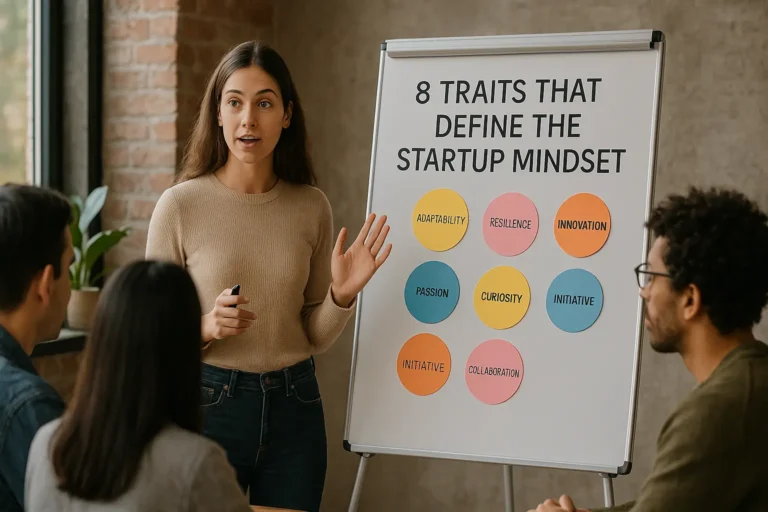
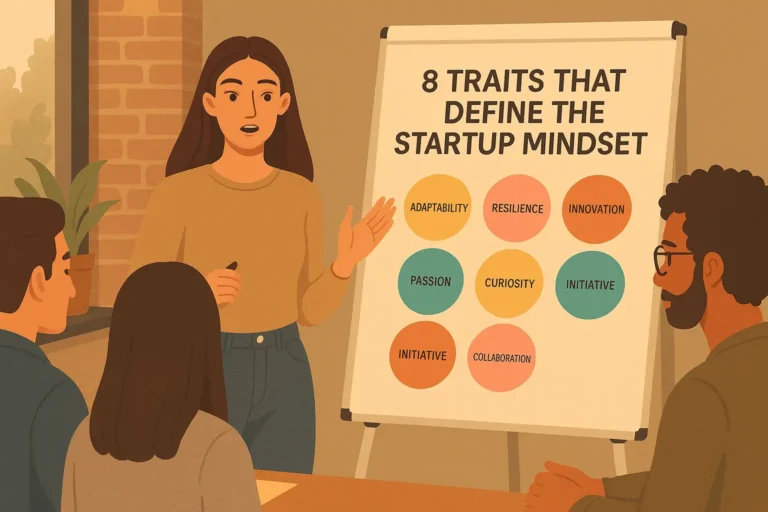
EP197: 8 Traits That Define the Startup Mindset

0

The real difference between startup ideas that die on the whiteboard and those that become global successes? The mindset of the founder.

(Recorded Live on Clubhouse November 20, 2025)

In this episode of The Complete Entrepreneur, Colin C. Campbell and Michael Gilmour break down the “startup mindset” — from relentless learning and curiosity to naivety, optimism, and managing fear. They share personal stories of launching new ventures, recovering from failure, and why tenacity, awareness, and a love for the game matter more than any spreadsheet. If you’re ready to think differently about how you think, this conversation is your masterclass.


Hosts: Colin C. Campbell, Michael Gilmour

EP196: AI Haves and Have-Nots: What Founders Must Know

0

“AI is both the ladder and the moat. The difference is how you use it.”

(Recorded Live on Clubhouse September 5, 2025)

Is AI leveling the field or creating a new moat? Colin and Michele debate paywalled models, free alternatives, and where founders should invest. Community voices weigh in with wins, warnings, and playbooks you can copy this week.

Hosts: Colin C. Campbell, Michele Van Tilborg

The Startup Mindset: 8 Traits That Define Founders

The startup mindset isn’t just a way of thinking — it’s a competitive edge. Successful founders approach challenges with curiosity, adaptability, and a willingness to learn fast and iterate even faster. They balance optimism with realism, embrace calculated risks, and push forward despite uncertainty. Whether you’re launching your first venture or scaling your fifth, cultivating this mindset is one of the most powerful tools you can develop.

Startup founder success demands a specific mindset as much as innovative concepts and substantial funding. The Complete Entrepreneur podcast episode from November 20th, 2025, shows that Michael Gilmour and Colin C. Campbell established that mental focus is a primary tool for startup success. 

Colin said, “The mind serves as the most vital instrument for startup success because founders need to approach their work with proper mental preparedness to achieve success.”

The mindset between successful and unsuccessful entrepreneurs is often what makes the difference between them. Startup founders tend to operate with both immediate urgency and radical thinking which others might view at times as being irrational.

“I dedicate at least 30 minutes each morning to developing skills that relate to the future needs of my business. The practice of continuous learning serves as an essential requirement for survival.”

Michael Gilmour

The discussion reduced the essential characteristics to eight fundamental traits. The following sections present each through direct quotes from the conversation to demonstrate how successful startup founders think and achieve success.

1. Be Naively Bold

Great founders demonstrate naively bold behavior by taking risks that others avoid because they are often unaware of the more traditional ways an industry may have approached problems in the past. This type of boldness stems from their passionate belief in the vision for the business.

Colin describes this mindset with the following example, “After college graduation I chose to become an entrepreneur while all my friends selected conventional employment paths. The college environment didn’t cater for entrepreneurs and, actively discouraged taking the large risk of starting a business. Many of my friends became lawyers and believed I was making a big mistake that would amount to nothing.” 

Like many entrepreneurs, Colin pursued his dream because he deeply loved the idea of building a business. Thirty years later he became immensely successful, and the rest is history.

A founder’s startup mindset emerges from a bold willingness to take risks that others would often find terrifying. This requires them to demonstrate unwavering confidence in their unorthodox business concepts even while not having all the facts.

This naïve boldness in their business idea will often be shared with anyone and everyone as they reinforce their conviction that success is inevitable. Their boldness is like a superpower that allows them to recognize opportunities which others have missed while their naivety propels them forward where others would run in the opposite direction.

2. Learn Relentlessly

Startup entrepreneurs demonstrate an intense desire to learn new things. The process of learning stands as the lifeblood of any new venture and sustains often unveils necessary business pivots that will save the business from failure.

In the session Michael Gilmour said, “Each day I dedicate at least 30 minutes each morning to developing skills that relate to the future needs of my business. This will include reading books, participating in master classes or watching videos of how other successful entrepreneurs have solved problems. The practice of continuous learning serves as an essential requirement for survival.”

The most successful founders function as knowledge absorbers who continuously learn from their reading materials, mentors and their personal experiences. Michael shared that Elon Musk demonstrated his knowledge about rockets through his reading activities before starting SpaceX. This was exemplified when an interviewer asked Musk about how he became so knowledgeable about building rockets. Musk replied that he learned everything through studying books.

The startup mindset requires entrepreneurs to maintain continuous learning because markets transform, technology advances and outdated knowledge becomes insufficient for future success.

A founder who deludes themselves that they possess the complete knowledge for their industry will inevitably experience a shutdown of their startup operations. Coline said, “The learning mode must remain active for you to achieve success because this enables you to make progress and acquire new knowledge to chart the course forward. Your failure to learn will result in business collapse.”

The practice of continuous learning enables you to stay alert while you become more flexible and maintain your position at the forefront of your industry. Startup leaders discover positive aspects in every situation when reality presents itself with obstacles.

Michael said, “The most important part of my week is the first 30 minutes of my management team meeting where each member discusses what they learned in the previous week. As the business grows the capacities of the senior leadership team must also grow if they are to move the business forward.”

3. Be Optimistic

The optimistic mindset which founders display creates such a strong belief in their mission that it attracts additional supporters to join their cause. The approach requires founders to work with positive visions which will reshape actual circumstances. A key gift that a founder can bring their team is a positive mindset that speaks of a better future together. This mindset will sometimes be the only thing between success and disaster.

Michael Gilmour said, “I choose to be optimistic because the world has never been changed by pessimists.”

Successful leaders maintain their optimistic outlook by combining it with realistic assessments during private meetings, but they never let their public optimism fade.

4. Turn Fear into Fuel

Every entrepreneur experiences fear because they worry about business failure and public humiliation and financial destruction. The startup mindset requires you to handle your fears instead of trying to eliminate them.

Colin expressed, “I experience a complete wave of doubt before every major product release. The fear of business failure, financial losses and public embarrassment go through my mind during all my business ventures.” This fear response is typical for most founders.

One distinguishing characteristic of founders emerges in the manner that they handle their fears. The monster of fear becomes their opponent which they defeat through their love for their business. Colin said, “The fear of failure is very real, and it will stop you from starting your own business.”

Founders who succeed at business use their fear to take immediate action. Michael describes his anxiety relief method by visualizing butterflies flying in chaos and slowly but surely, they fly in formation. Through structured thinking he transforms his panic into focused work. He also related that he uses the mantra from the science fiction book Dune, “fear is the mind-killer… I’ll let it pass through me and only I will remain” to transform his fear into determination.

The process of using fear as motivation will help you become more alert and push you to work with increased intensity. The experience of standing on stage or releasing a new product either makes you freeze or gives you a powerful boost which startup winners choose to experience. The fear experience leads them to take action while their body produces adrenaline which serves as their launch pad.

5. Lead with Passion

Every successful startup exists because at its core is the founder’s passion which drives it towards the vision. The complete devotion to your business product, mission and startup venture defines your passion. In order for a business to succeed the founder must be energized by their passion. 

The reason is that passion creates a “spreadable effect which defeats all forms of doubt”. Michael said, “Sometimes all that you have is your passion and it’s through your passionate belief in your team and vision that fear is overcome. In other words, love conquers fear.”

A founder who demonstrates genuine passion will spread their enthusiasm to all team members and customers and investors will take notice. Colin shared, “The presence of passion within an entrepreneur becomes the main factor which determines investor interest. A lack of passion from an entrepreneur makes investors want to avoid funding the business. Why would an investor tip thousands of dollars into a business where the founder doesn’t express their love for it?”

A leader who leads with passion demonstrates complete dedication to their mission through their actions which creates a positive impact on their team members and customers and investors.

It is essential to have complete faith in your startup because it encourages others to share your beliefs. “Your first step to success requires a complete faith in your venture before you can make others believe in it,” said Colin.

A genuine fire drives passionate leadership which enables leaders to overcome obstacles while inspiring their team members to dedicate their maximum effort. The startup mindset depends on passion as its main strength because it drives people toward the mission while moving you toward your goals.

6. See Opportunity Everywhere

Great entrepreneurs possess a unique ability to identify business opportunities all around them. Founders will view everyday problems in a different light and combine creativity with business acumen to build business success.

According to Michael, “Entrepreneurs need to maintain a ’sense of wonder’ while navigating the world because it’s through this wonder that they’ll recognize numerous business opportunities which others fail to notice.”

The startup mindset functions to identify two essential questions about market improvement and unfulfilled customer requirements. Many founders dedicate themselves to identifying business opportunities which exist in every market. Michael described his experience of visiting the United States as an Australian by saying, “The moment I exit the airport in Los Angeles I feel like I am walking through a field of gold bars that lie freely on the ground. I think that many people in the USA have become so accustomed to the gold lying around that they no longer see the opportunities. There is no country in the world like the USA for entrepreneurs to be able to thrive and succeed.”

Entrepreneurs need to maintain fresh eyes which help them detect business opportunities that others fail to notice. The ability to observe and show curiosity defines this entrepreneurial mindset. Colin shared, “I taught my son to carefully pay attention to the world around him. One day he found a $20 bill on the ground and remarked that he was lucky. I told him he wasn’t lucky, he was observant.”

A startup founder who observes everything will identify customer complaints, market patterns and technological applications that others fail to recognize. The ability to detect new business opportunities enables founders to stay innovative while they search for their next major business concept. The world presents itself as an endless treasure hunt to entrepreneurs who maintain an opportunity-focused mindset while they continuously search for new discoveries. 

7. Be Tenacious

Tenacity is often displayed when a founder discovers methods to bypass challenges or to directly confront them head-on. It’s a never give up mentality that comes to the forefront when times are tough. Tenacity combined with a flexible mindset will transform a business as problems are solved in innovative ways.

According to Colin, “You should establish specific checkpoints (stage gates) for your startup to monitor progress but when a particular approach fails you should use that experience to shift direction or eliminate that concept. The main progression of your journey will continue.”

The journey to success requires founders to maintain their dedication throughout the entire process. Founders who experience failures should use these experiences to gain knowledge instead of ending their efforts.

Both Michael and Colin indicated that they had an unyielding determination for their businesses which seemed to emanate from their entire being. The audience member known as “Magnificent” fully supported the idea that tenacity serves as an essential part of a startup’s success.

At times, being tenacious will require you to continue working through fatigue while facing continuous rejections. It’s this mindset that will keep you going during difficult times.

8. Embrace Calculated Risk

Startups will often survive by taking risks which others believe aren’t worth it. A founder needs to take risks, but the best founders make strategic choices before they act. 

Colin recalled, “My friends described me as the person who takes risks better than anyone else while also being a calculated gambler.”

The startup mindset requires you to handle risks through strategic decision-making. The approach to risk-taking resembles playing poker with favorable odds instead of random casino games. Founders use their research and instincts to evaluate where and when to place strategic bets in their business operations. They never forget that by not placing a bet that they are also potentially losing an opportunity. 

Colin said, “Strategic risk-taking forms an essential part of what defines the startup mindset. Every new business venture requires founders to enter uncharted territory.”

No matter how good your plan is on paper it’s only by actually launching your business that will reveal whether it was any good or not. Business planning does not guarantee success because launching a business creates an unpredictable situation that no one can forecast. A good plan identifies risks and outlines how to mitigate as much as possible. Entrepreneurs understand that it’s often the risks that were not identified at the planning stage that threatens their ventures. Despite not having all the facts, they choose to move forward anyway. Risk management stands as their preferred approach instead of risk avoidance.

The process of calculated risk acceptance requires you to conduct market research and test your business hypotheses before executing your plan with complete dedication. This approach suggests founders should take decisive action when they possess 70% of the necessary information because delaying until they have 100% might result in lost opportunities.

The startup mindset accepts unpredictable situations while enabling fast adjustments to market conditions. Founders need to demonstrate self-assurance because they believe they will solve problems by learning as they progress.

Founders choose to pursue their dreams through risk-taking instead of safeguarding their ideas from extinction. It’s the founders that choose to wager on their personal abilities that maximize their chances of success.

The Bottom Line

The eight characteristics which make up the startup mindset create an effective combination of traits.

The combination of these traits produces an entrepreneur who maintains optimistic fearlessness while learning continuously. They lead with passion, pursue opportunities while listening humbly. This is all combined with a dogged determination while taking bold leaps into unknown territory.

The startup mindset which Michael Gilmour and Colin C. Campbell and the Startup Club community endorse consists of these core elements. The mindset develops through real-world experiences and learning from both successes and failures. The implementation of several these traits will produce significant effects that will drive your business expansion.

The startup world demands strong determination from its participants, but the right mindset will help you achieve success while transforming the world. Your daily work should focus on developing your mindset while you maintain your drive for success. Your business success starts from the thoughts you create in your mind. Check out other blogs from Startup Club about the entrepreneurial mindset.

Michael Gilmour, Serial Entrepreneur and Author of Battleframe

Colin C. Campbell, Serial Entrepreneur and Award-Winning Author of Start. Scale. Exit. Repeat.