Home Blog

EP36: What Actually Works when Raising Money

0

Getting it right the first time & setting up for success

(Recorded Live on Clubhouse November 12, 2021) 

We were joined by Lil Roberts, CEO and founder Fintech platform Xendoo, for insights into raising capital for your startup. We learned where to look and what to look for in an investor, preparing to meet with potential investors, plus Lil’s top tips for perfecting your pitch.

Moderators: Colin C. Campbell, Michele Van Tilborg, Rachael Lashbrook, Jeff Sass

Guest: Lil Roberts

Sign up to our email and never miss an update on our special events, guest speakers, and more: https://startup.club/

15 Business Travel Tips for Entrepreneurs: Travel Smarter, Save Time, and Stay Productive

After 40 years of nonstop business travel, including a recent nine-flight sprint across three continents, I’ve learned one thing the hard way: if you don’t have a system, travel will destroy your performance. I currently run a micro global business and my home base is: Australia. Travel hasn’t only been a part of my life but become part of my DNA. 

This past trip involved 9 flights that had me hopping my way from Australia through the USA to Europe and back again. I stepped off planes straight into meetings, attended a major conference and my body had no idea what time zone I was in.

During all these trips I’ve developed several hacks that make a founder’s life so much easier. Feel free to add any of your own in the comments below.

  1. Only take carry-on luggage.
    Nothing ruins a trip more than if your airline loses your luggage. Everything comes down to minimizing weight and planning, ensuring you have access to laundry before you run out of clean clothes (or at least a hotel sink). 


I know that some of you will say that it’s impossible to travel only with carry-on but you’ll be surprised at how much easier it is to travel without having to wait at the carousel. You can speed right through the airport to the front of the taxi rank while everyone else is standing around. I’ve left colleagues at the airport who checked their bags in, gone to the hotel, had a shower and were ready for meetings by the time they arrived.

  1. Sleep on the plane.
    Leave watching movies for the trip home and take advantage of every second where you can sleep. I’ve trained myself so that I can sleep anywhere. Economy or business class, often I’m asleep before the plane leaves the ground. If you have difficulty sleeping, then close your eyes and just rest. When you’re hopping through time zones, becoming sleep deprived is a huge impediment for being alert in all those crucial meetings.
  2. Noise cancelling headphones.
    One of the biggest stresses on your body is the huge noise of the aircraft. I tried a heap of different headphones, and I’ve settled on in-ear noise cancelling headphones from either Apple or Bose. The first thing I do when I get to my seat is put my AirPods on with some slow orchestral music that I can relax to. I find that words with music become distracting as the plane is my place for recuperating from the day’s meetings.
  3. Planes don’t get cleaned properly
    I used to get sick after every international trip but since becoming a germaphobe it’s rare I feel ill even on the most hectic of schedules. Planes are rarely cleaned properly so assume that everything you touch has some terrible disease. The tray table has got to be the worst bacteria infested petri dish in the world! The only thing that should touch what you put in your mouth is a utensil and whatever you do, don’t touch your face with your filthy hands.
  4. Only drink from bottled water
    Ok, on this one I may sound a little paranoid but water that doesn’t come from a bottle may come from the onboard aircraft tanks. The last time some planes have had their tanks cleaned was when they were rolled out of the factory. So don’t drink water that’s offered out of a jug unless the steward says it comes from a bottle. Likewise, at altitude, water boils at a lower temperature so don’t have tea and coffee as it’s almost guaranteed to have a few nasty surprises added. 

And when traveling in second or third world countries do be paranoid of the water. Be cautious with raw foods like salads or cut fruit, as they’re often washed in local water. When in doubt, stick to cooked meals or fruit you can peel yourself, and stay away from fruits or vegetables that retain a lot of water like watermelons. 

  1. High speed immigration
    Depending upon your country, frequent business travellers can often get a pre-clearance card that will speed you through immigration. For me, I have an APEC card that allows me to go in the crew or ambassadors line. It’s a bit of a pain to apply for but an absolute necessity to avoid the huge queues that are often a part of travel. 

In the U.S. Global Entry is a must. In Canada, Nexus. Also, many customs now offer a way to fast track by preregistering on an app. Immigration and security lines are productivity killers. 

Lastly, my friend was traveling to Singapore from Miami and when transferring through Hong Kong was blocked from traveling to the conference because his passport was set to expire in 5 months. Some countries require that passports must have more than 6 months remaining to travel to those countries.

  1. Split up your credit cards and cash
    Don’t store all your credit cards and cash in your wallet. If it’s stolen, then you’re going to be in a real bind, so I’ll always split mine up between my different bags. And make certain you used a credit card that doesn’t charge extra fees on travel. It’s also a good idea to contact the credit card company before you go so they can put notes on the account of which countries you are traveling to.
  2. Buy what you really need
    Remember that ultimately all you need to travel is your passport and a credit card so don’t panic if the place you are going to is cold, if you really must just buy a coat. I always travel with a cashmere sweater that is light, warm for the plane and can be scrunched up into a ball and yet looks fine when I wear it. Let’s face it, for most business trips you’ll be indoors so don’t pack a heavy coat just because you’re heading to Toronto in winter.
  1. Protect your passport
    I always carry a printed copy of my passport and keep a scanned version securely in the cloud. If you lose your passport, this can help authorities verify your identity. A fellow traveller I know takes it even further and travels with an expired passport, which some countries return when you renew. He also uses a passport holder with AirTags for himself and his kids. Call him paranoid, but he claims it works. 

Most importantly, always store your passport in the same place every time. When you’re dealing with jet lag and exhaustion, routine is what keeps you from losing it.

  1. Prepare your itinerary
    Add all your hotels, flights, and ground transportation to your calendar, and keep a printed copy with your passport. Have your hotel addresses ready for immigration forms, and note your flight terminals, as taxis and rideshares don’t always know where each airline departs.
  2. International power plugs
    I used to have a grab bag of power adaptors, chargers etc. but to minimize weight I’ve now streamlined everything down to a single power adapter and an internationally powered USB hub. I’ve also managed to standardise all my USB needs into USB A with adaptors (I hate Apple constantly changing their plugs!). This meant that for my recent trip all I needed were power adapters for the US, UK and Europe for my MS Surface and just the USB hub.
  3. Hotel room/parking lot numbers
    Changing hotels from one day to the next also changes the room number for your room. I sometimes think that it’s a real win if I can remember the hotel I’m staying at, let alone the room number. I now take a photo of my room number in the folder with the key as this often has both the name of the hotel and the room number on it. The number of times I’ve tried to use my key on the wrong door and been so grateful for that photo is a little embarrassing!

Also, if you did park your car at the airport, be sure to snap a photo of the location of the car. Nothing can be worse than spending hours looking for a car after 12 hours of flight. It didn’t happen to me, but it’s happened a number of times to friends of mine. 

  1. Hotel rooms
    I’ve seen some people explode into hotel rooms and end up repacking their entire suitcase for one night. I’m an absolute creature of habit and that can help on the road. My computer goes in essentially the same spot and so does my charging station. My case sits in the same place as the last hotel room, and everything is kept tidy. This means I’m less likely to lose things and I don’t have to waste time putting my case back together for my 5am flight the next day.
  2. Meticulously plan your travel.
    If possible, ensure that you arrive in the city the night before your meetings the next day and get a hotel nearby. This eliminates the risk of being stuck in traffic and arriving flustered or late to your appointment. Work out when you should splash out on a hotel that will have room service or an Airbnb that has a washer and dryer. I like to put watches well in advance of the trip on potential air fares so that you can pick up the cheaper one and get the seat that you want.
  3. Upgrades!
    Booking upgradeable tickets works if you have points to spend and they make the journey much easier on both the budget and the body. The trick is to work out if you can get the upgrade. The secret is to work out when there is demand for flights. For example, depending which airport you’re leaving from you’ll be unlikely to get an upgrade on either a Sunday/Monday (people are leaving) or a Friday (people are returning) but there is a greater chance on Tuesdays.

Also join as many airline clubs as you can. If you are not a member it’s unlikely you will ever snag an upgrade for cheap.

If you don’t get an upgrade in advance you can try to get one at the gate. I’ve snagged a few upgrades for as little as $20 just because I asked. And even if you don’t get the upgrade, you may be able to get a better seat. On this last trip I secured an exit row seat for no extra cost.
 

These are the systems I’ve built over decades on the road to make travel predictable, efficient, and far less stressful. When you remove the friction of travel, you free up the energy to focus on what matters, performing at your best when it counts.

HOW TO SCALE A BUSINESS: THE ULTIMATE 10X GROWTH CHECKLIST 

0

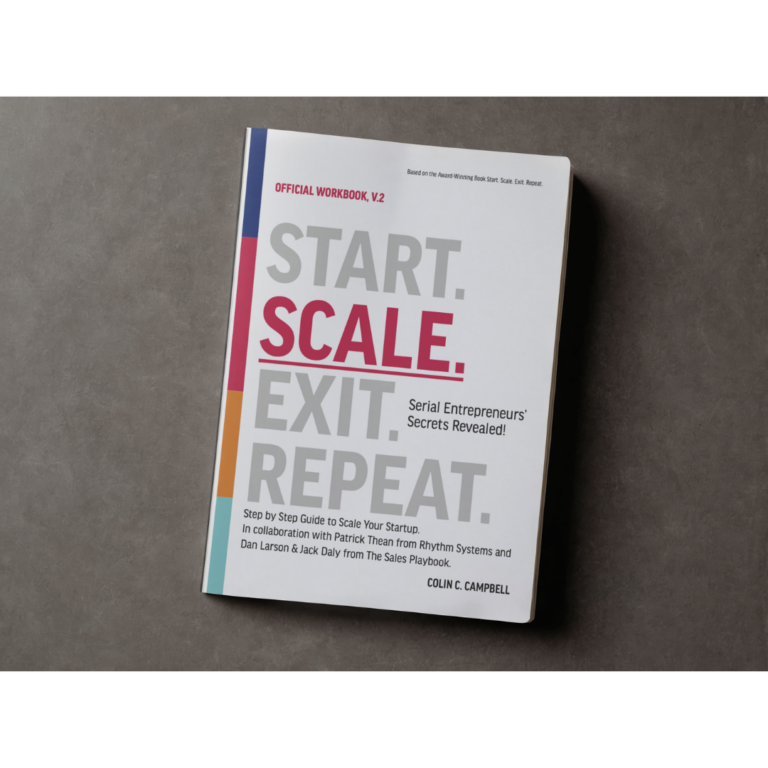
In Start. Scale. Exit. Repeat., we spent a lot of time identifying what actually works when scaling a business. In fact, it’s the largest section of the book. 

Most companies fail to scale. It is not instinctive. I learned that the hard way.

It was not until I brought in a coach who helped implement dozens of changes that we began to scale.

You have made it through Start Mode. Now it is time to move into Scale Mode.

THE ULTIMATE SCALE CHECKLIST

1. PRODUCT MARKET PROOF

☐ Customers are already paying, not just interested
☐ You have repeat purchases or retention
☐ Clear proof your product solves a real problem
☐ You can explain your value in one sentence
☐ Customers would be disappointed if you disappeared

Rule: Proof sells

2. YOUR X FACTOR

☐ You know exactly what makes your product or service different
☐ That difference matters to customers
☐ Competitors cannot easily copy it
☐ You are leaning hard into that advantage
☐ You have created a Nearly Unbearable Brand Promise

3. SCALE IN ZEROS

☐ You have visualized what 10x looks like in your organization
☐ You have proven you can go from 100 to 1,000 to 10,000 and beyond
☐ Your unit economics work
☐ Your process works without you
☐ You are planning for 10x operational demand

Subscribe to the Startup Club Newsletter to get the full Ultimate Scale Checklist!

EP209: Life Hacks for Entrepreneurs: 21 Tips From the Startup.club Community

0

The best founders don’t just build great companies– they build systems to improve all aspects of life and business. Here are 21 hacks they actually use, from Colin C. Campbell, Michael Gilmour, and the Startup Club community. 

Hosts: Colin C. Campbell, Michael Gilmour

Life Hacks for Entrepreneurs: 21 Tips From the Startup.club Community

No theory. No fluff. Just what works.

The best founders don’t just build great companies. They engineer their lives to run on autopilot. Here are 22 hacks they actually use.

Travel

1. Never check a bag. Michael Gilmour hasn’t checked luggage in 25 years. Carry-on only. One of his team members ignored this advice on a trip from Melbourne to Las Vegas. Michael was already at the hotel working by the time the guy’s bags showed up.

2. Same spot, every hotel room. Charger here. Laptop there. Shoes by the door. Every room, every trip. You’ll pack in 30 seconds and never leave anything behind.

Decisions cost energy. Energy is your most valuable resource.

Wardrobe

3. Kill sock-sorting forever. Throw them all out. Buy 24 identical white and 24 identical black. No sorting. No mismatches. No mental energy wasted.

4. Find something you like? Buy a dozen. Stop re-deciding things you’ve already decided. That energy belongs on your business.

5. Wear your company merch daily. Colin wears a Startup.club shirt. Michael wears a Park Logic polo. Every elevator, every photo, every random conversation becomes a branded impression. You already paid for the shirt, so make it work.

AI

6. Use AI to conquer your files. One founder spent 15 minutes letting Claude sort through six gigabytes of chaos. It categorized everything and flagged confidence levels before lunch. Start here.

7. Automate your repetitive communications. Michael built a workflow that reads support requests, routes summaries to the right people, and auto-replies to anything routine. It runs every day. He does nothing. That’s the goal.

8. Build a personal AI medical file. Upload your entire medical history to a dedicated chat. When a health issue comes up, the AI already has full context. First stop before any doctor’s visit.

9. Use AI as a nutrition coach. Photograph your meal before and after eating. Feed it to a dedicated chat. Over weeks it spots patterns and tells you exactly what you’re missing. No app. No subscription.

10. Drop legal documents into AI before calling your lawyer. Surface pros, cons, and red flags first. Still read every clause yourself, but the review will be dramatically faster.

11. Watch great films like a screenwriter. After a movie moves you, ask AI for the top ten reasons it worked as a story. It strips out the emotion and reveals the craft. Do this for ten years and you’ll become an exceptional storyteller.

Time and Focus

12. Your schedule is your to-do list. When something lands in Michael’s inbox, he asks one question: is this worth a calendar slot? Yes, it gets scheduled. No, it’s gone. No separate task list. No thrashing.

13. Batch your errands. Stop scattering low-value tasks across your week. Group them, knock them out, protect the rest of your time.

14. Commit to five minutes. Tell yourself you’ll work on something for just five minutes. An hour later, you’re still going. Tell yourself it’ll take an hour and you’ll never start.

15. Stop small decisions from reaching you. Michael told his accountant: never call about anything under $5,000. His team can spend up to $10,000 without him. His travel policy is one sentence: “I trust my team to make sensible decisions.” He says it’s saved more money than any rulebook ever could.

Health and Routine

16. Lay your workout clothes out the night before. Wake up, see the clothes, decision already made. One founder puts them just outside the bedroom door so he trips over them. Friction removed. Workout done.

17. Habit stack. You already make coffee every morning. Those two minutes are free. Do squats. Stack a new habit onto one you already have and it costs you nothing.

18. Make your bed, every day. Michael does it without fail. A small act of order that sets the tone for everything that follows.

Spending

19. Shop by price per gram, not sticker price. Ignore the headline number. Look at the unit cost. A two-pound tin can be a better deal than a one-pound one. Stop letting packaging fool you.

Delegation

20. Delegate responsibilities, not tasks. Colin hasn’t paid a personal bill in 25 years. He’s involved in 20 companies. He didn’t delegate to-dos. He handed off entire domains of his life.

Start small. If you make $50 an hour and pay someone $30 to do something you hate, the math is obvious. But the real win isn’t financial. It’s the 3am wake-ups you never have again.

21. Clean your desktop in 60 seconds. Create a folder. Call it “Desktop.” Drag everything into it. Done. Pull files out one at a time as you need them. Anything that never comes out? You never needed it.

The Bottom Line

Every hack on this list does the same thing: it eliminates a decision.

Decisions cost energy. Energy is your most valuable resource. Whether it’s socks, travel, or who pays your bills, stop burning mental cycles on things that don’t matter so you can go all in on the things that do.

Colin C. Campbell is the author of Start, Scale, Exit, Repeat. The Complete Entrepreneur airs every Thursday at 5PM ET on Startup.club. The content for this post was generated by the community during a live episode of the podcast.

EP208: How Fear and Self-Doubt Kill Great Businesses

0

Why fear is driving more decisions than you think

Colin C. Campbell and Michele Van Tilborg sit down with Dr. Rowshanak Hashemiyoon to unpack how fear and self-doubt actually work in entrepreneurs. This episode explores the biological roots of hesitation, the pressure behind success, and how founders can move forward without waiting to feel ready.

Hosts: Colin C. Campbell, Michele Van Tilborg

Guest: Dr. Rowshanak Hashemiyoon

How Fear and Self-Doubt Kill Great Businesses

Colin C. Campbell and Michele Van Tilborg spoke with Dr. Rowshanak Hashemiyoon to discuss one of the most common and least understood forces in entrepreneurship: fear.

Fear is the most expensive mistake entrepreneurs make.

Not bad ideas. Not lack of capital. Not timing. Fear.

And it shows up in ways that look smart, responsible, and even strategic.

Entrepreneurs are not thinking as clearly as they think

Most founders believe they are making rational decisions.

They are not.

As Dr. Hashemiyoon explained, the nervous system reacts to risk before the brain has time to process it, which means hesitation, overthinking, and delay often feel logical even when they are not.

That is why someone can know exactly what to do and still not do it.

It is not a knowledge gap.

It is a response.

Success creates pressure, not just upside

Fear of failure is obvious. Fear of success is quieter.

More visibility, more expectations, more responsibility, and more people relying on the business all show up at once, and the brain registers that as risk.

Colin pointed out that even experienced founders feel this tension when launching something new, not because they doubt the opportunity, but because they understand what comes with it.

So instead of accelerating, many founders slow down at the exact moment they should be leaning in.

They convince themselves they need more time or more certainty.

What they are really doing is managing pressure.

The fear is not about ego

Early-stage fear is often misunderstood.

It is not about embarrassment or looking bad.

In the discussion, Michele Van Tilborg, CEO of Paw.com, described how the real stress in launching came from the potential impact on others, not personal reputation.

Employees, partners, and customers raise the stakes.

The more people involved, the heavier each decision feels, and the easier it becomes to hesitate.

This is not insecurity.

It is responsibility.

Staying small can feel like the right move

There is a version of discipline that is actually fear.

If the business does not scale, it cannot fail at scale.

If the founder does not push, they cannot let people down.

It feels careful. It feels rational. It even sounds strategic.

But it limits what the business can become.

Sometimes staying small is not strategy.

It is protection.

You cannot outthink a stress response

One of the clearest takeaways from the conversation was that fear cannot be solved at the level of thought alone.

Dr. Hashemiyoon emphasized that founders need to regulate their state before making decisions, because the body is often reacting faster than the mind can keep up.

Simple tools like slowing the breath or writing things down are not soft tactics.

They are ways to interrupt the stress response and regain clarity.

Once the system settles, better decisions follow.

Action is what builds confidence

There is a common belief that confidence comes before action.

The reality is the opposite.

Confidence is built through evidence, and evidence only comes from taking action.

Small steps create momentum.

Momentum builds a sense of control.

And control reduces fear.

That is the loop founders need to understand.

At some point, the noise has to be shut out

Colin C. Campbell reflected on starting his first business when almost everyone around him advised against it.

The feedback was logical and well-intentioned.

It was also wrong.

Every founder eventually reaches a point where they have to choose between external opinions and internal conviction.

Setting clear targets and committing to them without constant outside interference becomes critical.

Focus creates progress.

Progress creates belief.

Worth and outcome are not the same

One of the most important distinctions raised in the discussion is that many entrepreneurs tie their worth to the outcome of their business.

If it works, they feel validated.

If it fails, they question themselves.

That is a dangerous equation.

A business can succeed or fail for many reasons, many of which are outside a founder’s control.

Separating identity from outcome makes decisions lighter and faster.

And speed matters.

Fear does not disappear as a business grows.

It evolves.

The founders who win are not the ones who eliminate fear.

They are the ones who understand it, manage it, and keep moving anyway.

Avora Cruise Residences: What We Learned From the AMA About Pricing, Risk, and the Reality of Living at Sea

We set out to have an honest and open conversation.

No polished pitch. No filtered answers.


This AMA was hosted by myself and Aaron Alexander, a fellow moderator from the Live at Sea community. We asked questions directly, and members from the Live at Sea Facebook group submitted questions as well, which we brought into the discussion.

The goal was simple. Ask the real questions people are thinking about when it comes to Avora cruise residences, and see how the team responds in real time.

What came out of it was far more useful than any brochure.

This is not a vacation product. 
It’s a capital-intensive, operationally complex, slightly unconventional model that might actually work if executed well.

The Deal Behind the Ship

This is where things usually get confusing, and to their credit, they explained it clearly.

Avora is operating under a nine-year charter-to-purchase agreement with Norwegian Cruise Line for the Seven Seas Navigator.

Here’s what that actually means:

– They put down roughly $20 million 
– They make structured payments over nine years 
– At the end, there is a nominal buyout to take full ownership 

During the AMA, they made an important clarification.

Even though the financing structure is nine years, when you buy a residence, you are buying it for the life of the vessel, not just nine years.

They estimate the ship’s usable life at 20 years or more, and they are guaranteeing 15 years with a prorated protection if something prevents the ship from operating before that.

In other words, the financing timeline and the ownership timeline are two different things.

What Buyers Actually Pay

Pricing discussed in the AMA:

– Entry-level residences start around $560,000 
– Balcony units run roughly $850,000 to just over $1 million 
– Larger suites range from about $1.4 million up to $4.5 million 

Monthly costs:

– Approximately $8,000 per month for single occupancy 
– Around $11,000 or more for double occupancy in smaller units 

What the Ship Is Actually Like

I’ve personally traveled on Regent’s luxury ships before, including this class, and it’s worth saying this plainly.

They don’t feel crowded. The service level is noticeably higher.

The ship underwent a $40 million refurbishment in 2016 and still feels modern today.

What This Really Is

After sitting through the AMA, this is not a standard investment.

It is a lifestyle decision with a financial structure behind it.

You are choosing mobility over permanence, experience over predictability, and community over isolation.

Business Networking & Strategizing in the World of AI

0

Business Networking & Strategizing in the World of AI

Speaking with author and marketing expert George Dubec about networking, strategizing, and using tech to your business’s advantage

https://www.clubhouse.com/invite/dXNcga065NX2pnGJEgrQ8OJAbZL1TlbBLYY:S5xenpCTTPy9ew6-8g0yl4I6uMZlZb0W5hMucRIkG5A

Parker McCumber- Turning Discipline into Execution

0

Parker McCumber- Turning Discipline into Execution

Speaking with Parker McCumber, US Army National Guard Captain about leadership, business execution, and team building

https://www.clubhouse.com/invite/ED7IL3WnLkp6nZoNb8agL48JXWLWSAD2533:o-BxUq1fYbR1LV_5fsVLbflKnrxlxF54GdNRWociGfI

Storylines Article Taken Down

I want to address why the Storylines article was taken down.

Prior to publication, I received a legal notice from the company. The article was published based on information that was reviewed and verified through documents, conversations, and multiple sources.

I remain confident in the process used to develop the article and the work that went into it.

To avoid a prolonged legal dispute, I have decided to remove the article and related posts.

I appreciate everyone who shared their experiences and contributed information. I will continue to follow the situation closely.