
What Private Equity isn’t Telling You – Serial Entrepreneur
https://www.clubhouse.com/invite/8dku4RgkbQYJZoNGjXJEwGd4Z3O8slVNg77:9RC_313OtWKHYMdhGrcfT0fT46vWKzA4ZvuM9H16PjM
What Private Equity isn’t Telling You – Serial Entrepreneur
https://www.clubhouse.com/invite/8dku4RgkbQYJZoNGjXJEwGd4Z3O8slVNg77:9RC_313OtWKHYMdhGrcfT0fT46vWKzA4ZvuM9H16PjM
Steve Simonson of Catalyst88 – Serial Entrepreneur
Room Link:
https://www.clubhouse.com/invite/gg1S6QQpaRrkJGeLzJ1alB9a008GHnpLXYY:PBVjmIbKFlzg6_l5NjQwfe-iYH2vLZbrPblU2q3M26M
The Ultimate Scale Plan – Launching the Scale Workbook!
https://www.clubhouse.com/invite/ED7IVpRpw6R1nE2vw8dYOKYO7A3rcAD2533:ROABN6cM3fQ8pCEcXSAzvoI1P1kP5Wv01jAHRMq9DfM
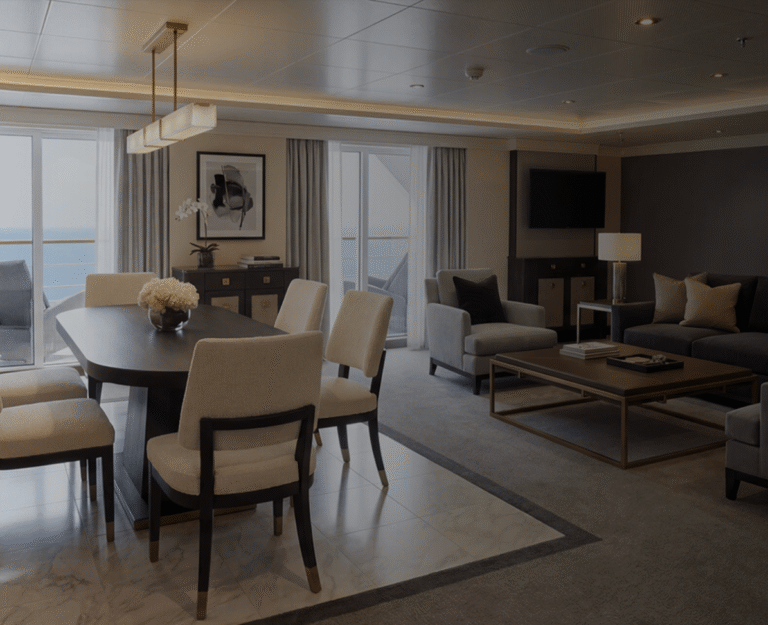

Ever thought about living at sea, working remotely while traveling the world, or building a company without being tied to a single city? Avora Residence, owned by Residential Cruise Holdings, is moving residential cruising one step closer to the mainstream.
The company recently announced the acquisition of Regent Seven Seas Navigator, a luxury cruise ship that will be converted into a floating residential community. The planned launch is January 2028. This is not Residential Cruise Holdings’ first attempt at residential cruising. The owners already operate Villa Vie Odyssey, giving it operational experience in this emerging category of long-term living at sea. “Residential cruising has proven its viability,” said Mikael Petterson, Founder of Avora Residences. “Avora Lumina represents the next evolution — purpose-built for long-duration global living, expedition capability, and a more refined residential experience.“

The Growing Market for Residential Cruising
Cruising continues to grow as a global lifestyle option. In 2025, the cruise industry reached approximately 37.7 million passengers worldwide. Each year, an estimated 30,000 to 40,000 people take world cruises, often lasting several months.
Luxury world cruises typically cost between $75,000 and $100,000, while ultra luxury cruises can reach $200,000 to $300,000 per voyage. Regent Seven Seas Navigator falls squarely into the ultra-luxury category. A recent review of pricing showed that the a 500 square foot suite on Regent’s Navigator for a 14 day cruise from Barcelona to London on July 5th, 2026 was $46598, or $3328 per night excluding fares.

Residential cruising offers a different model. Instead of paying repeatedly for short-term access, residents purchase a long-term home that continuously travels the world. If you have a constant desire to be on the ocean this can be a game changer.
Why Regent Seven Seas Navigator Works as a Residential Ship
Navigator is particularly well suited for conversion into residential use. The ship already has a more apartment-like feel, with features such as laundry rooms and relatively large suites. Even the smallest stateroom measures approximately 301 square feet, which is considered spacious by cruise standards. I had the opportunity to sail on the Navigator a few years ago and was impressed by both the suite layouts and the onboard facilities. It is a smaller, more intimate ship compared to the massive vessels that dominate the seas today, which makes it better suited for long-term living and connecting with a community.
“Our philosophy is evolution, not disruption,” said Kathy Villalba, Co-Founder & CEO of Avora Residences. “Navigator has a soul — built through years of disciplined operations, experienced crews, and trusted relationships. We intend to honor that legacy while transforming the ship into a true long-term residential platform.”
The ship also underwent a $40 million refurbishment in 2016, giving it a modern and refined luxury design. Avora plans to make additional changes, including expanding select suites and adding dedicated workspaces. This makes the concept especially appealing to remote workers, entrepreneurs, and founders who want to stay productive while traveling.
High speed satellite internet is expected, likely powered by Starlink. Having personally used Starlink on a recent transatlantic cruise, I was able to take Zoom calls, record a podcast, and work normally while crossing the North Atlantic on the way to Iceland. Although, I did have one problem…. finding a quiet place to work.
You can see from the image below the changes Avora is making converting the casino to workspaces.
Yes, launching a startup at sea is now a realistic option.

Pricing, Ownership, and Rental Potential

Avora has introduced aggressive early pricing, including a five-year option priced at roughly 40 percent of a unit’s value. Compared to other ultra luxury residential cruise offerings, this pricing is notably competitive. They are also offering a discounted early bird rate of 10% off for purchasing units. I find their pricing to be very fair given the costs of other luxury residential ships like The World.

While most buyers will likely use their residence as a primary or secondary home, we have confirmed with the company that owners will also have the option to rent out their units when not onboard. This makes the residences potentially investable, or at the very least capable of offsetting ownership costs.

Here is a simplified example using conservative assumptions of the Solstice Suite:
Purchase price for a 500 square foot unit with balcony – $1,425,200
Assuming a rental rate of $1,500 per night, which is roughly half the nightly cost of a traditional luxury cruise in the same room and ship, and only 300 nights rented per year, annual gross rental revenue could be as high as $450,000. Of course most people will choose to live on the ship and forgo some of this revenue.
Estimated monthly expenses are $18,725, or $224,000 annually.
That results in an estimated net operating profit of $226,000 per year, which equates to an approximate annual return of 16 percent before taxes and financing and rental commissions which will be paid to the ship. And what I really like is that you can still use it whenever you want and store your stuff on the ship so you don’t even have to pack a bag.
Even with lower occupancy or lower nightly rates, rental income could significantly reduce the effective cost of ownership. My wife and I have two second homes both of which we rent out when not there. This makes owning a second home much more affordable.
Monthly Fees and Lifestyle Comparison
Monthly residential fees are expected to range from approximately $8,355 for single and $12,355 for double occupancy, for the smallest of the suites. These fees include an all-inclusive lifestyle with multiple dining venues, housekeeping, concierge services, and continuous global travel.
When compared to luxury condos in cities like Miami, the costs are surprisingly comparable once HOA fees, insurance, property taxes, staffing, and amenities are considered. The difference is that instead of staring at the same skyline, your view changes weekly.
A New Way to Live and Travel
For thousands of years, humans have been tied to land. Residential cruising offers a fundamentally different way to live, combining travel, community, and luxury into a single experience.
Unlike traditional cruises, residential ships are quieter, less crowded, and designed for long-term living. Guests do not rotate every week, relationships have time to develop, and the pace is intentionally slower. Some residents on similar ships have even joked that the ship can feel quiet at times due to the low density, which for many is part of the appeal.
Residential cruising is not for everyone. But for people seeking freedom from fixed locations, deeper community, and a more adventurous lifestyle, it represents one of the most interesting experiments in modern living.
If you want the inside scoop on cruise condos join our Live at Sea Facebook Group or visit www.LiveAtSea.com.
Bon Voyage and safe travels.
Colin C. Campbell
Part 2- OpenMic: Make $1M using AI
https://www.clubhouse.com/invite/zg8SZQKZkZkEVODg5VaqOyDr778GcEw8r66:XfIjlJYd8noOjeW1gbYhAxbH0Gb2qTl1FjcC4J90q4w

Serial Success Has a System
In this OpenMic episode, the team breaks down what repeat startup success actually looks like in the entrepreneurial world. They walk through the ‘Start. Scale. Exit. Repeat.’ framework and how leaders win by shifting their story, team, capital strategy, and systems at every stage.
Hosts: Colin C. Campbell, Michele Van Tilborg
Most founders want the same thing: a repeatable way to win. Not a one-hit wonder. Not a lucky breakout. A system that works across markets, teams, and cycles.
That is what this conversation is about: the patterns behind repeat startup wins, and why Start. Scale. Exit. Repeat. keeps resonating. The book just picked up its 39th award, the International Press Award in New York City, which matters for one reason: it signals the framework is landing with real builders, not just readers.
The core idea is simple. Entrepreneurship starts instinctively, but it does not scale instinctively. You can will your way through the early days. After that, instinct becomes the bottleneck. Most companies stall because the founder stays in start mode while the business demands scale mode. The gap is not talent. It is operating discipline.
The Start. Scale. Exit. Repeat. framework forces clarity by breaking every stage into four parts: story, people, money, and systems.
In Start, the story is what you are building and why anyone should care. People are your first hires and partners. Money is what you need to reach the first stage gate, that go or no-go moment where you either double down, pivot, or shut it down. Systems are lightweight early, but there is one exception: KPIs. If you are not tracking the handful of metrics that actually drive your business, you are flying blind. You are making decisions off vibes.
In Scale, everything changes. Your story evolves because what got you to one million will not get you to ten. The people you need are different, too. Scaling is not about hiring more. It is about hiring the right operators who can add zeros without breaking the machine. The money conversation gets smarter here. Venture capital is not the default path for most companies. The real job is matching the right type of capital to the right stage, without losing your leverage too early. Then come systems, the thing most founders resist until the pain forces it.
One of the clearest points from this episode: systems are not corporate theater. They are what gets you unstuck. Weekly check-ins, quarterly goals, annual planning, and clear red-yellow-green scorecards sound basic because they are. That is why they work. When the team agrees on what “winning” looks like, you cut drama, confusion, and wasted motion.
Michele Van Tilborg, CEO of Paw.com, put it in practical terms. Start meetings with three wins, three priorities, and three stuck points. You would think adults could do that easily. Many cannot. Especially the wins. People discount progress because it is not headline-worthy. That is a mistake. Momentum is built on micro moves: fixing the shipping glitch, tightening the packaging, improving the process that saves ten minutes a day. Those “small” wins compound into real advantage, and they keep teams confident when the big wins are lumpy.
Audience members Renee and Jason reinforced another truth: you do not absorb operations in school. You learn it by watching it or getting burned. Renee described what strong process looks like in the real world: tight handoffs, clear deadlines, and accountability that keeps work moving. That is the difference between a team that performs and a team that waits. Jason shared the darker version: a business can hit ten million fast and still implode in a year if there is no clear leadership, no strategy, and no system to absorb growth.
Then comes Exit, and founders tend to get this wrong because they treat it like a victory lap. It is not. It is a shift in identity. The operator job in exit mode is to make the company less dependent on you, not more. Buyers pay a premium for a business that runs like a Swiss clock. They discount founder-dependent companies because the risk is obvious: founders leave. Post-acquisition founder retention is low, and buyers price that in.
If you want the premium multiple, you need to step back earlier than feels comfortable. Promote your leaders. Demote your ego. Get out of the way. The story becomes “this is a professionally run company.” The people are the bench that stays after the deal. The money is deal structure, leverage, and negotiation discipline. The systems are what you sell, because they prove the results are repeatable.
Colin shared the real thing that makes the framework real: you can spend ten years building wealth and ten weeks destroying it on a bad exit. Two mistakes to never repeat: giving up control without liquidity, and signing lockups that trap you when the market turns. You do not get points for almost cashing out.
Finally, Repeat is where the compounding really happens. Ideas show up when you are in the arena, not when you are parked on the couch. That is why the best advice for someone who wants to start something is often: go get close to the action. Work inside a business. Learn how the machine works. Opportunities live in the mess.
Repeat also means you track your A-players. You do not “steal” them from prior companies, but you keep a relationship and you rehire great people when the next build starts. You build a reputation, too. A strong LinkedIn presence, a consistent body of work, and proof of wins make the next raise, hire, or deal easier. And you copy-paste what worked. Not blindly, but intentionally. Systems are assets. If they produced results once, they can produce results again.
That is the through-line: repeat wins are not magic. They are the outcome of story, people, money, and systems evolving on purpose, stage by stage. Founders do not fail because they are not “built for it.” They fail because they refuse to change modes. The ones who win again and again treat entrepreneurship like a craft. Learn it. Run it. Improve it. Then do it again.
OpenMic – Make $1M using AI – Part 2
https://www.clubhouse.com/invite/9dGuoJO11Zevo8zj66nGVBveLqzNC9Yev77:mT5MAblBvONeNhEC0Y9ulgqDGLmN2F1nGeBYhuAeNlQ
OpenMic- Make $1M using AI
https://www.clubhouse.com/invite/y32SVdKKe0VrW9We2zqQgvdp9A50Fl5vYDD:HEcGXhKlIlSOxc8HiCN2YYtac6P9yFFZFhiLYEu_pwk
What Private Equity isn’t Telling You – Serial Entrepreneur
https://www.clubhouse.com/invite/8dku4RgkbQYJZoNGjXJEwGd4Z3O8slVNg77:9RC_313OtWKHYMdhGrcfT0fT46vWKzA4ZvuM9H16PjM