Launching a Kickstarter in Real Time: Lessons, Mistakes, and Strategies from a Live Campaign
(Recorded Live on Clubhouse March 6, 2026)
What does it really take to launch a successful Kickstarter? In this episode, we break down a campaign happening in real time—sharing the strategies, mistakes, and lessons learned just days after launch. From product development to storytelling and marketing, discover what it takes to turn an idea into a funded campaign.
Lessons from Paw.com CEO Michele Van Tilborg, Funded Founder
Launching a successful Kickstarter campaign is not luck. It is preparation, positioning, and execution.
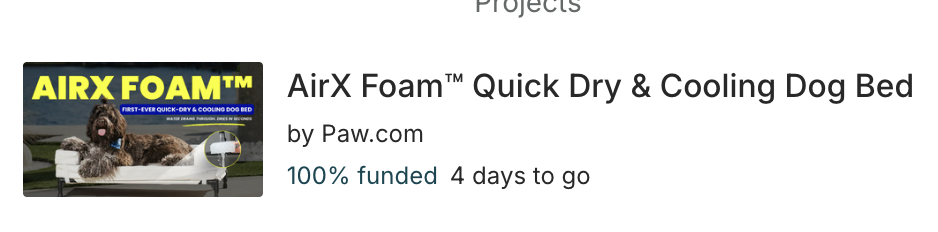
I recently sat down with Michele Van Tilborg, CEO of Paw.com, a company in our incubator whose team launched the AirX Foam™ Outdoor & Cooling Dog Bed after three years of development.
Kickstarter is the spark. The real company is built in what happens next.
The campaign was not rushed. It was engineered.
What surprised me most was the level of attention to detail and the sheer amount of effort and investment behind the launch. Nothing in the startup world happens by accident. It takes focus and effort.
Here are the 10 lessons she shared:
1. Create Something Truly Unique. Invent It.
Crowdfunding is not the place to launch a copycat product.
Paw.com did not tweak an existing dog bed. They reinvented it. The team created the first outdoor dog bed designed to drain instantly and dry in minutes using proprietary AirX Foam™ technology.
“We spent three years designing an outdoor dog bed that dries instantly,” Michele says. “We aren’t fighting the rain or mother nature. We embrace it.”
If your product does not clearly solve a real problem in a different way, the crowd will not fund it.
A great Kickstarter video isn’t about flashy production – it’s about clarity, authenticity, and momentum. Viewers should understand the problem and the product within seconds. The most successful campaigns come from real collaboration between the founders and the production team, where everyone is aligned on the story and the audience. When that happens, the video doesn’t just explain the product – it invites people to become part of the story.
Ian LaQua, Head of Production at Braveman Media
2. Invest in the Video
Kickstarter is visual. Your video is your pitch.
Paw.com hired a professional production company. The day after filming, Michele sent this note to the team:
“Just wanted to say a huge thank you from our whole crew. The shoot was amazing, and we had an absolute blast working with you all. You’re great to collaborate with, and the energy on set made the day fly by. We’re really excited to get into the edit and start shaping the video.”
The video became the emotional anchor of the campaign.
If budget is tight, negotiate. You can sometimes lower upfront costs in exchange for a small percentage of sales. But do not compromise on video quality. It directly impacts conversion.
3. Tell a Real Story
Authenticity converts.
In the Kickstarter video, Michele shares Paw.com’s three year journey, including failed attempts at outdoor dog beds. That honesty builds credibility.
Failure signals experience. It shows you know what does not work.
Backers fund people and stories, not just products.
The Power of the story.
4. Build a Professional Page That Sells
A Kickstarter page is a sales page.
Paw.com structured its campaign with clear benefit statements, visual proof of performance, and short GIFs showing water draining instantly. Every section answered one question: why should someone back this?
Design matters. Clarity matters more.
5. Pre Promote Before You Launch
Momentum starts before launch day.
Paw.com emailed its audience in advance and opened the preview page so people could follow it before it went live. When launch day arrived, they were not starting from zero.
The goal is velocity on day one.
6. Understand the Momentum Curve
Kickstarter runs on psychology and visibility.
Days 1 to 3 are critical. This is when you convert your warm audience and try to reach at least 30 percent of your funding goal. Early traction increases visibility on the platform.
Days 4 to 25 are often quieter. This is when you must push updates, announce stretch goals, pursue press, and continue outreach. Do not disappear.
The final 48 to 72 hours bring urgency back. Countdown messaging and limited tiers can drive a second wave of pledges.
If you understand the rhythm, you can manage it.
7. Use Early Bird Pricing Strategically
Pricing is leverage.
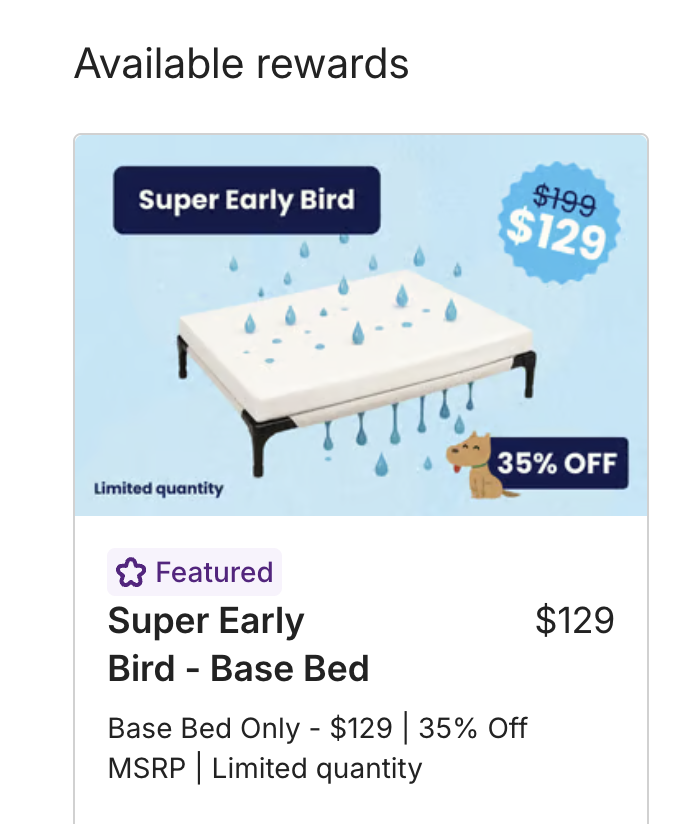
Paw.com offered a limited Super Early Bird tier, then increased pricing in stages. The first tier sold out quickly, which created urgency and social proof.
Scarcity creates momentum.
8. Be Ready to Ship and Be Honest About Delivery
Manufacture before you launch if possible.
Paw.com had its first 500 units produced before launch to test quality and ensure readiness. After those sold out, later backers were given longer delivery timelines.
Transparency builds trust. Add buffer to your shipping estimates. It is better to deliver early than to explain delays.
9. Protect Your Idea
Kickstarter is public. Competitors watch closely.
Trademark your brand elements. File patents where appropriate. In the United States, you typically have up to one year from public launch to file a patent application.
If you invent something meaningful, protect it. The Paw.com team have done just that to stop others from taking down their products. In fact, the company actually objected to a competitor that launched another Paw.com product that was very similar to a patented product in Costco and after contacting them about the violation, they never restocked.
The company has also been effective at taking down competitors on Amazon. Work with Amazon if you have a trademark violation.
10. Turn Kickstarter Momentum Into a Multi-Channel Launch
Kickstarter is proof. It is not the business.
When a campaign gains traction, funding is not the finish line. It is validation. Validation unlocks distribution.
Once your campaign succeeds, you now have three powerful assets: demand validation, real customers, and social proof. Use them immediately.
Start with your own brand site. This is where you control margins, own the customer relationship, and build long-term brand equity. Convert Kickstarter backers into repeat buyers.
Then expand strategically. Marketplaces like Amazon give you search demand and scale. TikTok and social commerce platforms give you discovery and viral reach. Each channel plays a different role. Do not rely on just one.
Some of today’s most recognizable brands followed this path:
Pebble used Kickstarter to validate demand before becoming one of the most funded campaigns in history.
Oculus launched on Kickstarter before being acquired by Facebook for billions.
Allbirds leveraged early crowdfunding validation before scaling into a global footwear brand.
Away used early momentum and direct-to-consumer distribution to build a dominant luggage brand.
Peloton began with crowdfunding support before growing into a multi-billion-dollar fitness company.
In each case, crowdfunding was the spark, not the ceiling.
Leverage your Kickstarter credibility in paid media. “Fully Funded” badges, real backer testimonials, milestone screenshots, and user-generated content lower friction and increase conversion rates.
If the product is strong and the margins are healthy, paid acquisition becomes fuel. You do not need perfect ads. You need math that works.
Many founders obsess over hitting a 3x ROAS as if it is a universal rule. It is not. What matters is contribution margin and lifetime value. If your unit economics support it, you can scale profitably even below a 3x ROAS. The key is knowing your numbers cold before you increase spend.
Build retargeting audiences from campaign traffic. Create lookalike audiences from early buyers. Feed purchase data back into ad platforms. Algorithms reward products that convert consistently.
Once the numbers work, scale aggressively.
In my award winning book Start. Scale. Exit. Repeat. I talk about “Scaling in Zeros”. If you sell 100, now go for 1,000 then 10,000 then 100,000, you get the picture.
A validated product with disciplined paid acquisition, and strong word of mouth can grow far beyond crowdfunding.
Kickstarter is the spark. The real company is built in what happens next.
Both Michele and I had the opportunity to host a show on Startup.club about this very topic. Unlike a typical theoretical discussion, this episode was recorded during the actual product launch. Listen to the full conversation above, or get it as a podcast on all platforms.
This site uses functional cookies and external scripts to improve your experience.
Privacy settings
Privacy Settings
This site uses functional cookies and external scripts to improve your experience. Which cookies and scripts are used and how they impact your visit is specified on the left. You may change your settings at any time. Your choices will not impact your visit.
NOTE: These settings will only apply to the browser and device you are currently using.