

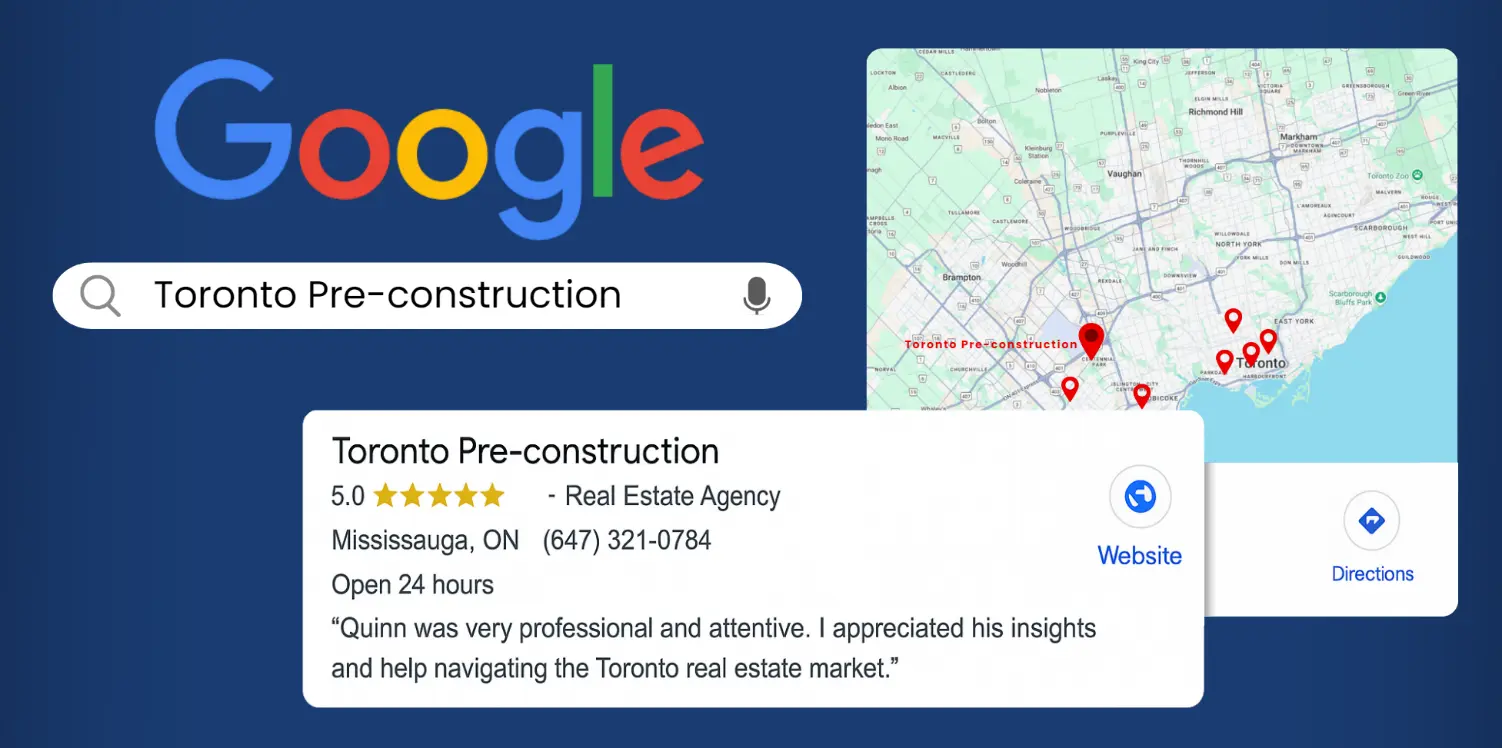

Do you want to get on the front page of Google for Your Startup?
If a tree falls in a forest does anyone hear it? If you are page 5 do you really exist?
Let me start by saying: I’m the last person who should be writing this article. I launched my career just twelve months ago as a real estate agent, fresh from graduating as an Architectural Technologist.
I joined Nucorp Realty in Toronto and decided to specialize in the Toronto preconstruction market. Having recently moved into a condo in Mississauga, my passion for architecture was focused on design and comfort in condo living. I dove into research and launched www.TorontoPreconstruction.com.
I spent weeks building what I thought was the perfect site for buyers looking for preconstruction condos in Toronto.
And Boom!
Nothing Happened.
I was buried deep in Google search results – well beyond where most people ever scroll.
Disheartened and thinking I will never get ahead in this world so far back I decided to meet with the Startup Club team to figure out how to crack this code. And what I found turned into gold.
Here are the 7 lessons I learned that helped me get my business to the front page.
1. Choosing the Right Domain Name
Domain names were the first thing I focused on. Preconstruction real estate relies heavily on online visibility. I brainstormed with the Startup Club team, and we landed on the core idea: preconstruction condos in Toronto.
We used Google Keyword Planner to study search terms. People across the globe use different language like “new builds” “under construction” or “off-plan” properties. But in Toronto, “preconstruction” was the key term.
So we landed on TorontoPreconstruction.com.
The domain I wanted was taken, so I reached out to the owner. After some negotiation, I bought it for a few thousand dollars. It was well worth it. That domain gave me credibility, authority and a bit of Google juice as well.
2. Mastering Keyword Strategy
A great domain name means nothing without a keyword plan.
I focused on the 3 Ws:
- What: Preconstruction homes
- Where: Toronto, Ontario, Canada
- Who: Investors, first-time buyers, downsizers, international clients
From there, I built phrases like:
- “Pre-construction home for sale in Toronto”
- “Toronto pre-construction investment opportunities”
These keywords went into my website titles (Title tags), articles, social posts, and Google Ads. Strong, relevant keywords help Google understand your content and connect you with real intent.
3. Google My Business (GMB)
GMB is essential. I created a listing, uploaded photos, and waited a few days for verification. I appeared on Google Maps but was far from the top.
Then I learned something critical: activity matters.
I started publishing blog posts, updates, and fresh content regularly. Within weeks, I climbed the list and hit a top spot without spending a dollar on ads.
4. Blogging for Authority
I had never written a blog. But blogging became a powerful tool for visibility.
What I learned:
- Writing builds trust
- Consistency can improve your chances of ranking
- Your voice is your brand
- You don’t have to be perfect just be real (And don’t think you can just use AI to write everything). I use AI to help clean up my grammar and mistakes but it’s got to be authentic and real just like this article.
Tell your story. Offer value. And always post those blogs to your Google My Business page too.
5. Social Media Visibility
Social builds your image.
In real estate, it’s about showing what buyers care about. I shared images, slideshows, educational content, and videos. Video content got more engagement than stills. Getting on camera gave people someone to trust.
Punchy lines like:
- “Toronto’s skyline is evolving”
- “Are you looking for a smarter investment?”
These helped grab attention and increase watch time which social platforms love.
Consistency is key. Every post builds trust and drives engagement. It’s also important to go on the social platforms where your audience is. For me it’s Instagram and Tik Tok as I am targeting younger users.
6. Google Ads & Personas
Google Ads aren’t about throwing money around. They’re about smart targeting.
I created two personas:
- End-users looking for homes
- Investors chasing ROI
I used ChatGPT to build detailed profiles and tailored my messaging to each. I targeted neighborhoods, tested headlines, kept creatives simple:
“Toronto preconstruction units from the $500s”
I tested and optimized constantly—keywords, locations, ad spend. Never set it and forget it.
7. Learn From Data: Google Analytics
At first, Analytics felt overwhelming. But it quickly became one of my most valuable tools.
I tracked:
- Traffic sources (search, social, ads)
- Bounce rates (are visitors engaging?)
- Conversions (are people registering for info?)
I tweaked campaigns based on what worked. Small changes drove big results.
When to Scale:
The Toronto market is slow right now due to high interest rates and a bad economy. Pushing hard now isn’t smart. I’m using this downtime to build systems, refine strategies, and create valuable content.
When demand returns and it will, I’ll be ready to scale fast.
8. Use Ratings and Reviews
Reviews are your digital reputation. They boost trust and SEO.
Early on, I had zero reviews. I reached out to past contacts and asked for honest feedback. When I started doing deals I also asked my clients to post a review. I always go way beyond what is required to help new home owners buy a condo, which eventually translates into reviews.
As reviews came in, so did clicks and conversions. Real reviews with keywords like “preconstruction condos” helped me rank higher.
Conclusion: No One-Size-Fits-All
There’s no magic SEO formula. What works is being consistent, learning as you go, and staying active. And you can’t outsource it to the IT guy…every entrepreneur needs to learn how to do it and given AI and all the info out there, it is easier than you think.
Keep testing, keep building, and keep showing up.
That’s how I cracked Google’s front page in Toronto for www.TorontoPreconstruction.com . You can too!