The startup mindset isn’t just a way of thinking — it’s a competitive edge. Successful founders approach challenges with curiosity, adaptability, and a willingness to learn fast and iterate even faster. They balance optimism with realism, embrace calculated risks, and push forward despite uncertainty. Whether you’re launching your first venture or scaling your fifth, cultivating this mindset is one of the most powerful tools you can develop.
Startup founder success demands a specific mindset as much as innovative concepts and substantial funding. The Complete Entrepreneur podcast episode from November 20th, 2025, shows that Michael Gilmour and Colin C. Campbell established that mental focus is a primary tool for startup success.
Colin said, “The mind serves as the most vital instrument for startup success because founders need to approach their work with proper mental preparedness to achieve success.”
The mindset between successful and unsuccessful entrepreneurs is often what makes the difference between them. Startup founders tend to operate with both immediate urgency and radical thinking which others might view at times as being irrational.
“I dedicate at least 30 minutes each morning to developing skills that relate to the future needs of my business. The practice of continuous learning serves as an essential requirement for survival.”
Michael Gilmour
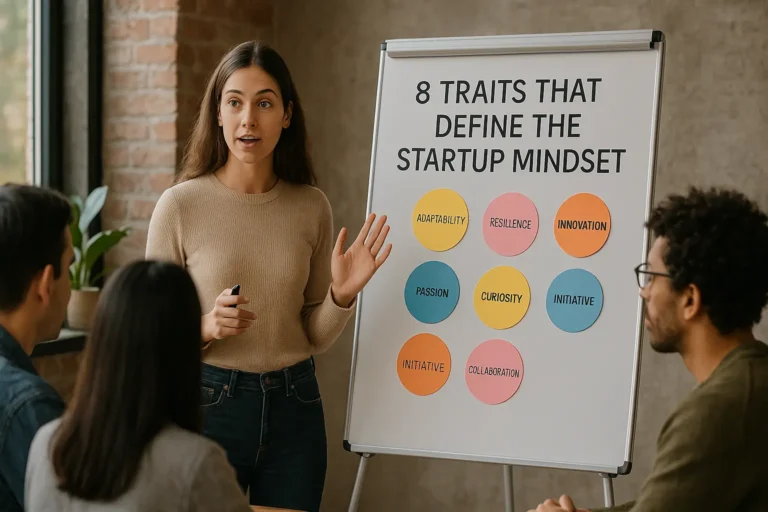
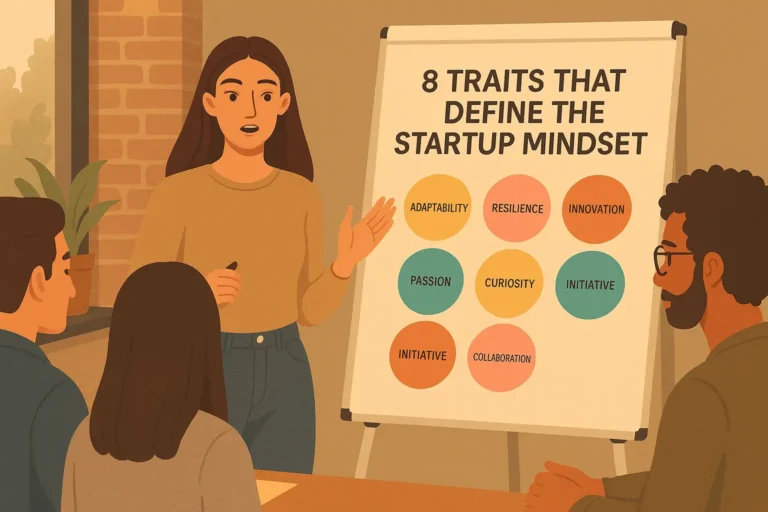
The discussion reduced the essential characteristics to eight fundamental traits. The following sections present each through direct quotes from the conversation to demonstrate how successful startup founders think and achieve success.
1. Be Naively Bold
Great founders demonstrate naively bold behavior by taking risks that others avoid because they are often unaware of the more traditional ways an industry may have approached problems in the past. This type of boldness stems from their passionate belief in the vision for the business.
Colin describes this mindset with the following example, “After college graduation I chose to become an entrepreneur while all my friends selected conventional employment paths. The college environment didn’t cater for entrepreneurs and, actively discouraged taking the large risk of starting a business. Many of my friends became lawyers and believed I was making a big mistake that would amount to nothing.”
Like many entrepreneurs, Colin pursued his dream because he deeply loved the idea of building a business. Thirty years later he became immensely successful, and the rest is history.
A founder’s startup mindset emerges from a bold willingness to take risks that others would often find terrifying. This requires them to demonstrate unwavering confidence in their unorthodox business concepts even while not having all the facts.
This naïve boldness in their business idea will often be shared with anyone and everyone as they reinforce their conviction that success is inevitable. Their boldness is like a superpower that allows them to recognize opportunities which others have missed while their naivety propels them forward where others would run in the opposite direction.
2. Learn Relentlessly
Startup entrepreneurs demonstrate an intense desire to learn new things. The process of learning stands as the lifeblood of any new venture and sustains often unveils necessary business pivots that will save the business from failure.
In the session Michael Gilmour said, “Each day I dedicate at least 30 minutes each morning to developing skills that relate to the future needs of my business. This will include reading books, participating in master classes or watching videos of how other successful entrepreneurs have solved problems. The practice of continuous learning serves as an essential requirement for survival.”
The most successful founders function as knowledge absorbers who continuously learn from their reading materials, mentors and their personal experiences. Michael shared that Elon Musk demonstrated his knowledge about rockets through his reading activities before starting SpaceX. This was exemplified when an interviewer asked Musk about how he became so knowledgeable about building rockets. Musk replied that he learned everything through studying books.
The startup mindset requires entrepreneurs to maintain continuous learning because markets transform, technology advances and outdated knowledge becomes insufficient for future success.
A founder who deludes themselves that they possess the complete knowledge for their industry will inevitably experience a shutdown of their startup operations. Coline said, “The learning mode must remain active for you to achieve success because this enables you to make progress and acquire new knowledge to chart the course forward. Your failure to learn will result in business collapse.”
The practice of continuous learning enables you to stay alert while you become more flexible and maintain your position at the forefront of your industry. Startup leaders discover positive aspects in every situation when reality presents itself with obstacles.
Michael said, “The most important part of my week is the first 30 minutes of my management team meeting where each member discusses what they learned in the previous week. As the business grows the capacities of the senior leadership team must also grow if they are to move the business forward.”
3. Be Optimistic
The optimistic mindset which founders display creates such a strong belief in their mission that it attracts additional supporters to join their cause. The approach requires founders to work with positive visions which will reshape actual circumstances. A key gift that a founder can bring their team is a positive mindset that speaks of a better future together. This mindset will sometimes be the only thing between success and disaster.
Michael Gilmour said, “I choose to be optimistic because the world has never been changed by pessimists.”
Successful leaders maintain their optimistic outlook by combining it with realistic assessments during private meetings, but they never let their public optimism fade.
4. Turn Fear into Fuel
Every entrepreneur experiences fear because they worry about business failure and public humiliation and financial destruction. The startup mindset requires you to handle your fears instead of trying to eliminate them.
Colin expressed, “I experience a complete wave of doubt before every major product release. The fear of business failure, financial losses and public embarrassment go through my mind during all my business ventures.” This fear response is typical for most founders.
One distinguishing characteristic of founders emerges in the manner that they handle their fears. The monster of fear becomes their opponent which they defeat through their love for their business. Colin said, “The fear of failure is very real, and it will stop you from starting your own business.”
Founders who succeed at business use their fear to take immediate action. Michael describes his anxiety relief method by visualizing butterflies flying in chaos and slowly but surely, they fly in formation. Through structured thinking he transforms his panic into focused work. He also related that he uses the mantra from the science fiction book Dune, “fear is the mind-killer… I’ll let it pass through me and only I will remain” to transform his fear into determination.
The process of using fear as motivation will help you become more alert and push you to work with increased intensity. The experience of standing on stage or releasing a new product either makes you freeze or gives you a powerful boost which startup winners choose to experience. The fear experience leads them to take action while their body produces adrenaline which serves as their launch pad.
5. Lead with Passion
Every successful startup exists because at its core is the founder’s passion which drives it towards the vision. The complete devotion to your business product, mission and startup venture defines your passion. In order for a business to succeed the founder must be energized by their passion.
The reason is that passion creates a “spreadable effect which defeats all forms of doubt”. Michael said, “Sometimes all that you have is your passion and it’s through your passionate belief in your team and vision that fear is overcome. In other words, love conquers fear.”
A founder who demonstrates genuine passion will spread their enthusiasm to all team members and customers and investors will take notice. Colin shared, “The presence of passion within an entrepreneur becomes the main factor which determines investor interest. A lack of passion from an entrepreneur makes investors want to avoid funding the business. Why would an investor tip thousands of dollars into a business where the founder doesn’t express their love for it?”
A leader who leads with passion demonstrates complete dedication to their mission through their actions which creates a positive impact on their team members and customers and investors.
It is essential to have complete faith in your startup because it encourages others to share your beliefs. “Your first step to success requires a complete faith in your venture before you can make others believe in it,” said Colin.
A genuine fire drives passionate leadership which enables leaders to overcome obstacles while inspiring their team members to dedicate their maximum effort. The startup mindset depends on passion as its main strength because it drives people toward the mission while moving you toward your goals.
6. See Opportunity Everywhere
Great entrepreneurs possess a unique ability to identify business opportunities all around them. Founders will view everyday problems in a different light and combine creativity with business acumen to build business success.
According to Michael, “Entrepreneurs need to maintain a ’sense of wonder’ while navigating the world because it’s through this wonder that they’ll recognize numerous business opportunities which others fail to notice.”
The startup mindset functions to identify two essential questions about market improvement and unfulfilled customer requirements. Many founders dedicate themselves to identifying business opportunities which exist in every market. Michael described his experience of visiting the United States as an Australian by saying, “The moment I exit the airport in Los Angeles I feel like I am walking through a field of gold bars that lie freely on the ground. I think that many people in the USA have become so accustomed to the gold lying around that they no longer see the opportunities. There is no country in the world like the USA for entrepreneurs to be able to thrive and succeed.”
Entrepreneurs need to maintain fresh eyes which help them detect business opportunities that others fail to notice. The ability to observe and show curiosity defines this entrepreneurial mindset. Colin shared, “I taught my son to carefully pay attention to the world around him. One day he found a $20 bill on the ground and remarked that he was lucky. I told him he wasn’t lucky, he was observant.”
A startup founder who observes everything will identify customer complaints, market patterns and technological applications that others fail to recognize. The ability to detect new business opportunities enables founders to stay innovative while they search for their next major business concept. The world presents itself as an endless treasure hunt to entrepreneurs who maintain an opportunity-focused mindset while they continuously search for new discoveries.
7. Be Tenacious
Tenacity is often displayed when a founder discovers methods to bypass challenges or to directly confront them head-on. It’s a never give up mentality that comes to the forefront when times are tough. Tenacity combined with a flexible mindset will transform a business as problems are solved in innovative ways.
According to Colin, “You should establish specific checkpoints (stage gates) for your startup to monitor progress but when a particular approach fails you should use that experience to shift direction or eliminate that concept. The main progression of your journey will continue.”
The journey to success requires founders to maintain their dedication throughout the entire process. Founders who experience failures should use these experiences to gain knowledge instead of ending their efforts.
Both Michael and Colin indicated that they had an unyielding determination for their businesses which seemed to emanate from their entire being. The audience member known as “Magnificent” fully supported the idea that tenacity serves as an essential part of a startup’s success.
At times, being tenacious will require you to continue working through fatigue while facing continuous rejections. It’s this mindset that will keep you going during difficult times.
8. Embrace Calculated Risk
Startups will often survive by taking risks which others believe aren’t worth it. A founder needs to take risks, but the best founders make strategic choices before they act.
Colin recalled, “My friends described me as the person who takes risks better than anyone else while also being a calculated gambler.”
The startup mindset requires you to handle risks through strategic decision-making. The approach to risk-taking resembles playing poker with favorable odds instead of random casino games. Founders use their research and instincts to evaluate where and when to place strategic bets in their business operations. They never forget that by not placing a bet that they are also potentially losing an opportunity.
Colin said, “Strategic risk-taking forms an essential part of what defines the startup mindset. Every new business venture requires founders to enter uncharted territory.”
No matter how good your plan is on paper it’s only by actually launching your business that will reveal whether it was any good or not. Business planning does not guarantee success because launching a business creates an unpredictable situation that no one can forecast. A good plan identifies risks and outlines how to mitigate as much as possible. Entrepreneurs understand that it’s often the risks that were not identified at the planning stage that threatens their ventures. Despite not having all the facts, they choose to move forward anyway. Risk management stands as their preferred approach instead of risk avoidance.
The process of calculated risk acceptance requires you to conduct market research and test your business hypotheses before executing your plan with complete dedication. This approach suggests founders should take decisive action when they possess 70% of the necessary information because delaying until they have 100% might result in lost opportunities.
The startup mindset accepts unpredictable situations while enabling fast adjustments to market conditions. Founders need to demonstrate self-assurance because they believe they will solve problems by learning as they progress.
Founders choose to pursue their dreams through risk-taking instead of safeguarding their ideas from extinction. It’s the founders that choose to wager on their personal abilities that maximize their chances of success.
The Bottom Line
The eight characteristics which make up the startup mindset create an effective combination of traits.
The combination of these traits produces an entrepreneur who maintains optimistic fearlessness while learning continuously. They lead with passion, pursue opportunities while listening humbly. This is all combined with a dogged determination while taking bold leaps into unknown territory.
The startup mindset which Michael Gilmour and Colin C. Campbell and the Startup Club community endorse consists of these core elements. The mindset develops through real-world experiences and learning from both successes and failures. The implementation of several these traits will produce significant effects that will drive your business expansion.
The startup world demands strong determination from its participants, but the right mindset will help you achieve success while transforming the world. Your daily work should focus on developing your mindset while you maintain your drive for success. Your business success starts from the thoughts you create in your mind. Check out other blogs from Startup Club about the entrepreneurial mindset.
Michael Gilmour, Serial Entrepreneur and Author of Battleframe.
Colin C. Campbell, Serial Entrepreneur and Award-Winning Author of Start. Scale. Exit. Repeat.